You're standing in the bathroom or kitchen, medication box open, pen in hand, and your eyes go straight to the needle. Not the dose. Not the instructions. The needle.
That reaction is normal. For many people, the hardest part of starting a GLP-1 medication isn't the weekly routine. It's the moment before the first injection, when “How big is this thing?” suddenly feels more important than everything else.
The reassuring answer is that modern GLP-1 injections usually use very short, very thin needles. The question also isn't just needle length. It's what device you're using, whether that's a prefilled pen like Ozempic, Wegovy, Mounjaro, or Trulicity, or a vial-and-syringe setup. Those are different systems, and they don't use interchangeable needle advice.
Introduction to GLP 1 Injections and Needle Basics
You open the box, screw on the needle, and pause. The pen looks manageable. The part that still sets off alarm bells is the tiny tip at the end.
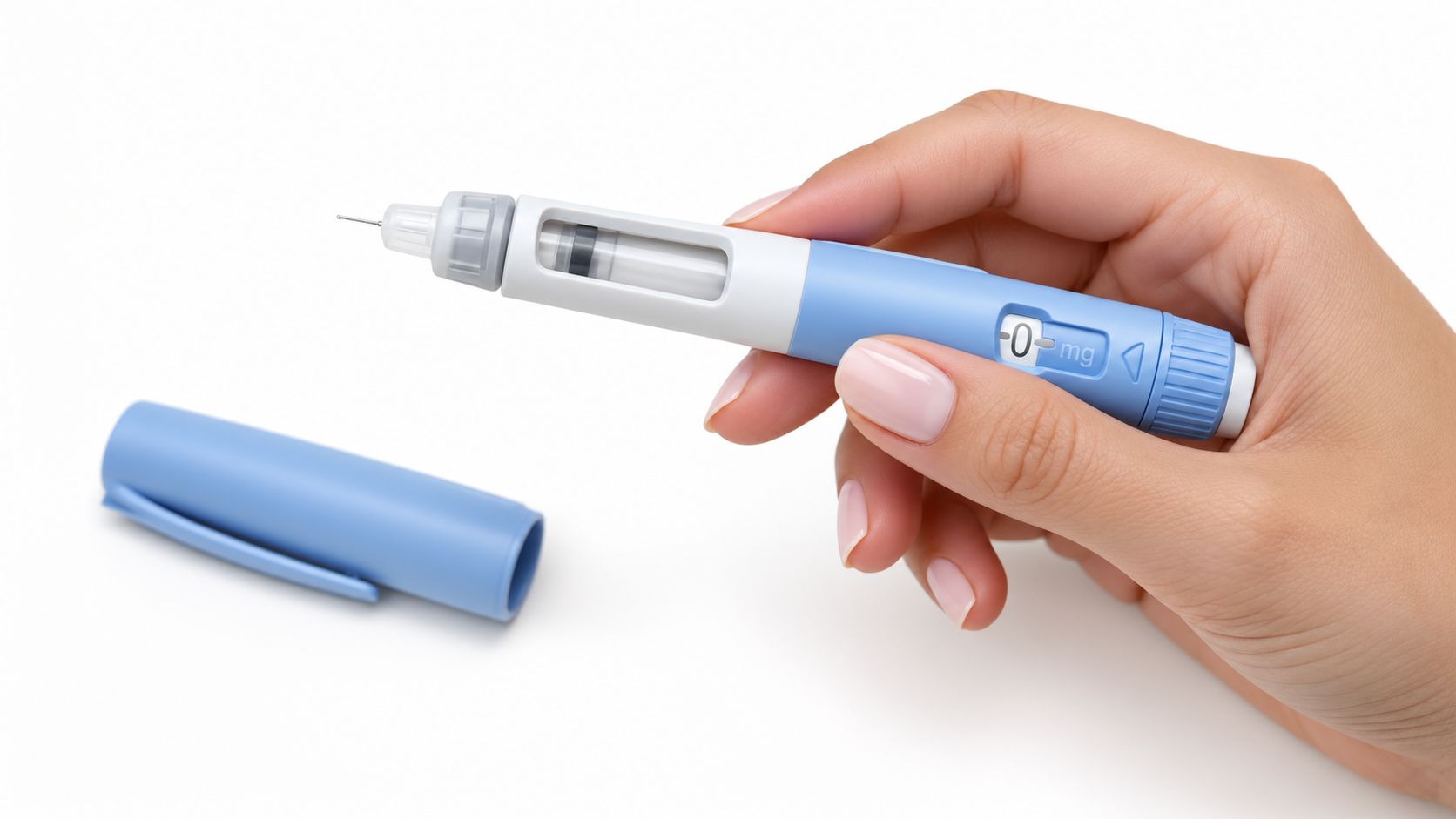
That reaction is common, especially for people who picture injections as the longer needles used for older syringe-based medicines. Modern GLP-1 systems are different. A prefilled pen and a vial with a separate syringe are two different tools, so the needle conversation starts with the device, not with body size.
GLP-1 medicines such as semaglutide and tirzepatide are injected into the fat layer just under the skin. That target sits close to the surface, which is why pen needles can be short and fine. For example, Ozempic and Wegovy pens commonly use a single-use 4 mm, 32G pen needle. Small does not mean weak here. It means the needle is built for the depth this medicine needs.
Comfort matters more than many patients expect.
A weekly injection is easier to stick with when the setup feels predictable and less intimidating. That comfort is partly physical, but it is also psychological. If the needle looks less threatening and the steps feel simple, people are more likely to keep the routine, rotate sites, and avoid putting off doses.
Needle choice also sits alongside the rest of the learning curve. Many people are adjusting meal size, protein intake, and appetite changes at the same time. If food planning feels harder than the injection itself, a practical GLP-1 protein snack guide can make that part of the routine easier.
One myth deserves to be corrected early. Larger bodies do not automatically need longer GLP-1 needles. For pen devices, the usual starting point is short because the goal is to reach the subcutaneous fat layer, not to go deeper. Longer is not more effective in routine use. It can make the process feel more intimidating.
So the first question is not, "What is the biggest needle I need?" It is, "Am I using a pen or a syringe, and what needle is made for that system?" Once that clicks, needle size starts to feel much less mysterious.
What GLP 1 Needle Size Means for Subcutaneous Delivery
You press the pen to your skin and hesitate for a second. The common worry is that a short needle looks too small to work, or that a larger body must need a longer one. For GLP-1 injections, the target is much closer to the surface than many people expect.
GLP-1 medicine is placed into the subcutaneous fat layer that sits between the skin and the muscle. That middle layer is the destination, so needle size is really about reaching the right depth reliably and comfortably.
Length tells you depth
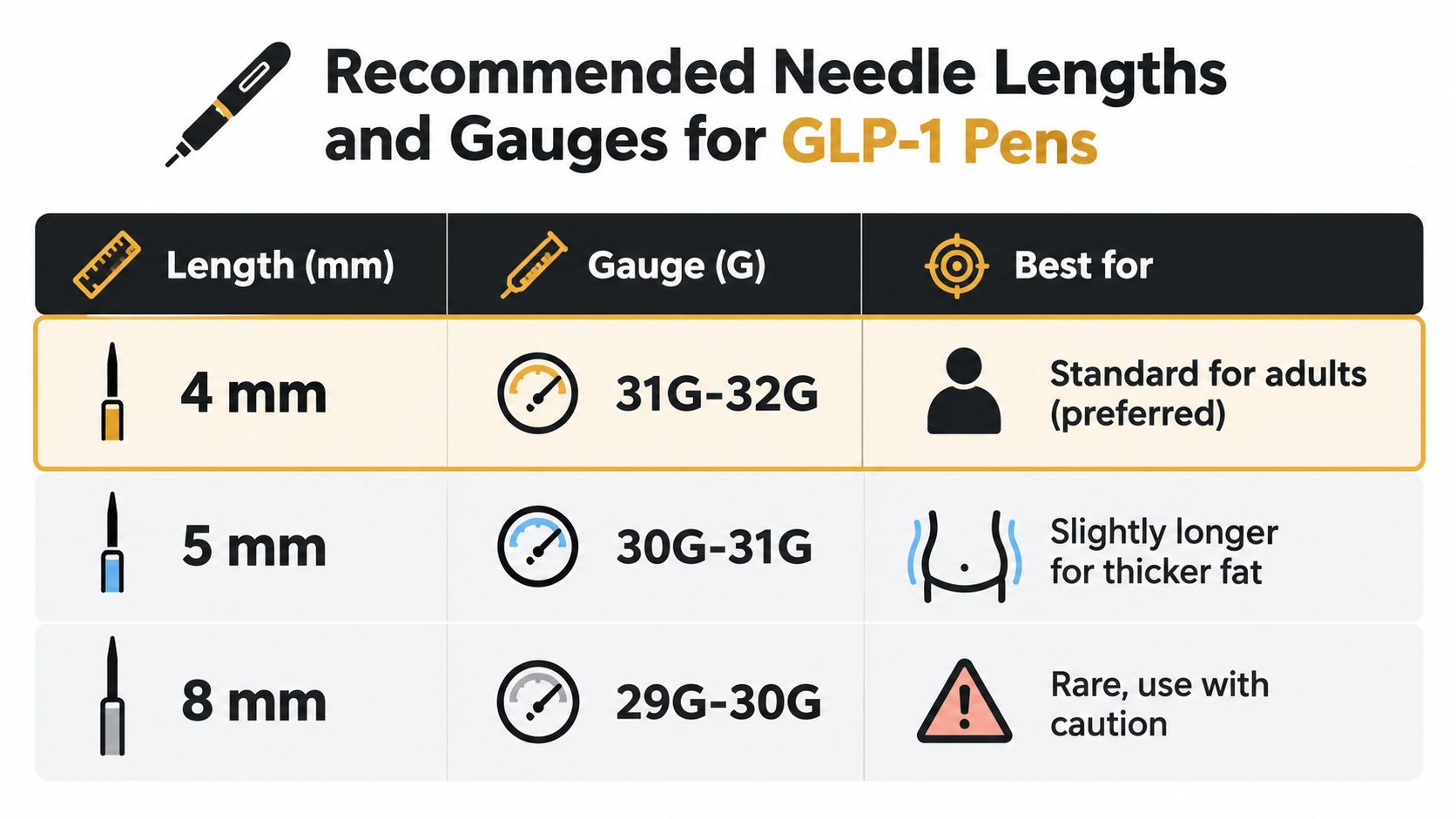
Needle length tells you how far the tip can go. For subcutaneous injections, the goal is a controlled, shallow delivery. Guidance from diabetes injection technique recommendations describes 4 mm pen needles as sufficient for subcutaneous delivery across adult body types, including adults with obesity, while also reducing the chance of going into muscle compared with longer needles, as summarized in the Forum for Injection Technique and Therapy Expert Recommendations.
That point matters because people often match needle length to body size in their head. With GLP-1 pens, the better question is whether the device is designed to place medicine into subcutaneous tissue. In many cases, a short pen needle already does that job.
Gauge tells you thickness
Needle gauge tells you how thick or thin the needle is. The numbering feels backward at first. A higher gauge number means a thinner needle.
For GLP-1 pens, the needles are usually very fine, often in the 31G to 32G range. That affects more than skin feel. It also changes the psychology of the injection. A thinner, shorter needle often looks less threatening, which can make weekly dosing easier to stick with.
Why a short needle can still deliver a full dose
A short needle is not a weaker needle. It is a needle matched to a shallow target.
A useful way to picture it is dropping a letter into the correct mailbox slot. You do not improve delivery by pushing farther past the slot. You improve it by reaching the correct opening consistently. GLP-1 works the same way. The medicine needs to enter the subcutaneous layer, not deeper tissue.
If you want a plain-language refresher on why these medications are injected into this layer at all, this overview of how GLP-1 medications work explains the logic clearly.
A full dose depends on reaching the intended layer, not on using the longest needle available.
That is why device type changes the conversation. Pen users are usually working within a short-needle system built for subcutaneous delivery. Vial-and-syringe users face a different sizing decision, which is why needle choice should start with the device in your hand, then with comfort and technique.
Recommended Needle Lengths and Gauges for GLP 1 Pens
You open a new GLP 1 pen box, see a row of tiny screw-on needles, and wonder whether you now need to choose the "right" size for your body. For pen users, the choice is usually much simpler than that.
A pen is built as a matched system. The medication, the dose dial, and the needle style are designed to work together for shallow under-the-skin delivery. That is why pen shopping is usually less about hunting for a custom length and more about confirming fit, comfort, and simple day-to-day use.
What pen users usually buy
For GLP 1 pens, the common supply choice is a short, fine pen needle, often in the 4 mm to 6 mm range and in a thin gauge commonly labeled 31G or 32G. If that sounds technical, the practical meaning is straightforward. These needles are made to feel small in the hand, attach easily to a pen, and deliver a full dose into the intended tissue layer with standard pen technique.
The bigger buying question is often compatibility.
Some pens come with needles in the box. Others require you to buy pen needles separately. Before you order, check the pen instructions or your pharmacy listing so you know the needle type that fits your device. Brand matters here more than body size.
What to look for on the box
A pen needle box usually answers four practical questions:
- Will it fit my pen? Look for pen-needle compatibility information.
- How long is the needle? The length is usually printed in millimeters.
- How fine is it? The gauge number tells you how thin it is.
- How many are included? Boxes may contain enough for several weeks or several months, depending on your dosing schedule.
That last point gets overlooked. A weekly GLP 1 pen may only need one new needle each week, but each injection still requires a fresh needle. Pen needles are single-use supplies, not reusable accessories.
Why pen choice is also a comfort choice
Pen needles are part hardware, part psychology.
A short, thin needle often looks less intimidating, which can make weekly injections easier to stick with over time. That matters because hesitation usually starts before the injection, when the needle looks bigger than expected. A pen system reduces some of that stress by keeping the setup simple and the needle small.
This also helps correct a common myth. People with larger bodies do not automatically need longer pen needles. With GLP 1 pens, the usual question is whether the needle fits the device and supports comfortable, consistent technique.
If you see 5 mm or 6 mm options
You may still come across 5 mm or 6 mm pen needles, especially when supply varies by pharmacy or brand. Those options can still be used with pen systems if they match the device instructions and your clinician's guidance.
The key is not to assume that longer means more effective. In pen use, longer can mean a different feel.
If you want to see how a prefilled pen product is presented, these Trulicity pen details give a useful example of the category. The takeaway is simple. Start with the pen in your hand, then choose the compatible needle supply that keeps injections easy, predictable, and less stressful.
Bottom line: For GLP 1 pens, buy for device fit and comfort first. Needle choice is usually a pen-system decision, not a body-size test.
Pen Needles Versus Syringes and How Device Type Changes Size
Many GLP 1 needle size articles lose people. They answer one question as if every injectable GLP-1 uses the same hardware. That isn't true.
A prefilled pen and a vial with syringe are different workflows. The right size depends on which one you have in your hand.
Two systems, two sizing conversations
Public guidance often mixes these together, but the size ranges are not identical. Search results and educational summaries show a clear split between prefilled pens and vial-based injections. Pens are typically paired with 31G to 32G needles in the 4 to 6 mm range, while vial-based injections often use U-100 insulin syringes around 29G to 31G and roughly 12.7 mm (1/2 inch) in length, as summarized in this device-format overview for semaglutide needle size.
That doesn't mean one is superior. It means the device changes the supply choice.
Pen Needles vs Vial Syringes for GLP-1 Delivery
| Feature | Pen Needle System | Vial and Syringe System |
|---|---|---|
| Medication format | Prefilled pen | Medication drawn from vial |
| Typical needle profile | Short, fine pen needles | Longer attached syringe needles are common |
| Common range described in guidance | 31G to 32G, 4 to 6 mm | Around 29G to 31G, roughly 1/2 inch |
| User task | Attach needle and inject | Measure dose, draw medication, then inject |
| Main confusion point | Choosing among pen needle sizes | Confusing units, volume, and needle specs |
| Interchangeability | Pen advice applies to pen systems | Syringe advice applies to vial systems |
Why people get mixed up
A person may search “What size needle for semaglutide?” when they're really asking one of two very different questions:
- What pen needle should I use with my branded injector?
- What syringe setup applies to my vial-based medication?
Those are not the same question. If you switch from a pen to a vial workflow, your supplies can change dramatically. This is especially relevant in telehealth, where people sometimes move between FDA-approved pens and pharmacy-dispensed vial formats.
One practical example is Weight Method, which provides clinician-guided GLP-1 care and also publishes patient education on injection use. In any telehealth setting, the key safety move is the same: confirm your device format first, then follow instructions specific to that format.
The safest way to think about it
Don't ask, “What's the best GLP-1 needle size overall?”
Ask these instead:
- Am I using a pen or a vial?
- Does my device already determine the needle style?
- Am I choosing a pen needle, or am I choosing a syringe with an attached needle?
- Did my pharmacy or prescriber give instructions that match the actual device in the box?
That one shift clears up a surprising amount of confusion.
How Body Type Injection Site and Comfort Affect Your Choice
The most persistent myth in this topic is that larger bodies need longer needles. Current technique guidance points in the opposite direction.
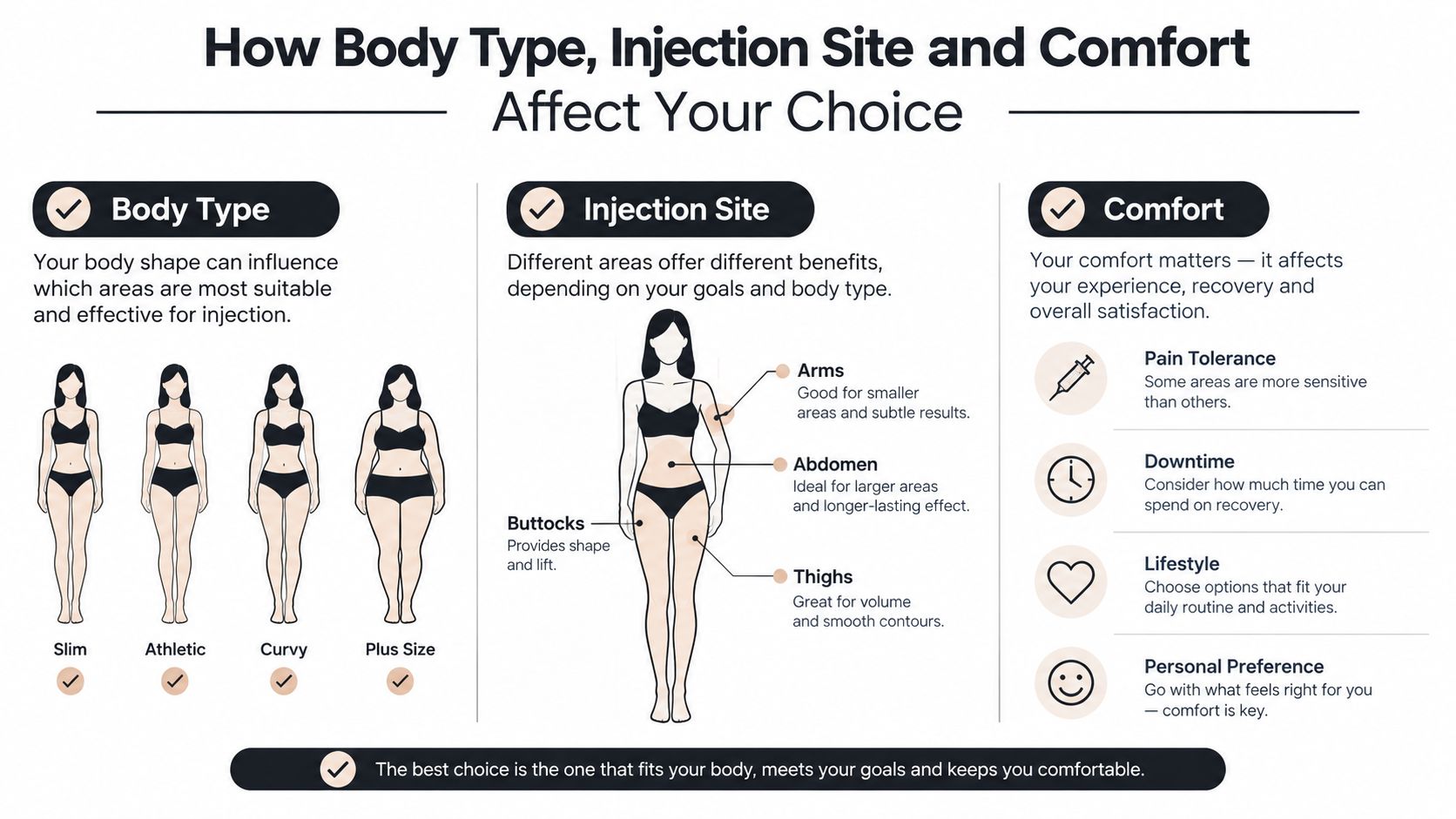
Evidence-based guidance indicates that 4 mm pen needles are safe and effective even in adults with obesity, while longer needles can raise intramuscular risk if used without an appropriate skinfold. It also notes that 5 mm can be acceptable, but 6 mm and above are generally reserved for specific advice, as described in this NHS pen needle guidance document.
Body size doesn't automatically change the answer
That can feel counterintuitive. People often think, “If I have more body fat, shouldn't I need more needle?” For subcutaneous GLP-1 delivery, not usually. The target is still the tissue just under the skin. A longer needle may increase depth without improving the injection.
Injection site changes comfort more than people expect
Your abdomen, thigh, and upper arm are common subcutaneous sites, but many patients find one area easier than another. Often, the best site is the one you can reach comfortably, use consistently, and rotate without overthinking it.
If you want a more detailed walkthrough of site options, this guide to injection sites for Wegovy gives a practical overview of what patients usually compare.
Needle phobia is real, and design matters
Many people aren't just worried about pain. They're reacting to the sight and anticipation of the needle itself. Recent public-facing guidance highlights that GLP-1 auto-injectors often use concealed, very fine needles, typically 31G to 32G and 4 to 5 mm, specifically to reduce the physical and psychological experience of injection, as discussed in this GLP-1 needle phobia FAQ.
That's a meaningful distinction. “What size is it?” often means, “How scary will this feel?”
If the needle is hidden, very fine, and used once a week, many people find the routine becomes ordinary much faster than they expected.
A comfort-first checklist
- If you're using a pen: start with the standard short needle approach unless your clinician says otherwise.
- If you're nervous about pain: focus on thin gauge, a calm setup, and a site you can reach without rushing.
- If you have a larger body: don't assume you need to size up.
- If injections sting or bruise: review site rotation and technique before blaming the needle length.
Safe Injection Technique Dosing and Disposal Best Practices
A good needle choice helps. A calm routine helps more.
What keeps weekly injections comfortable is consistency. Same general time of week, same preparation steps, and a simple check before you inject.
A repeatable weekly routine
Use the instructions that came with your medication and your clinician's guidance, especially if your product is a vial rather than a pen. In general, a safe routine looks like this:
- Check the medication first. Confirm the label, make sure it's the correct medication, and look at the solution before use.
- Wash your hands. That step is easy to skip when you're in a hurry.
- Choose a site you haven't overused. Rotate between appropriate areas rather than hitting the same exact spot each week.
- Prepare the device correctly. Pen setup and syringe setup are not the same, so follow the directions for your format.
- Insert at the angle instructed for your device. Many short pen needles are used straight in for subcutaneous delivery.
- Inject steadily. Don't jab, hesitate, pull back early, or rush the hold time if your instructions say to keep the device in place briefly.
- Dispose of the used needle right away. Don't set it on the counter “for later.”
For a practical step-by-step demonstration focused on semaglutide technique, this guide on how to inject semaglutide can help reinforce the routine.
Dosing errors matter more than needle drama
With pens, the process is often simpler because the device is designed around preset or clearly selected dosing. With vials and syringes, the bigger risk is often measurement confusion rather than the needle itself.
That's why it's smart to pause if anything on the label, syringe, or instructions doesn't match what you expected. If you're unsure, contact your prescriber or pharmacist before injecting.
Disposal and handling habits that protect everyone
- Use a new needle each time. Reuse makes the process less hygienic and often less comfortable.
- Place used sharps into an appropriate container. Don't leave loose needles in household trash.
- Store medication as instructed. Follow the product-specific storage directions from your pharmacy or manufacturer.
- Pack thoughtfully for travel. Bring enough supplies, your instructions, and a safe disposal option.
Safety note: The injection is only one part of the process. Storage, correct dosing, and disposal are part of the same routine.
Common Questions About GLP 1 Needle Size Answered
A lot of needle-size confusion starts after a routine change. Someone switches pharmacies, gets a new box, sees different supplies, and assumes the needle must now match their body size or the brand name. In reality, the first question is simpler: are you using a pen, or are you drawing medication from a vial?
Do I need a different needle length if I switch GLP-1 brands
Sometimes, yes, but the deciding factor is usually the device, not the drug name on the carton. If you switch from one prefilled pen to another prefilled pen, the needle often stays in the same short, fine category because both devices are built for shallow under-the-skin delivery. If you switch from a pen to a vial and syringe, ask the pharmacy to review the whole setup with you, including the syringe markings and the needle attached to it. The bigger risk in that switch is often using the wrong measuring tool, not choosing a needle that is too short.
Should I use a longer needle if I'm heavier
Body size by itself does not usually call for a longer pen needle. For GLP-1 injections, the target is the fatty layer under the skin, and short pen needles are designed to reach that layer across a wide range of body types.
What changes more than body weight is technique. If a person is very lean, their clinician may suggest a skin pinch at some sites. If a person carries more weight, they still usually do not need a much longer pen needle. The common myth is “bigger body, bigger needle.” For subcutaneous pens, that idea does not hold up well in practice.
Is reusing a pen needle ever a good idea
Use a new pen needle each time. Reuse dulls the tiny beveled tip, so the second or third injection can sting more even if the needle looks fine. It also raises the chance of contamination and can let medication or air affect how the pen performs after use. If cost or supply shortages are pushing you toward reuse, bring that up directly with your pharmacist or prescriber instead of stretching your supplies.
Why does the shot sting sometimes even with a tiny needle
A small needle does not guarantee a sensation-free injection. Skin can be more reactive in one area than another, and cold medication can feel sharper going in. If your label allows it, let refrigerated medication sit out for a few minutes before use so it is not going in ice-cold.
Your pace matters too. If you tense your hand, press hard, or inject into the exact same zone week after week, the area can become more tender. Rotating within the approved site works like giving one patch of skin a day off. Tiny changes in routine often help more than changing needle length.
If I use a vial, can I just follow pen advice
Pen advice only gets you part of the way there. A pen is a built-in delivery system. A vial-and-syringe setup asks you to do more of the measuring and assembly yourself.
That means two extra checks matter. First, confirm the syringe type and markings match the prescribed dose. Second, make sure you know whether the needle on that syringe is meant for comfortable subcutaneous use. With vials, people often focus on needle length and miss the more important question: “Am I drawing up the right amount correctly?”
What should I ask my provider or pharmacy
Bring practical questions, not just “What size needle do I need?”
- Am I using a pen or a vial and syringe?
- What exact needle or syringe should I leave the pharmacy with?
- Can you show me where the dose mark is on this syringe or how this pen needle attaches?
- Do you want me to pinch the skin at my usual injection site, or inject flat against the skin?
- If stinging, bruising, or anxiety keeps happening, what should I change first?
Those questions usually lead to clearer, safer instructions because they connect needle choice to the actual device in your hand and to how comfortable you feel using it.
If you want clinician-guided help with GLP-1 treatment, device instructions, and ongoing dose support, Weight Method offers telehealth care for adults using FDA-approved semaglutide or tirzepatide. It's a practical option if you want your medication plan, injection guidance, and follow-up support handled in one place.