Weight Method reports 12 pounds lost in the first month on average and 18% average weight loss over time, but those figures describe supplied aggregate outcomes, not a promise for every patient. A responsible gallery must ask what the photograph leaves out: the starting weight, treatment timeline, medication and dose, adherence, side effects, body-composition changes, functional improvements, and the provider's interpretation.
The strongest before and after results pair visual evidence with measurements collected under consistent conditions. Photos should use similar lighting, clothing, posture, and camera angle. Weight should be interpreted alongside waist measurements, strength, energy, appetite, and relevant clinical monitoring. A single “after” image can show change, but it can't establish whether the change was typical, durable, or achieved without meaningful treatment difficulties.
The examples below distinguish supplied aggregate figures from individual variability. They don't add unsupported laboratory values, demographic outcomes, or guarantees. Patient materials should be verified, and any testimonial should clearly identify its timeframe and treatment context.
GLP-1 medications also require clinical screening, prescribing, dose adjustments, and follow-up. Eligibility differs by patient, and compounded medication status should be explained wherever relevant. Side effects can require medical attention. Speak with a licensed healthcare professional before beginning treatment.
1. Patient Weight Loss Journey From Month 1 to Month 6
A six-month story can look dramatic in photographs, yet the timeline matters more than the final pose. Weight Method's supplied materials describe an average first-month loss of 12 pounds and an average long-term loss of 18%, but those figures shouldn't be converted into an expected result for an individual patient.
A documented semaglutide journey may show an early reduction followed by continued change during dose titration. The clinical question isn't whether every month produced the same loss. It's whether the patient received appropriate monitoring, tolerated the medication, and maintained a plan that matched their response.
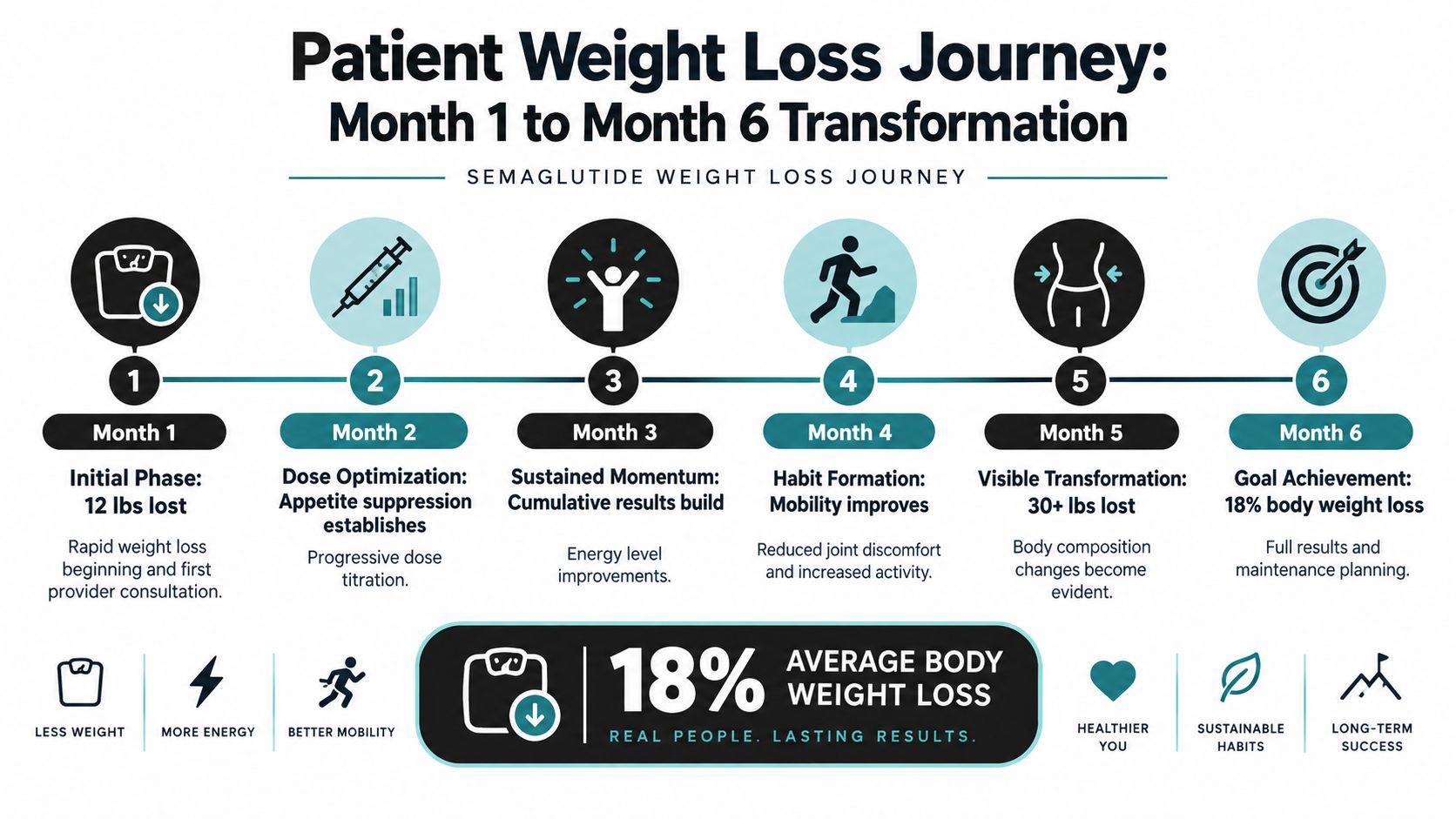
What the gallery should record
A useful patient record includes:
- Weekly weight and measurements: Record trends rather than treating one reading as definitive.
- Appetite and intake patterns: Note whether hunger, cravings, meal size, or eating frequency changed.
- Energy and activity: Track how walking, stairs, exercise, or daily tasks feel over time.
- Provider communication: Preserve questions, dose changes, symptom reports, and clinical guidance.
- Standardized photographs: Use consistent lighting, clothing, posture, and distance.
For more context on how progress can unfold, compare the documented timeline with Weight Method's GLP-1 weight-loss timeline. Sleep quality can also affect how a patient experiences appetite, recovery, and daily energy, so a relevant sleep quality for fat loss resource may help frame the behavioral context without claiming that sleep alone caused the result.
Practical rule: A six-month “after” photo is stronger evidence when the record also shows what happened during the six months.
2. Professional Success Story for a Busy Executive
A demanding schedule tests whether treatment can be followed consistently. For an executive who travels, works remotely, or manages a crowded calendar, video consultations, home delivery, and secure provider messaging may reduce logistical friction. They do not remove the need for regular medication use, symptom reporting, and clinical oversight.
The record should connect treatment to work conditions. Note whether injection routines continued during travel, whether the patient answered provider messages, and how meals were planned around meetings. Also record disruptions, such as illness, missed doses, or schedule changes, rather than presenting an uninterrupted timeline.
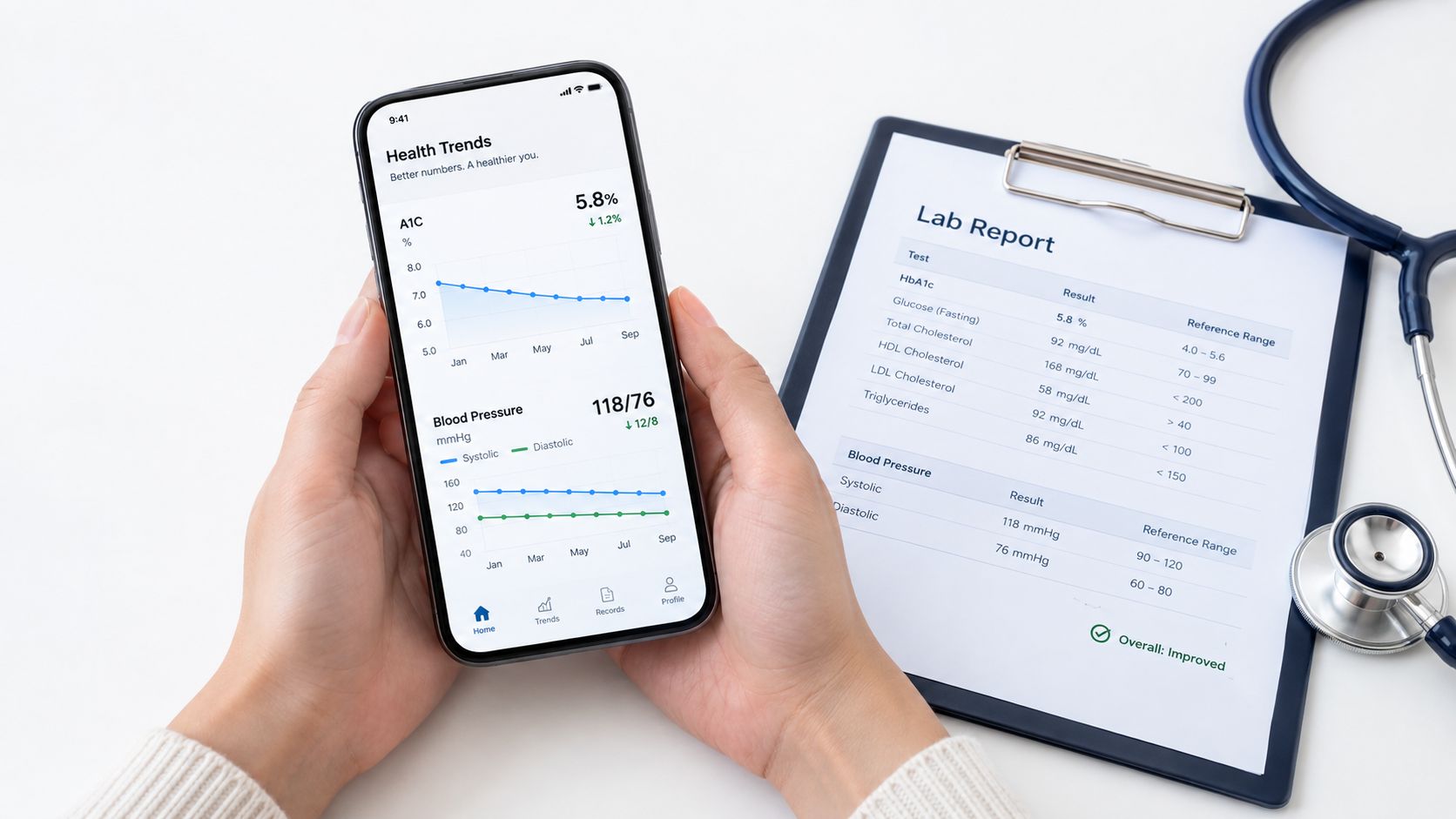
A stronger gallery pairs the image with dated weight and body-composition or functional measures, medication context, tolerance notes, and provider interpretation. Improved confidence in meetings or greater comfort during work travel can be recorded as individual observations. They should remain separate from supplied aggregate figures and should not be treated as expected outcomes for every patient.
Build a verifiable workday timeline
Choose one weekly injection day and use calendar reminders during travel or periods of heavy scheduling. Keep provider notifications in the same record, since messages may document symptom checks, dose adjustments, and clinical guidance. Meal preparation can also show how the patient responded to appetite changes on demanding days.
The useful comparison is structured care versus an undocumented photo sequence. It asks what happened, under which constraints, and how the provider adjusted the plan when tolerance or adherence changed. That context makes an executive case study more informative than a polished portrait alone.
3. Chronic Diet Failure to Medical Success
Repeated dieting may leave patients familiar with food rules but uncertain that another plan will last. A useful before-and-after record therefore begins with treatment history, not a polished photograph. It should identify prior calorie counting, keto, Paleo, restriction, coaching, or exercise efforts, along with how long each lasted and why it ended.
The recurring barrier often explains more than the diet label. Hunger, schedule conflicts, social eating, fatigue, and regain can show why adherence changed. These observations describe one patient's experience. They do not establish that medication will produce the same result for someone else.
A medically supervised GLP-1 approach adds provider assessment, eligibility review, tolerance monitoring, and dose adjustment. The patient still makes decisions about meals, hydration, movement, and follow-up. The record should show how those elements worked together, rather than presenting medication as a substitute for lifestyle support.
Read the change as a monitored case
A verification-first gallery can pair the initial account with dated follow-up notes, appetite and eating-pattern observations, medication and titration context, tolerance reports, and the provider's interpretation. If the patient reports fewer hunger episodes or more consistent meals, label those as individual observations. Separate them from any supplied aggregate figures, which cannot predict every patient's response.
One short comparison can clarify the evidence:
Documented: prior approaches, duration, barriers, treatment changes, and observed response.
Illustrative: an “after” image suggesting improved confidence or routine stability.
The provider's reasoning matters as much as the visible result. It should explain why the selected treatment and monitoring plan fit the patient's circumstances, while avoiding unsupported claims about specific hormones or guaranteed success. A credible outcome shows a change in medical support and measured follow-up, not a failure of personal discipline.
4. Health Marker Improvement Beyond Appearance
A photograph cannot show whether health markers changed. A credible before-and-after record starts with baseline measurements, then compares the patient's own laboratory and vital-sign data over time. Depending on clinical relevance, a provider may monitor A1C, triglycerides, blood pressure, cholesterol, or other measures. Testimonials should not supply values that the record does not contain.
Appearance and clinical progress can follow different timelines. A patient may report feeling better before a laboratory result changes. Conversely, a result requires interpretation alongside medication use, diabetes status, diet, illness, and testing conditions.
Verify the metric before interpreting the outcome
Select measures according to the patient's care plan, then document why and when follow-up testing occurred. A useful gallery can show the evidence in a compact comparison:
- Baseline context: State why each test was ordered and describe the starting status.
- Comparable testing: Use the same measurement type where possible, while noting treatment or health changes between tests.
- Medication context: Record other medicines that may affect blood pressure, glucose, or lipids.
- Provider interpretation: Separate the recorded result from an assumption about its cause.
- Patient relevance: Explain how the finding informed care, rather than presenting it as promotional proof.
The timeline should also include tolerance notes and relevant body-composition or functional measures when available. These details help distinguish a documented change from an illustrative claim. Supplied aggregate figures may describe a broader treatment experience, but they do not predict an individual patient's response.
“Prediabetes became normal” requires the underlying test records and clinician interpretation. Without them, use narrower wording, such as a documented change in laboratory monitoring. That phrasing does not prove a specific metabolic outcome.
A verification-first gallery therefore pairs each result with its testing conditions, medication context, follow-up interval, and provider explanation. It can show meaningful progress without implying that weight loss guarantees normalization of every marker. Medication changes remain decisions for a qualified clinician.
5. Physical Capability Restoration
Functional change can be more informative than appearance alone. Climbing stairs with less difficulty, walking farther, playing with children, returning to an outdoor activity, or resuming a sport may show practical improvement. Each outcome remains patient-specific, so the record should identify the timeline, treatment context, and provider interpretation rather than present it as a predictable medication result.
Start with the original limitation. “I exercise more now” provides little evidence. A stronger comparison states which activity was difficult, how performance changed during follow-up, whether medication or other health changes occurred, and whether activity increased gradually under appropriate clinical guidance.
A useful functional record may include:
- Activity duration: Record how long the patient moved and how often, using comparable activities across visits.
- Perceived exertion: Note breathlessness, pain, fatigue, and recovery after movement.
- Daily function: Describe stairs, errands, childcare, household tasks, or work demands that were previously limited.
- Milestones: Record a first longer walk or return to a favorite activity, with the date and relevant conditions when available.
- Tolerance and safety: Document dizziness, unusual shortness of breath, persistent fatigue, or pain, and note when clinical review was required.
Low-impact movement, such as walking, swimming, or mobility work, may offer a manageable baseline for some patients, subject to individual advice. The activity plan should reflect starting ability, symptoms, treatment response, and any relevant medication effects. An outcome gallery can pair these observations with supplied aggregate figures, while keeping those broader figures separate from one patient's experience.
A “before” image cannot show breathlessness, joint discomfort, or reduced endurance. An “after” photo cannot establish that symptoms resolved. Functional measures provide that missing evidence, but they do not replace clinical assessment.
6. Body Composition and Muscle Preservation
A lower scale reading cannot show whether the change came from fat, lean tissue, water, or a combination. Verification therefore requires more than photographs. A patient may look more defined while weight changes slowly, or lose weight while needing a stronger plan to support muscle and function.
A useful gallery pairs the timeline with treatment and medication context, waist or other circumference measurements, strength records, and a body-composition method selected with professional guidance. Results remain individual. Starting status, nutrition, resistance training, illness, treatment response, and measurement quality can all affect the outcome, so protein intake and exercise should not be presented as guarantees of muscle preservation.
Match appearance with measurable context
The record should identify:
- Strength progression: Repeat selected exercises under comparable conditions instead of comparing unrelated workouts.
- Training pattern: Note resistance-work frequency and meaningful changes to the plan.
- Nutrition and treatment context: Record eating patterns, provider or dietitian guidance, medication changes, and tolerance notes where relevant.
- Assessment method: Name the tool, explain its limits, and repeat testing under similar conditions.
- Visual and functional evidence: Use photographs alongside measurements and performance records, since no single measure is complete.
Weight Method's guidance on avoiding muscle loss helps frame treatment around body composition and function. A resource on professional fitness assessment methods explains why different testing tools may produce different readings.
Aggregate figures supplied by a provider can establish the broader context, but they do not predict one patient's result. A posed photograph cannot verify muscle preservation. Repeatable testing, strength records, nutrition context, and clinician interpretation provide stronger evidence.
7. Confidence and Mental Health Transformation
Confidence can change alongside weight, but the relationship is individual rather than automatic. A patient might report less social avoidance, renewed interest in dating, or greater ease in professional conversations. Those observations belong in the record as personal outcomes, not evidence that GLP-1 therapy treats depression, anxiety, stigma, or isolation.
A useful gallery pairs the patient's account with timeline and treatment context. Record when the change was reported, current medication, dose adjustments, tolerance, counseling, psychiatric care, and other support. A single testimonial describes experience. It does not establish a clinical diagnosis or prove that medication caused the improvement.
Document wellbeing without overstating it
Use concrete evidence where available:
- Patient account: Quote or summarize changes in confidence, mood, social participation, and daily functioning.
- Validated assessment: If a clinician used PHQ-9 or GAD-7, identify the tool and report only documented results. Do not invent scores.
- Behavioral markers: Returning to a hobby, attending events, or speaking more often at work gives the claim observable context.
- Provider interpretation: Ask a qualified clinician to distinguish reported wellbeing from symptoms requiring treatment.
- Privacy and consent: Obtain permission for photographs, video, and identifiable personal details.
The comparison should show both improvement and remaining concerns. A patient may feel more capable while anxiety or body-image distress persists. Treatment for mental health conditions should continue independently when indicated, including counseling, psychiatric care, or crisis support. That qualification makes the outcome more credible, because a polished photograph cannot carry claims that the documented evidence does not support.
8. Cost Benefit and Health Spending
Cost comparisons require a defined period and matching categories. Weight Method's publisher information lists pricing starting at $149 per month, with an introductory promotion of $99 for the first month, and states that FSA/HSA eligibility may apply. These are program terms, not evidence that every patient saves money. Readers should verify current pricing and eligibility directly.
The patient record should separate listed charges from personal spending. Monthly fees may sit alongside clinical visits, laboratory testing, medication, nutrition support, exercise services, travel, and side-effect management. Comparing those totals with a traditional program is meaningful only when both records cover similar services and the same timeframe.
A useful ledger can show:
- Current treatment cost: Record the program, medication, consultations, and required monitoring.
- Previous spending: Include commercial programs, memberships, supplements, coaching, and unused services.
- Benefits eligibility: Confirm FSA or HSA rules with the plan administrator.
- Health-related changes: Discuss medication adjustments and clinical outcomes with a provider.
- Long-term uncertainty: Do not assign disease-prevention savings without patient-specific evidence.
The provider context matters. A lower bill may reflect fewer services, while a higher bill may include monitoring or support that affects treatment safety. Those trade-offs should appear beside the outcome timeline rather than being converted into a simple savings claim.
A money-back policy, if available under stated terms, can reduce perceived financial risk, but it does not guarantee a clinical result. An online testimonial about spending less is also not an economic analysis. A verification-first gallery identifies assumptions, distinguishes supplied aggregate figures from individual costs, and notes that insurance coverage and eligibility vary.
9. Medication Tolerance and Side Effect Resolution
An early treatment photo can appear encouraging while nausea, constipation, fatigue, or another adverse effect limits daily life. Tolerance therefore belongs beside the weight timeline. Symptoms may change as treatment continues, but a fixed resolution schedule requires documented evidence.
Dose titration links treatment progression to the patient's response and tolerance. A provider may delay, maintain, or adjust the dose after reviewing symptoms and clinical context. Patients should not increase doses independently because another patient's before-and-after record appears to show faster progress.
A verification-first record should make the difficult weeks visible. Useful entries include:
- Symptom description: Record severity, timing, triggers, and effects on eating or daily activities.
- Food adjustments: Smaller meals or avoiding personally triggering foods may help some patients, but recommendations remain individualized.
- Hydration and bowel habits: Track relevant changes without treating one fluid target as universal.
- Dose decisions: State what the provider changed and the reason documented for that decision.
- Escalation concerns: Persistent, severe, or worrying symptoms require prompt medical advice.
Weekly notes can clarify whether improvement followed time, a food change, a dose adjustment, or another intervention. That distinction matters when interpreting an individual outcome, since supplied aggregate results cannot establish how every patient will tolerate treatment.
Weight Method's titration schedule offers background for discussing dose progression, but it does not replace individualized prescribing. A credible “after” account states which effects continued, improved, or required a revised plan. It records tolerance as an outcome, not an inconvenient detail removed from the final image.
10. Age and Demographic Diversity
Age range alone does not establish whether a gallery represents different treatment experiences. Adults in their 30s, 40s, 50s, 60s, and beyond may begin with different body composition, diabetes status, menopause status, medications, mobility, and prior treatment histories. Those variables can affect weight change, functional progress, tolerability, and monitoring needs.
Weight Method's publisher materials provide age-range context, not guarantees for any individual. Claims about reversing prediabetes, improving A1C, building muscle, or maintaining weight need corresponding records and clinician interpretation. A before-and-after photograph cannot show which factors shaped the result.
A verification-first gallery should pair each image with the evidence needed to interpret it:
- Starting context: Record relevant weight, health history, body-composition information, and functional limitations when appropriate.
- Treatment context: Name semaglutide or tirzepatide only when verified. Describe the monitored plan without inferring an unreported dose.
- Timeline: State when photographs, measurements, and functional assessments were collected.
- Comorbidities: Include conditions only when documented, and identify medication context where it affects interpretation.
- Outcome boundaries: Distinguish patient-reported changes from measured clinical outcomes, tolerance notes, and provider interpretation.
Representation should improve comparison rather than compress different patients into one expected result. A post-menopausal patient, a man prioritizing strength, and a patient living with type 2 diabetes may require different goals and follow-up. Supplied aggregate figures can describe a broader group, but they do not predict individual variability. The most useful record makes those differences visible.
Before & After: 10 Outcome Comparisons
| Example | Implementation complexity | Resource requirements | Expected outcomes | Ideal use cases | Key advantages |
|---|---|---|---|---|---|
| Patient Weight Loss Journey: Month 1 to Month 6 Transformation | Moderate, medication titration, weekly injections, provider follow-up | Semaglutide, telehealth visits, weekly monitoring, lifestyle support | Rapid initial loss then sustained progress; ~18% average body-weight reduction over 6 months | Patients seeking structured medical weight loss with ongoing clinician support | Demonstrates typical trajectory and validated medication efficacy with provider oversight |
| Professional Success Story: Busy Executive Weight Loss Without Lifestyle Disruption | Low–Moderate, telehealth workflow, self-injection discipline | Smartphone/app, home delivery, asynchronous messaging, flexible consults | Weight loss achieved with minimal routine disruption (varies by individual) | Busy professionals, remote workers, executives needing convenience | High convenience and privacy; minimal time commitment and scheduling barriers |
| Chronic Diet Failure to Medical Success: Evidence-Based Weight Loss | Moderate, medical management and patient education | GLP-1 medication, clinician education, follow-up consultations | Significant, sustained weight loss (examples 15–20%); reduced cravings/hunger | Patients with repeated diet failures or yo-yo dieting history | Addresses physiological causes of weight regain; reduces stigma and blame |
| Health Marker Improvement: Blood Work and Clinical Metrics | Moderate, requires coordinated lab testing and interpretation | Baseline and follow-up lab tests (A1C, lipids, BP), clinician review | Objective improvements in A1C, lipids, BP and other metabolic markers over 3–6 months | Patients with cardiometabolic risk (prediabetes, high lipids, hypertension) | Provides objective medical evidence of health benefit beyond weight |
| Physical Capability Restoration: Mobility and Activity Level | Low–Moderate, medication plus graduated activity plan | Physical therapy or exercise program, activity tracking, clinician guidance | Improved walking distance, reduced joint pain, better exercise tolerance within months | Patients limited by mobility or joint pain aiming to restore function | Measurable functional and quality-of-life improvements; supports sustained activity |
| Body Composition Transformation: Muscle Preservation During Weight Loss | High, coordinated resistance training and nutrition alongside meds | Strength-training program, adequate protein intake, body composition testing (DEXA/BIA) | Fat loss with preserved or increased muscle mass; improved strength metrics | Patients prioritizing aesthetics, fitness athletes, those wanting metabolic rate preservation | Maintains lean mass, supports long-term metabolic health and better appearance |
| Confidence and Mental Health Transformation: Psychological Impact | Low–Moderate, requires psychosocial support and assessment tools | Mental health screening (PHQ-9/GAD-7), counseling resources, testimonial documentation | Improved self-esteem, reduced anxiety/depression symptoms (variable, subjective) | Patients seeking holistic wellbeing and emotional benefits from weight change | Deep emotional and social benefits; compelling patient narratives and improved life quality |
| Cost-Benefit Analysis: Investment Return Through Health Savings | Low, financial modeling and transparent pricing comparisons | Program pricing data, FSA/HSA eligibility checks, long-term cost projections | Lower annual program cost vs. many alternatives; projected long-term healthcare savings | Cost-conscious patients comparing program value and ROI | Transparent pricing, tax-advantaged options, clear value proposition and money-back guarantee |
| Medication Tolerance and Side Effect Resolution: Optimization Timeline | Moderate, requires careful titration and symptom management | Titration schedule, patient education, frequent provider communication | Early GI side effects commonly resolve by weeks 3–5 with slow titration | Patients concerned about tolerability or prior adverse reactions | Normalizes side effects, reduces early dropout, and improves long-term adherence |
| Age and Demographic Diversity: Successful Outcomes Across Patient Populations | Moderate, individualized plans for varied patient profiles | Diverse case curation, tailored treatment adjustments, inclusive communications | Effective outcomes across ages, genders, BMIs and comorbidities with individual variability | Broad patient populations seeking representative and relatable results | Inclusive credibility; demonstrates applicability across demographics and health statuses |
How to Read These Results Responsibly
The aggregate picture is useful, but it has limits. Weight Method supplies an average first-month loss of 12 pounds and an average long-term loss of 18%. In the STEP 1 trial, adults with obesity receiving semaglutide 2.4 mg lost an average of 14.9% of body weight over 68 weeks, compared with 2.4% with placebo; 86.4% lost at least 5%, 69.1% lost at least 10%, and 50.5% lost at least 15%. These results helped establish weekly GLP-1 treatment as an evidence-based weight-loss approach, but a trial average still isn't an individual forecast. The STEP 1 figures are reported here.
Routine care can look different from a controlled trial. In a real-world cohort of 44,025 patients, semaglutide users reached 7.2% total weight loss at one year and 8.8% with longer follow-up, while tirzepatide users reached 11.7% to 11.9% across the same periods. Sleeve gastrectomy remained a stronger comparator, at about 22.0% total weight loss at three years in that analysis. The cohort comparison is available in Obesity.
A separate U.S. real-world study found that GLP-1-naïve patients using tirzepatide lost 10.2 kilograms on average after twelve months, compared with 6.1 kilograms for semaglutide. At least 5% loss was reached by 81.8% of tirzepatide users and 64.6% of semaglutide users, while at least 10% was reached by 62.1% and 37.1%, respectively. The patient-level comparison is indexed by PubMed.
Durability deserves equal prominence. Evidence summarized in a 2025 meta-analysis and related reviews describes weight regain after discontinuation, while newer real-world data show mixed trajectories. Some patients maintained or continued losing weight after stopping, while a substantial share regained weight during follow-up. A Cleveland Clinic analysis cited in the supplied evidence found that patients had lost about 8.4% before stopping and regained 0.5% on average at one year, with 55% regaining and 45% maintaining or continuing loss. Another cited review reported about 5.63 kilograms of weight gain and HbA1c increases after discontinuation in obesity populations. The supplied discontinuation evidence is discussed here. Additional subgroup context reports about 9.2% weight recurrence among people with at least 20% initial loss. That analysis is summarized by Medscape.
Use this comparison checklist before trusting any gallery:
- Starting point: What were the patient's weight, health conditions, medications, and functional limits?
- Timeframe: Was the photo taken after weeks, months, or longer?
- Medication context: Which medication was used, and was the treatment prescribed and monitored?
- Adherence and interruptions: Were doses missed, paused, or stopped?
- Body composition: Are there measurements or strength records beyond appearance?
- Tolerance: What side effects occurred, and how did the provider respond?
- Maintenance: Does the record show what happened after peak loss or discontinuation?
- Evidence quality: Are the images consistent, and are claims supported by actual records?
Medical disclaimer: Weight Method outcomes are individual. Supplied averages and ranges aren't guarantees. Medication eligibility, prescribing, and dosing require a licensed provider. Concerning or severe side effects need medical attention. Consult a qualified clinician before starting, changing, or stopping treatment.
Readers can review the available Weight Method program information and compare its monitoring, consultations, progress tracking, and support features with their own clinical needs. If you're evaluating testimonials or video social proof for small business, treat them as patient experiences, not substitutes for medical evidence.
If you're comparing before and after results, review the timeline, treatment context, tolerance notes, and maintenance information rather than relying on photos alone. Visit Weight Method to review its telehealth program and discuss individualized eligibility and treatment questions with a licensed provider.