A doctor can prescribe Mounjaro and phentermine together off-label, but there are no FDA-approved dosing guidelines or randomized clinical trials proving the combination is safe or effective. The FDA-established Mounjaro starting schedule is 2.5 mg once weekly, increasing to 5 mg after 4 weeks, but that schedule applies to tirzepatide, not to a tirzepatide-phentermine combination.
The popular advice is to run both medicines through a pharmacy interaction checker and accept a clean result as reassurance. That approach misses the central clinical problem. The question isn't only whether the two drugs can physically be taken together. It's whether a particular patient can tolerate two appetite-suppressing mechanisms, one of them a stimulant, without avoidable cardiovascular, psychiatric, gastrointestinal, or nutritional harm.
The Reality of Combining Mounjaro and Phentermine
Mounjaro, whose active ingredient is tirzepatide, is FDA-approved as an adjunct to diet and exercise for glycemic control in adults with type 2 diabetes. Its prescribing information describes tirzepatide alongside specified diabetes treatments, but it doesn't identify phentermine as an approved combination partner or provide combination dosing instructions. That means there's no FDA-established dose, duration, or risk-benefit estimate for taking the two together. The FDA prescribing information for Mounjaro makes that boundary clear.
Phentermine is individually prescribed as a sympathomimetic appetite suppressant. Tirzepatide is individually prescribed through incretin pathways. Individual approval doesn't transfer automatically to every possible drug pairing. A clinician may decide that off-label combination treatment is reasonable in a carefully selected patient, but that decision rests on clinical judgment and extrapolation rather than an established regimen.
Why a clean interaction check isn't enough
Pharmacy software is useful for identifying known pharmacologic conflicts. It may flag contraindications, duplicate ingredients, or interactions documented in available databases. It can't tell you whether the combination has been tested in the population you're treating, whether the expected benefit outweighs the uncertainty, or how much cardiovascular strain a specific patient can tolerate.
That distinction matters because the available evidence for tirzepatide plus phentermine isn't a randomized comparison of combination therapy against either medicine alone. It also doesn't establish which tirzepatide dose, phentermine dose, treatment duration, or monitoring schedule produces a favorable balance of benefit and harm.
Practical rule: The absence of a listed contraindication is not evidence that an unstudied combination is safe.
Before considering both medicines, a prescriber should review blood pressure, resting pulse, cardiovascular history, diabetes treatment, psychiatric history, sleep, eating patterns, substance-use risk, and every prescription or supplement being used. The patient shouldn't start, stop, or combine either medication independently. A plateau or persistent hunger also deserves assessment before adding a stimulant, because the cause may be dose titration, adherence, sleep, diet, or an untreated medical condition.
How These Distinct Weight Loss Mechanisms Interact
Tirzepatide and phentermine reduce appetite through different physiological routes. Tirzepatide activates GIP and GLP-1 receptors, influencing appetite regulation and slowing gastric emptying. Phentermine is a sympathomimetic stimulant that increases norepinephrine signaling in the central nervous system. That can reduce hunger, but it can also raise heart rate, blood pressure, anxiety, and the risk of insomnia. Phentermine prescribing information describes the stimulant-related concerns that make this pairing more than a simple appetite calculation.
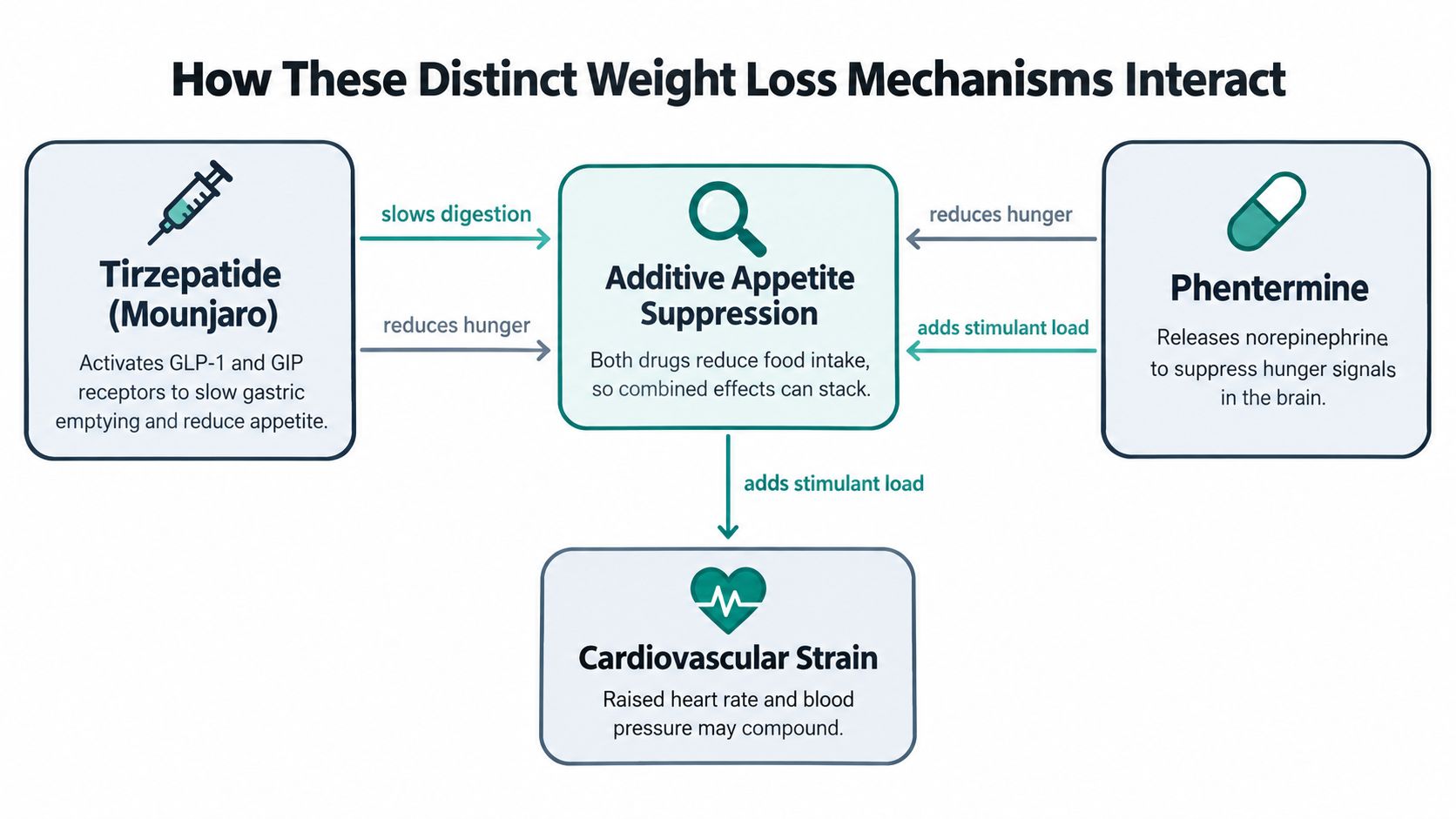
One pathway slows digestion, the other adds stimulant load
Tirzepatide can make meals remain in the stomach longer and may reduce the desire to eat. That can be useful for appetite control, but nausea, vomiting, diarrhea, and difficulty maintaining fluid intake can become clinically important, particularly during dose escalation or illness. Delayed gastric emptying can also affect the absorption of oral medicines, so a prescriber needs to know what else the patient takes.
Phentermine adds a different kind of pressure. Its norepinephrine activity can create stimulation, restlessness, palpitations, raised blood pressure, anxiety, or difficulty sleeping. Some patients may experience stronger appetite suppression when both medicines are used, but that effect isn't a validated treatment advantage. It may instead make it harder to recognize that the patient is eating too little, drinking too little, or developing symptoms from the stimulant.
Patients who want broader context on digestion and nutrient processing can review how enzymes support nutrition, but that information doesn't replace medication monitoring or resolve the uncertainty around this drug combination. A useful comparison of the two medication classes is also available in GLP-1 versus phentermine.
The overlap creates a monitoring problem
The two drugs don't perform the same job twice. They can produce additive appetite suppression while affecting separate systems. One changes gut-hormone signaling and gastric function. The other increases sympathetic stimulation. That combination may be clinically plausible in selected circumstances, but its net effect is difficult to predict without direct trial evidence.
The practical concern is not just weight loss. It's whether the patient can maintain adequate nutrition, hydration, sleep, emotional stability, and cardiovascular control while taking both medicines.
What the Clinical Evidence Actually Shows
The evidence gap is substantial. Tirzepatide and phentermine each have their own prescribing information and clinical research, but those data don't establish what happens when the medicines are used together. A result from a tirzepatide study cannot be treated as the expected result from tirzepatide plus phentermine, and phentermine outcomes cannot be added to it.
A recent medical case report described two adults with acquired hypothalamic obesity who received tirzepatide-based combination treatment. One reported tirzepatide with phentermine, while another used tirzepatide with phentermine/topiramate. The report emphasized that the evidence consisted of individual cases rather than randomized trials, and that trials hadn't established the efficacy or safety of tirzepatide with phentermine-based therapy. The published case report is useful for showing the evidence gap, not for predicting what will happen to a typical patient seeking weight loss.
Why single-drug results don't answer the combination question
A randomized trial controls how participants are selected, how treatment is assigned, what outcomes are measured, and how adverse events are compared. A case report does none of those things at the same level. It may identify a clinically interesting possibility, but it can't show that the combination caused the outcome or that the same result would occur in people with different medical histories.
The people described in the case report had acquired hypothalamic obesity, a specialized condition that isn't interchangeable with the broader group of adults who use tirzepatide or phentermine for obesity management. Their treatment context, prior therapies, metabolic factors, and monitoring may differ considerably from those of a patient in primary care.
What the existing context can and can't tell us
The case report cited contextual findings from separate evidence. A cited meta-analysis found approximately 7.3% average weight reduction after 2–24 weeks of phentermine at 15–30 mg, while phentermine/topiramate trials reported roughly 5.1%–10.9% weight reduction over 56 weeks. Those figures describe separate treatment contexts and must not be added to tirzepatide results or interpreted as the expected benefit of combining the drugs. The report and its cited evidence support caution, not a dosing formula.
For now, the honest clinical conclusion is narrow: a prescriber might consider the combination off-label for an individual patient, but no adequate trial has established that it is safer or more effective than a well-managed single-drug approach. That uncertainty should change the standard of care. It calls for careful selection, explicit consent about unknowns, and close follow-up rather than casual prescribing.
Critical Warning Signs and Monitoring Requirements
If a clinician approves off-label use, monitoring should begin before the first combined dose. The baseline review should include resting heart rate, blood pressure, cardiovascular history, anxiety and sleep, current medications, diabetes treatment, eating patterns, and the patient's ability to maintain fluid and protein intake. Follow-up should assess both benefit and harm, not just the number on the scale.
Tirzepatide-related gastrointestinal symptoms can make hydration and nutrition difficult. Phentermine-related stimulation can make sleep and anxiety worse. When appetite falls sharply from two agents, a patient may interpret weakness, dizziness, or a racing heart as a normal part of weight loss when those symptoms deserve prompt assessment.
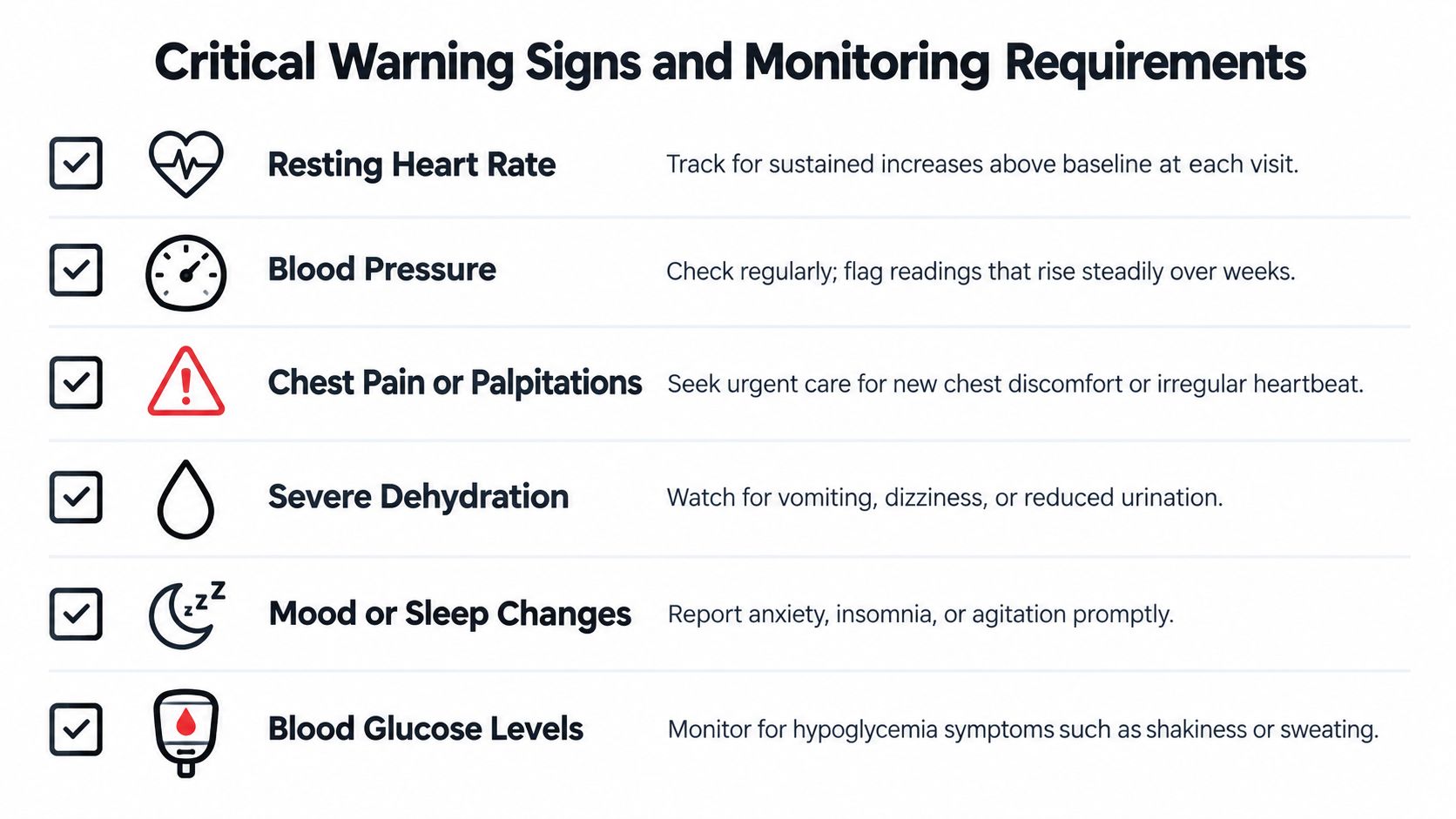
Symptoms that should stop the experiment
Contact the prescribing clinician promptly about new or worsening insomnia, anxiety, agitation, palpitations, persistent nausea, reduced intake, or repeated loose stools. These symptoms can affect safety and may require a dose change, a pause, treatment of dehydration, or a different strategy.
Seek urgent medical evaluation for:
- Chest pain or fainting: These symptoms can indicate a serious cardiovascular problem and shouldn't be watched at home.
- A sustained racing heartbeat: A persistent rise above your usual resting level requires clinical assessment, especially when a stimulant is involved.
- Severe abdominal pain: Severe or persistent pain needs urgent evaluation rather than automatic attribution to a medication side effect.
- Repeated vomiting or dehydration: Dizziness, inability to keep fluids down, markedly reduced urination, or worsening weakness can require urgent care.
- Inability to eat and drink: Profound appetite suppression can compromise hydration, protein intake, and overall nutrition.
- Major mood or sleep changes: Severe anxiety, agitation, or prolonged insomnia should be reported promptly.
These stop-and-contact-care thresholds are consistent with patient-safety guidance for combining complementary appetite pathways. Clinical guidance on warning signs and monitoring emphasizes cardiovascular, gastrointestinal, hydration, and nutritional surveillance.
What to track between appointments
Keep a simple record of symptoms, food and fluid intake, sleep quality, resting pulse, and blood pressure readings if your clinician has recommended home monitoring. Patients with diabetes may also need individualized glucose monitoring, particularly when tirzepatide is used with other glucose-lowering medicines.
A resource on tirzepatide drug interactions can help patients prepare questions, but online interaction information can't replace a prescriber's review of the full medication list. The clinician needs to know about other stimulants, psychiatric medicines, diabetes drugs, and over-the-counter products before deciding whether the combination should continue.
Who Should Strictly Avoid This Combination
Some medical histories make the risk profile unacceptable or require the combination to be rejected. Phentermine's stimulant activity can raise heart rate and blood pressure, so a patient with uncontrolled hypertension, significant cardiovascular disease, concerning rhythm symptoms, or another major cardiovascular vulnerability needs specialist-level review rather than an informal add-on.
The same caution applies to people with severe anxiety, significant insomnia, agitation, or a history of stimulant misuse. Adding a sympathomimetic drug can intensify the symptoms that are already undermining health, sleep, and treatment adherence. Patients with eating-disorder risk also need careful assessment because two appetite suppressants can reinforce restrictive patterns and make inadequate intake harder to detect.
Medication history matters
The prescriber should review all psychiatric and neurologic medicines, not just the two weight-loss drugs. Phentermine's stimulant effects may create problems with other stimulants or medicines that affect norepinephrine, blood pressure, heart rate, anxiety, or sleep. Monoamine oxidase inhibitor therapy is a particularly important issue and must be discussed directly with the prescribing clinician.
A complete review should also include diabetes treatments and oral medicines. Tirzepatide delays gastric emptying, which can affect the absorption of oral medicines, while changes in food intake can alter how a broader diabetes regimen is tolerated. The correct response isn't to stop a medicine independently. It's to ask the prescriber to coordinate the entire regimen.
Situations that need a firm pause
Pregnancy, inability to maintain fluids, active severe gastrointestinal illness, unstable psychiatric symptoms, and uncontrolled cardiovascular risk all call for stopping the combination discussion until a clinician has evaluated the situation. The patient should also disclose sleep problems, substance-use history, and any pattern of compulsive restriction or bingeing.
For readers comparing regulated options, FDA-approved weight-loss pills offer useful background. Approval doesn't mean every option is suitable for every person, but it does distinguish treatments with defined labeling and studied use from a largely untested tirzepatide-phentermine pairing.
Safer Alternatives for Breaking a Weight Loss Plateau
A plateau is a clinical signal, not an automatic prescription for phentermine. Before adding a stimulant, the prescriber should confirm the current tirzepatide dose, the timing of dose increases, adherence, food intake, sleep, stress, activity, other medicines, and medical conditions that could affect weight or appetite.
The review may show that the patient needs more time at a tolerated dose, a better plan for protein and fluids, or support with meal structure. It may also uncover an untreated problem that a second appetite suppressant won't fix. FDA labeling information on tirzepatide supports examining these factors rather than assuming that persistent hunger or inadequate weight loss automatically justifies adding phentermine.
A more disciplined decision sequence
Start with the basics that directly affect medication response:
- Confirm the regimen: Check whether titration has followed the prescribed plan and whether side effects are limiting the intended dose.
- Audit intake: Look for missed meals, inadequate protein, low fluid intake, or eating patterns that leave the patient hungry later.
- Review sleep and stress: Poor sleep and unmanaged stress can increase hunger and undermine adherence.
- Investigate medical causes: Review relevant conditions and medicines before labeling the response a treatment failure.
- Reassess the goal: Decide whether the target is glycemic control, appetite control, weight reduction, or a combination of these outcomes.
Some patients benefit from a coordinated program that combines prescribing, dose management, nutrition support, and behavioral follow-up. For another perspective on broader care, a clinician-led Restore Osteopathic Medicine integrative program may be useful to discuss with a qualified provider. The important feature is coordinated evaluation, not just adding another medication.
Weight Method is one telehealth option that connects adults with licensed providers for virtual consultations, medication discussions, ongoing dose management, messaging, and progress tracking. A patient considering tirzepatide alongside phentermine can use that type of consultation to disclose the full medication history and ask whether a monitored, single-drug plan or another evidence-based approach is more appropriate.
If you're considering Mounjaro and phentermine, use Weight Method to connect with a licensed provider who can review your health history, assess medication options, and manage treatment remotely. Bring your current medicines, blood pressure history, cardiovascular concerns, sleep symptoms, and eating patterns to the consultation so the plan is based on your actual risks rather than a pharmacy interaction result.