You take your first weekly injection, sit down to dinner, and lose interest after two bites. A faint wave of nausea follows, and suddenly you're searching GLP-1 weight loss side effects to decide whether your body is adjusting or warning you.
That uncertainty is common. Semaglutide and tirzepatide change appetite, fullness, and digestion, so stomach and bowel symptoms are the effects patients notice most often. They're usually mild to moderate, especially around dose increases, but a few symptoms need prompt medical attention. This guide pairs each common symptom with a practical action and each red flag with a clear decision about whether to contact your provider now or later.
A Typical First Month on a GLP-1 Medication
During the first week, you may feel full sooner than expected, eat less without trying, or notice queasiness after a normal meal. The medication is influencing the signals that regulate appetite and how quickly food leaves your stomach. A small meal can therefore feel much more substantial than it did before treatment.
The key question is when the symptom appears and how severe it becomes. Mild nausea, temporary constipation, or a few days of reduced appetite can occur during adjustment, particularly after a scheduled dose increase. Severe or persistent pain, repeated vomiting, or an inability to drink is different and shouldn't be managed by merely waiting it out.
A practical guide to the first month of semaglutide can help you keep a simple record of injection dates, meals, bowel movements, fluids, and symptoms. That record gives your prescribing clinician useful information instead of relying on memory during a short appointment.
The practical rule: A common symptom is usually manageable when you can drink, urinate normally, and carry out ordinary activities. A symptom that prevents hydration, worsens steadily, or causes severe pain needs clinical guidance.
Most digestive effects are more noticeable during titration, when the dose rises before your body has fully adapted. The sections below explain what each symptom means, what you can do at home, and when home care stops being appropriate.
How GLP-1 Medications Work and Why They Cause Side Effects
GLP-1 is a hormone naturally released after eating. It helps coordinate appetite, blood sugar regulation, and digestion. Semaglutide activates the GLP-1 receptor, while tirzepatide activates both the GLP-1 and GIP receptors, so the medications are related but not identical.
One useful analogy is a sink with a slow drain. Food still enters the stomach, but it may leave more gradually. That longer period of fullness can help you eat smaller portions, yet it can also create nausea, bloating, reflux, or early fullness if you eat quickly or choose a heavy meal.
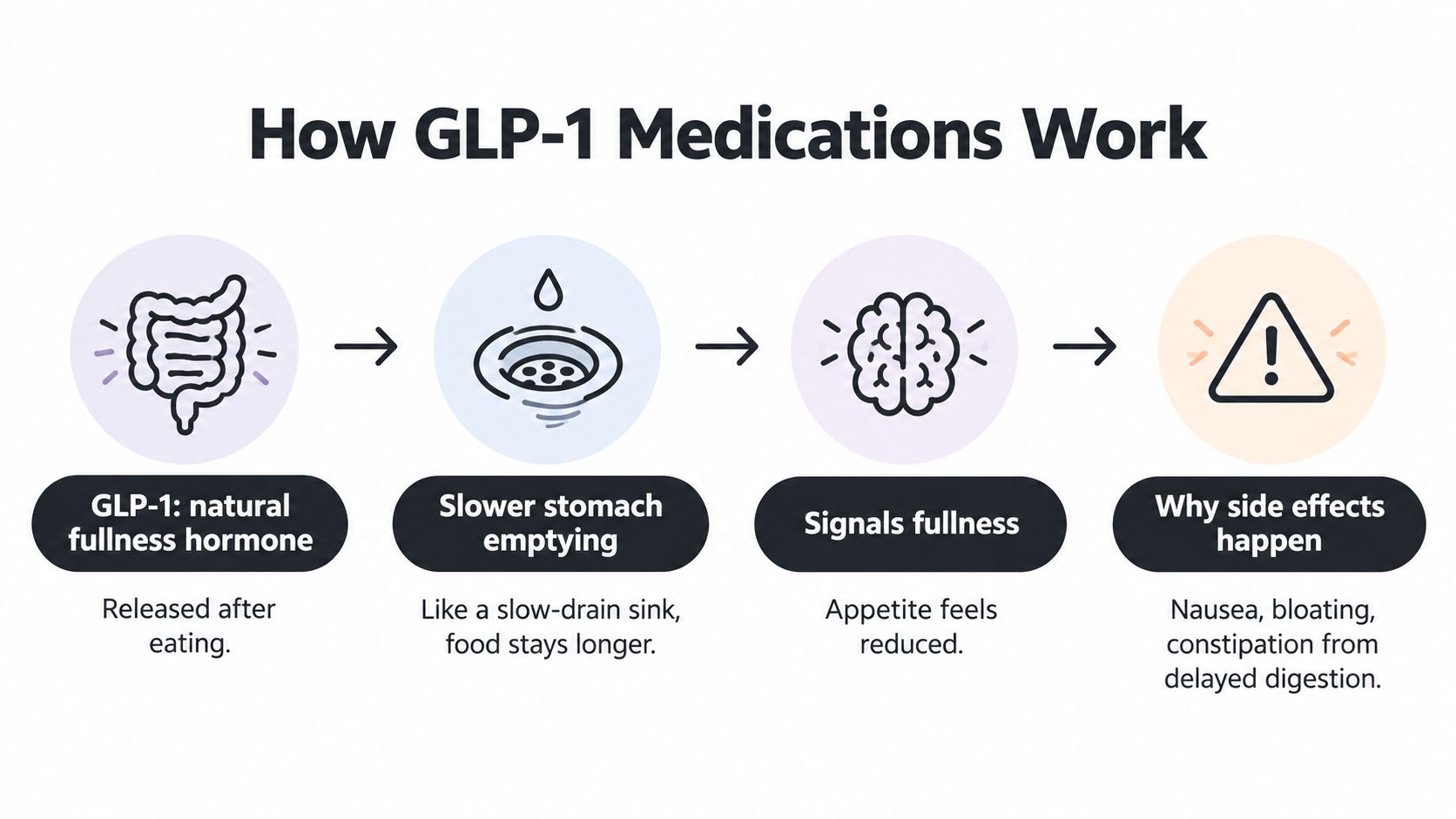
Why the dose matters
The medication's effect can feel stronger after an increase because appetite signals and gastric emptying are being influenced more intensely. That doesn't automatically mean the drug is harming you. It means your current dose may be moving faster than your digestive system can comfortably accommodate.
Dose escalation, not the molecule alone, often determines how difficult the adjustment feels.
Your clinician may keep you at a dose longer, reduce it, or change the escalation plan if symptoms interfere with eating or hydration. The guide to how GLP-1 medications work can provide additional background, but it doesn't replace individualized prescribing advice.
The same mechanism explains both the intended benefit and the unwanted effects. Reduced appetite is useful when it helps you make nourishing choices without constant hunger. It becomes a concern when you can't meet your fluid or nutritional needs, or when fullness comes with persistent vomiting or significant pain.
The Most Common GLP-1 Side Effects and Their Actual Rates
A patient may notice nausea after a few bites, looser stools the next morning, or constipation that makes a normal routine uncomfortable. In the STEP 1 trial, gastrointestinal disorders occurred in 74.2% of participants receiving semaglutide 2.4 mg, compared with 47.9% receiving placebo (American College of Cardiology summary). FDA-reviewed adult obesity trials reported at least one gastrointestinal adverse reaction in 73% of Wegovy-treated participants, compared with 47% with placebo (FDA Wegovy prescribing information).
| Side effect | Semaglutide 2.4 mg, STEP 1 | Tirzepatide 5 mg | Tirzepatide 10 mg | Tirzepatide 15 mg |
|---|---|---|---|---|
| Nausea | 44.2% | 24.6% | 33.3% | 31.0% |
| Diarrhea | 31.5% | 18.7% | 21.2% | 23.0% |
| Constipation | Not reported | 16.8% | Approximately 17.1% | Approximately 17.1% |
| Vomiting | 24.8% | 8.3% | 10.7% | 12.2% |
| Gastrointestinal disorders overall | 74.2% | Not reported | Not reported | Not reported |
The tirzepatide figures come from the SURMOUNT-1 trial summary. Gastrointestinal symptoms were generally mild or moderate and occurred mainly during dose escalation (American College of Cardiology SURMOUNT-1 summary). Rates vary by medication, dose, and study, so the table sets expectations rather than predicting your experience.
Common doesn't mean irrelevant
For mild nausea, eat smaller portions, slow down, and choose plainer foods. For diarrhea, take frequent sips of fluid and monitor whether you are urinating normally. For constipation, increase fluids, walk if able, and ask your clinician before adding a laxative. If a symptom is mild and improving, mention it at your next planned visit.
Call your provider now if vomiting prevents you from keeping fluids down, diarrhea continues with dizziness, or constipation comes with severe pain, swelling, or inability to pass gas or stool. Seek urgent medical care for severe or persistent abdominal pain, especially with repeated vomiting. Semaglutide's FDA-reviewed rates were 44% for nausea, 25% for vomiting, and 30% for diarrhea, compared with 16%, 6%, and 16% with placebo, respectively. Your dose, medical history, hydration, and other medicines still shape your individual risk.
What the First 12 Weeks Usually Feel Like
Dose schedules vary by product and by patient, so your prescriber's instructions take priority. In broad terms, the early weeks are designed to let your digestive system adapt before the medication reaches a higher maintenance dose.
During weeks 1 through 4, appetite may change before weight or eating patterns feel dramatically different. Smaller portions may satisfy you, and a large meal may suddenly feel uncomfortable. Your action step is to slow down, stop when you feel full, and avoid treating the starting dose as a test of how much food you can tolerate.
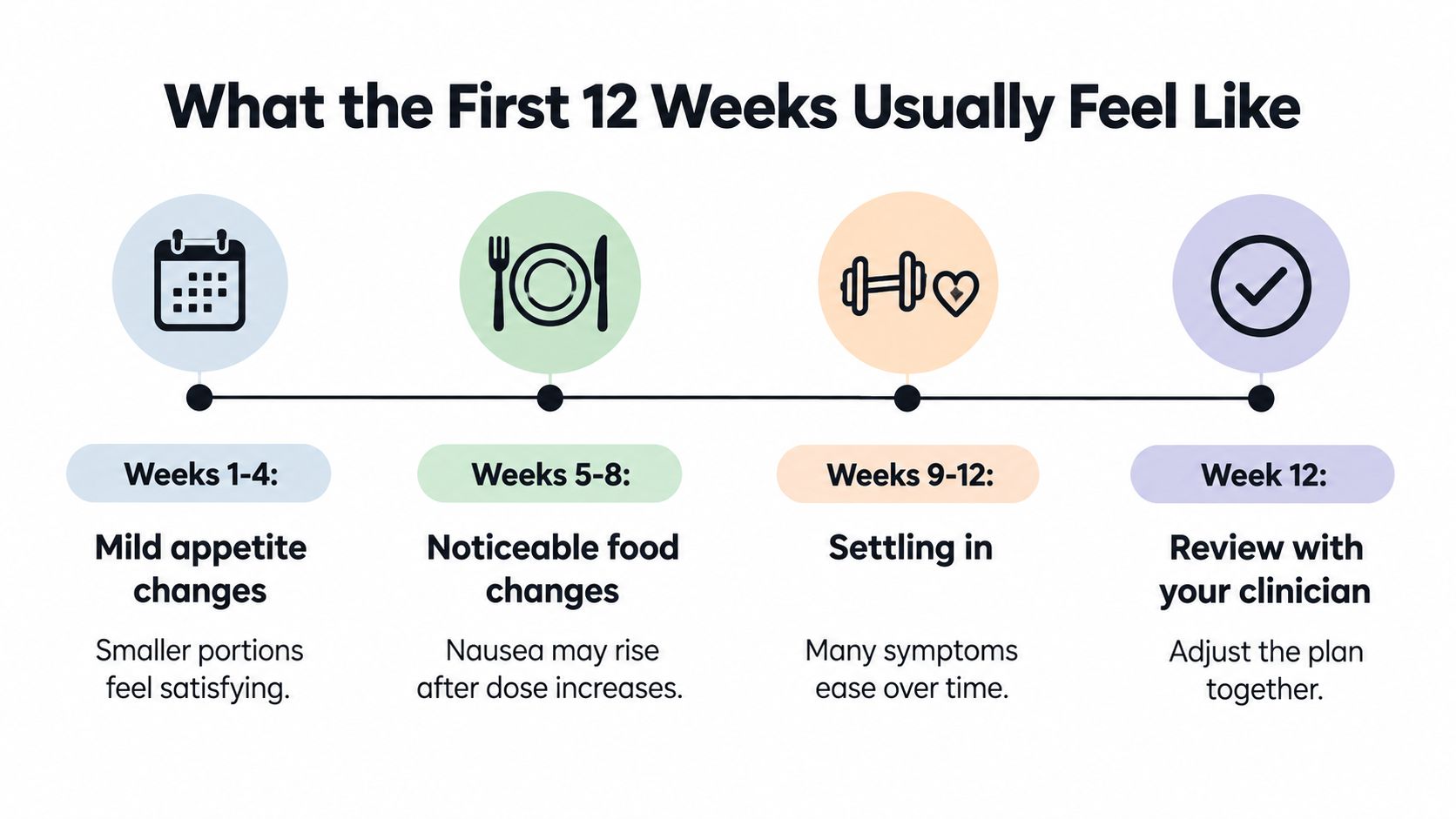
Weeks 5 through 8
After an increase, nausea or food aversion may become more noticeable. Try smaller meals, eat slowly, and choose lower-fat foods if rich meals worsen symptoms. Message your prescriber this week if nausea is interfering with ordinary meals, if you're struggling to maintain fluids, or if symptoms aren't easing before the next planned increase.
A provider may extend the current step rather than automatically advancing. That isn't a failure of treatment. Titration is meant to be individualized, and a slower schedule can be more useful than reaching a higher dose that you can't tolerate.
Weeks 9 through 12
Further increases may bring another short adjustment period. Some symptoms settle over time, but persistent vomiting, worsening constipation, or a meaningful drop in energy should trigger a conversation before another dose change.
At the end of this period, review your symptom log with your clinician. Include the day symptoms began, the relationship to your injection, what you ate, how much you drank, and whether you could work, sleep, and exercise normally. Those details help distinguish a tolerable adjustment from a plan that needs modification.
Less Common but Serious Side Effects to Know
Many people who experience GLP-1 side effects deal with digestive discomfort, not an emergency. Serious symptoms still matter because vomiting, severe pain, or low blood sugar can require treatment rather than home observation.
Pancreatitis and gallbladder warning signs
Severe, persistent abdominal pain, especially pain that radiates to the back and may occur with vomiting, requires urgent evaluation. FDA labeling instructs patients to stop Wegovy promptly and contact a clinician if pancreatitis is suspected (FDA Wegovy prescribing information). Call your provider now, or seek urgent or emergency care, rather than waiting for the next appointment.
Upper-right abdominal pain, fever, or yellowing of the skin or eyes can suggest a gallbladder problem. Call your provider the same day for these symptoms, and use urgent care or emergency services if pain is severe, you're repeatedly vomiting, or you feel very unwell.
Dehydration and severe stomach symptoms
Repeated vomiting or diarrhea can cause dehydration, especially when appetite and fluid intake are already reduced. Reduced urination, marked weakness, dizziness, or inability to keep fluids down needs prompt assessment because dehydration can contribute to acute kidney injury. Call your provider now, and seek urgent care if you can't retain fluids.
Persistent vomiting with extreme early fullness may indicate severe delayed stomach emptying. Contact your provider promptly, and don't take another dose change without guidance. New severe abdominal distension, inability to pass stool or gas, repeated vomiting, or escalating pain warrants urgent evaluation.
Low blood sugar
Hypoglycemia deserves special attention if tirzepatide is combined with insulin or an insulin secretagogue such as a sulfonylurea. Shakiness, sweating, confusion, unusual weakness, or a racing heartbeat should prompt immediate glucose management according to your diabetes plan and a call to your clinician. Call urgently if symptoms are severe, recurring, or accompanied by confusion or loss of consciousness.
For broader context on how clinicians think about procedure-related medical risks and warning signs, navigating liposuction complications offers a useful example of why symptom severity and timing matter.
Practical Strategies to Reduce Day-to-Day Side Effects
Small changes work best when they match the medication's physiology. Since food may remain in the stomach longer, a portion that used to feel normal can become too large after an injection or dose increase.

If nausea is the problem
Start with smaller meals and take more time between bites. Plain or bland foods may be easier to tolerate, while greasy, fried, or very rich meals can make nausea worse, particularly after a dose increase.
Sip fluids throughout the day instead of drinking a large amount quickly. Ginger tea may help some people, and a clinician can advise whether an anti-nausea medicine is appropriate for you.
If constipation is building
Slower intestinal movement, less food, and reduced fluid intake can reinforce one another. Drink regularly, walk when you're able, and add fiber gradually if your stomach tolerates it. Ask your provider before using a stool softener or laxative, particularly if you have pain, vomiting, or significant abdominal swelling.
If appetite is too low
Don't use appetite suppression as a reason to stop eating and drinking altogether. Choose nutrient-dense portions, prioritize protein, and keep easy options available, such as yogurt, eggs, soup, oatmeal, or a clinician-approved nutrition drink.
Injection-site discomfort is usually handled differently. Rotate between approved sites such as the abdomen, thigh, and upper arm, and follow the product instructions for preparation and storage. Contact your provider about a reaction that is spreading, increasingly painful, blistering, or accompanied by breathing difficulty or facial swelling.
Stopping, Switching, and What Happens After Side Effects
Feeling sick enough to consider stopping a GLP-1 medication is a treatment issue, not a personal failure. Contact your prescriber before changing the dose. Possible options include slower titration, a lower dose, staying longer at the current step, switching medicines, or supervised discontinuation.
Stopping can alter appetite and weight because the medication's effects on hunger and fullness are no longer the same. A 2025 review found that after semaglutide withdrawal, approximately two-thirds of lost weight was regained (2025 review of weight regain after GLP-1 withdrawal). Use that finding to plan, not to feel pressured to continue a medicine with unacceptable side effects. Ask what will support eating patterns, weight maintenance, and follow-up after the change.
When switching may be reasonable
Semaglutide and tirzepatide can produce different symptom patterns. A 2025 head-to-head tolerability analysis reported belching in 14.8% of tirzepatide users versus 4.4% of semaglutide users (2025 analysis of GLP-1 tolerability). If belching is persistent, record when it occurs and discuss whether the medicine, dose, meal pattern, or another digestive problem may be contributing. A switch could improve one symptom while causing another, so your clinician should compare your health history, glucose medicines, symptom pattern, and treatment goals.
After a break, do not restart at your previous dose without medical advice. Tolerance and dosing needs may have changed. Your clinician might consider a lower maintenance dose or a structured taper when appropriate.
Use this guide on what happens when you stop a GLP-1 to prepare questions about appetite, weight maintenance, and follow-up. Call your provider now for severe or unexplained symptoms. For tolerable side effects, arrange a later review before adjusting treatment.
Your Next-Week Action Plan and When to Call
For the next week, keep meals smaller, eat slowly, drink regularly, and record symptoms beside your injection date. Mild nausea or constipation that is improving can usually be discussed at a routine follow-up.
Message your provider this week if symptoms persist after a dose change, interfere with meals, or make you consider stopping. Ask whether the next increase should be delayed, reduced, or replaced with another plan.
Seek urgent care for inability to keep fluids down, reduced urination with weakness or dizziness, severe persistent abdominal pain, repeated vomiting, marked abdominal swelling, or confusion. Supervised telehealth care can still provide real clinical oversight when the prescribing team reviews your symptoms and adjusts titration rather than asking you to manage uncertainty alone.
Weight Method connects adults with licensed providers for medically supervised semaglutide or tirzepatide treatment, including ongoing messaging, progress tracking, and dose adjustments when side effects affect tolerability. If you want a structured evaluation and a plan for managing symptoms safely, visit Weight Method to begin the online intake.