Yes, semaglutide can cause tiredness, reported in 11-12.8% of adults in trials versus 5-7.4% on placebo, and the effect is real but modest. But does feeling drained mean the medication itself is making you sleepy, or that nausea, reduced meals, or fluid loss is leaving you short of energy?
That distinction changes what you should do next. Fatigue is a recognized side effect, not a diagnosis of its cause. Your symptom pattern can help your prescriber distinguish treatment-related tiredness from dehydration, low blood sugar, or a condition that needs separate attention.
Yes, Semaglutide Can Make You Tired, and How Often
Semaglutide increases reported fatigue in some adult trials, but it doesn't make everyone tired. In the randomized obesity trial published in JAMA, 12.8% of adults receiving once-weekly semaglutide 2.4 mg reported fatigue, compared with 7.4% receiving placebo, an absolute difference of 5.4 percentage points.
The distinction between the total rate and the additional rate matters. Some participants would have reported fatigue without semaglutide, as the placebo results demonstrate. The difference between groups is more informative about the treatment's contribution than the treatment-group percentage alone.
Fatigue rates in semaglutide studies
| Study or label | Semaglutide group | Placebo or comparator | Difference or note |
|---|---|---|---|
| STEP 1 obesity trial, 2.4 mg weekly | 12.8% | 7.4% | 5.4 percentage points |
| FDA Wegovy label, adults | At least 5% | No single comparator rate for this listing threshold | Listed as a common adverse reaction |
| FDA dose-ranging data, 2.4 mg | 9% | 5% | 4 percentage points |
| FDA dose-ranging data, 7.2 mg | 11% | 5% | 6 percentage points |
| Adolescent obesity trial | 3% | 5% | Lower on semaglutide |
| Cardiovascular-risk review, 50 trials | Risk ratio 1.67 (1.41-1.97) | Control groups form the reference | Number needed to harm 35 |
| 2024 meta-analysis, 4 studies | Risk ratio 1.29 (0.81-2.04) | Control groups form the reference | Not statistically significant |
How to interpret the differences
These entries aren't interchangeable estimates of your personal risk. They describe different populations, doses, comparisons, and ways of recording adverse events. A risk ratio also isn't a percentage of people who became tired.
The FDA-approved Wegovy prescribing information lists fatigue among common adverse reactions occurring in at least 5% of users and groups it with asthenia, meaning reduced strength or lack of energy. That makes fatigue a recognized treatment effect rather than merely an anecdote.
Not every pooled analysis gives an equally certain result. The 2024 systematic review and meta-analysis reported a fatigue risk ratio of 1.29 across 4 studies involving 1,689 participants, with a 95% confidence interval of 0.81-2.04. Because that interval includes no difference between groups, this particular result wasn't statistically significant.
Interpretation: Most participants didn't report fatigue, but an individual's substantial tiredness still deserves attention. A modest average increase doesn't make a disabling symptom unimportant.
The practical verdict is balanced: fatigue is possible and measurable, but trial rates don't establish why you're tired or how severe your symptoms will be.
How Semaglutide Leads to Feeling Drained
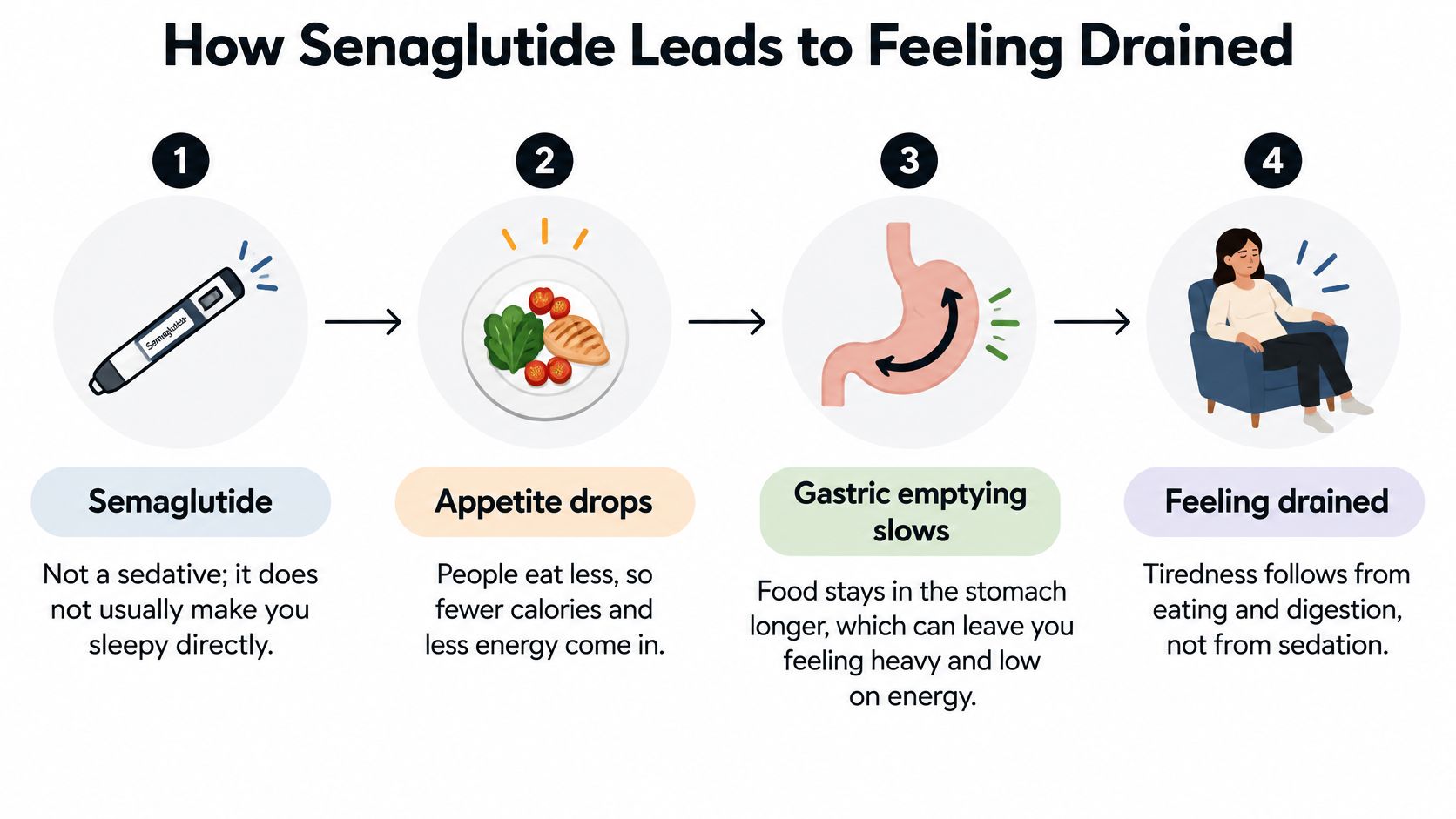
Consider someone whose appetite drops after an injection. They leave breakfast unfinished, postpone lunch because they still feel full, and drink less because nausea makes swallowing anything unappealing. By evening, they feel depleted.
That sequence doesn't require a sedative effect. Semaglutide reduces appetite and slows gastric emptying, while gastrointestinal symptoms can make adequate eating and drinking harder. Our explanation of how semaglutide works provides additional context for those appetite and digestion changes.
The size of the additional risk
A 2026 BMJ comparative-effectiveness analysis pooled 47 randomized trials involving 52,940 participants and 1,872 fatigue events; for subcutaneous semaglutide, it estimated a fatigue risk ratio of 2.0, with a 95% confidence interval of 1.6-2.4, corresponding to approximately 40 additional cases per 1,000 treated people over one year. The same source describes a separate cardiovascular-risk review of 50 trials, with a risk ratio of 1.67 (1.41-1.97) and a number needed to harm of 35.
The absolute increase in the larger analysis was roughly four percentage points, not a prediction that everyone would become exhausted. Think of reduced intake as a low fuel tank: it increases the chance of running short during a long drive, but it doesn't prove the tank is empty.
Gastrointestinal and dizziness rates on 2.4 mg semaglutide
| Side effect | Semaglutide 2.4 mg | Why it matters for energy |
|---|---|---|
| Nausea | 44% | Can discourage eating and drinking |
| Diarrhea | 30% | Can cause fluid and electrolyte loss |
| Vomiting | 24% | Can prevent adequate food and fluid intake |
| Constipation | 24% | Adds discomfort that can accompany feeling sluggish |
| Dizziness | 8% | Can limit activity and warrants attention to accompanying symptoms |
These are FDA trial rates, not proof that each symptom caused fatigue. The plausible chain is treatment, appetite or gastrointestinal changes, insufficient intake or fluid loss, then tiredness.
The trials don't establish that every fatigue episode follows this route. Hydration and nutrition are useful things to assess, but they don't completely explain every case.
Symptom Patterns and Warning Signs
Mild tiredness with otherwise normal eating, drinking, and daily function is different from exhaustion with vomiting or fainting. The accompanying symptoms often tell you more about urgency than the word fatigue does.
If your low-energy days coincide with nausea or bowel changes, inadequate intake or fluid loss becomes a plausible explanation. If tiredness occurs alone, you still shouldn't assume it's unrelated to treatment, but you should leave room for other causes.
The FDA's original Wegovy prescribing information reports fatigue in 11% of adults receiving 2.4 mg versus 5% receiving placebo, alongside nausea in 44%, diarrhea in 30%, vomiting in 24%, constipation in 24%, and dizziness in 8% of semaglutide recipients. Those figures describe the label's trial population, not a single universal rate to combine with results from other studies.
Match the pattern without diagnosing yourself
Tiredness patterns, likely links and next steps
| Symptom pattern | Likely link | Next step |
|---|---|---|
| Mild tiredness after an injection that gradually improves | Possible early treatment adjustment | Track it, maintain intake, and mention it at follow-up |
| Tiredness with nausea, vomiting, or diarrhea | Fluid and calorie loss | Sip fluids, try small meals, and discuss tolerability before further escalation |
| Tiredness with dizziness, fainting, or very dark urine | Possible dehydration | Contact the prescriber promptly; seek urgent care for fainting or inability to keep fluids down |
| Tiredness with shakiness, sweating, or confusion, especially with insulin or a sulfonylurea | Possible low blood sugar | Check glucose if possible, follow your prescribed low-glucose treatment plan, and obtain prompt medical advice |
| Persistent tiredness unrelated to injection timing | Possible anemia, thyroid disease, sleep problems, mood disorder, infection, or another medicine | Arrange a medical review; the clinician can decide which tests are appropriate |
There isn't a validated fatigue timetable that makes symptoms automatically safe after starting treatment. Don't use an expected adjustment period to justify waiting through worsening symptoms.
The NHS semaglutide guidance recognizes tiredness as a common side effect; the adolescent trial evidence summarized alongside this guidance recorded fatigue in 3% of semaglutide recipients versus 5% of placebo recipients. That reversal is a useful reminder that fatigue isn't always drug-specific.
What belongs in your log
Record the injection date, dose changes, meals, drinks, gastrointestinal symptoms, sleep, and other medicines. Include glucose readings when relevant, and describe function plainly, such as needing to stop work or being unable to complete ordinary activities.
Diet changes deserve a place in that record too. If you've recently introduced meat substitutes, Louisville Jerky Co.’s plant-based meat side effects explained offers food-specific context to discuss separately, rather than assuming every digestive symptom comes from semaglutide.
A symptom log helps identify associations. It can't confirm dehydration, rule out anemia, or establish that the medication caused your symptoms.
Contact your prescriber when fatigue limits daily life, persists, or worsens. Severe abdominal pain, persistent vomiting, reduced urination, fainting, or confusion require more urgent assessment, not another entry in the log.
Dose Increases and When Tiredness Shows Up
Higher doses don't produce a perfectly predictable increase in tiredness. In the FDA Wegovy dose-ranging information, fatigue was reported by 9% of participants at 2.4 mg and 11% at 7.2 mg, compared with 5% receiving placebo.
Those results support a dose-related possibility, not a rule that every increase will make you more tired. They also don't establish a dose someone should take or justify changing a prescription independently.

Separate timing from persistence
The useful distinction is between these patterns:
- Tiredness after starting or stepping up. A close relationship to the change makes treatment tolerability worth discussing. Record whether symptoms are easing rather than assuming they must disappear by a particular deadline.
- Fatigue during gastrointestinal symptoms. If your energy worsens while intake falls or fluid losses increase, the next dose decision should include an assessment of those symptoms.
- Tiredness throughout the dosing cycle. Symptoms that remain similar regardless of injection timing warrant a broader review, including sleep, other medication effects, and unrelated illness.
Timing alone doesn't prove causation. Someone might increase their dose during a week of poor sleep or an infection, so the log needs more than injection dates.
Individualized escalation matters
At Weight Method, our providers select semaglutide or tirzepatide based on BMI, medical history, and expected response, with gradual escalation dosing. The pace remains a clinical decision, informed by response and tolerability rather than a requirement to advance despite significant symptoms.
Our titration schedule guide explains the role of stepwise dosing. If you're struggling, describe what changed after the last increase and ask your prescriber whether the next step should be delayed or otherwise adjusted.
Don't experiment by alternating doses, skipping injections, or borrowing someone else's schedule. Write down the date of every dose increase, then pair it with your actual symptoms and ability to eat, drink, and function.
Day-to-Day Habits That Ease Tiredness
When reduced intake contributes to fatigue, the goal isn't to force large meals. It's to make eating and drinking manageable enough that appetite suppression doesn't turn into unintended under-fueling.
Start with foods you can tolerate and repeat reliably. Our GLP-1 diet recommendations can help you organize meals around the practical constraints of treatment.
Make intake easier
- Sip fluids steadily. Keep a drink within reach and take small amounts regularly if nausea makes larger drinks uncomfortable.
- Build small, balanced meals. Pair protein foods such as eggs, yogurt, fish, beans, or lean meat with oats, brown rice, or whole-grain bread.
- Avoid turning low appetite into missed eating opportunities. A small snack may be more manageable than a conventional meal, but it shouldn't become the entire day's intake.
- Ask about rehydration support. With vomiting or diarrhea, a pharmacist or prescriber can advise whether an oral rehydration solution suits your situation and medical history.
Keep bedtime and waking time consistent, and choose gentle activity when you feel able. Don't push through dizziness or marked weakness to meet an exercise target.
Practical rule: Improving intake is a reasonable first step for mild symptoms. Failure to improve is a reason to reassess the explanation, not to keep adding more self-care measures indefinitely.
Don't automatically add a sleep supplement
Poor sleep deserves attention, but adding a product isn't the same as investigating daytime fatigue. If you're considering Supplemynts Inc.’s 60-count tri-layer melatonin tablets, bring the product details to your pharmacist or prescriber rather than treating it as a remedy for semaglutide-related tiredness.
Include supplements in your medication list. A clinician needs to know what you're taking before deciding whether sleep, medication effects, or another condition explains your symptoms.
Decide Whether to Continue or Call Your Prescriber
The decision isn't just continue or stop. Mild, improving symptoms may be monitored while you continue as prescribed; troublesome symptoms call for a prescribing review; warning signs need prompt assessment before routine planning continues.
Your daily functioning matters as much as your description of tiredness. Tell your clinician if you can't work normally, maintain meals, or complete ordinary activities, rather than reporting only that you're somewhat tired.
Prepare a useful clinical conversation
-
Start a symptom log now. Record fatigue, injection dates, dose changes, meals, fluids, sleep, and gastrointestinal symptoms. Keep recording while arranging review, but don't postpone care to complete a particular length of log.
-
Bring your full medication list. Include prescriptions, over-the-counter medicines, and supplements so the clinician can assess overlapping effects and relevant interactions.
-
Discuss the next dose before changing it. Ask whether slower titration, a temporary hold, or another adjustment is appropriate; your prescriber should make that decision using your symptoms and treatment history.
-
Report any treatment interruption accurately. At Weight Method, patients who've been off GLP-1 medication for more than three months begin two steps below their reported dose under provider management. This is our restart policy, not a universal instruction to calculate or resume a dose yourself.
-
Don't stop, skip, or restart independently. Follow your prescription unless a clinician advises otherwise, and contact the prescribing team when side effects interfere with taking it safely.
-
Let urgent symptoms override the routine plan. Seek prompt same-day care for inability to keep fluids down or suspected low blood sugar; fainting, significant confusion, or severe persistent abdominal pain warrant urgent medical assessment.
Weight Method connects adults with licensed providers for GLP-1 evaluation, prescribing, and ongoing dose management. If tiredness is complicating treatment, visit Weight Method to discuss your symptoms, medical history, and a monitored treatment approach with a provider.