Stop reading weight loss injections reviews for the biggest before and after photo. That's the most popular advice, and it's backwards. The drug usually doesn't fail first. The plan around it does, through nausea you can't manage, a refill that arrives late, a monthly bill you didn't budget for, or a provider who disappears after checkout. Judge every review by whether that person could stay on treatment, not by what happened in week four.
What Most Weight Loss Injection Reviews Get Wrong
Most weight loss injections reviews answer the wrong question. They tell you how much weight someone lost, how fast their jeans loosened, and how easy the signup felt. They rarely tell you whether that person was still injecting months later, whether dose increases were tolerable, or what happened when a shipment, side effect, or payment problem interrupted treatment.
That's a serious blind spot because you're usually not shopping for a molecule in isolation. You're choosing a provider, a pharmacy, a titration plan, and a monthly cost you'll have to live with. A five star rating can't tell you if a prescriber screened your history properly. Neither can a polished testimonial page, which is why independent signals such as a Trustpilot rating explained in context are more useful than screenshots curated by the seller.

What a Trustworthy Review Actually Answers
A useful review names the drug, maintenance dose, treatment duration, and follow up support. It says whether nausea caused missed doses, whether appetite control held between injections, and whether the patient had a plan for maintenance or stopping. If none of that appears, you're reading marketing with a first name attached.
If a review doesn't say how long the person stayed on therapy, treat the result as unfinished, not proven.
Read every claim through four lenses. First, does the clinical evidence match the drug and dose being sold. Second, are side effects described with enough detail to judge tolerability. Third, can you verify the prescriber, pharmacy, and sourcing. Fourth, do you know the total cost of staying on treatment, not just the introductory price. Anything that skips those four checks isn't decision grade information, no matter how confident it sounds.
Semaglutide and Tirzepatide Explained
Semaglutide and tirzepatide aren't different brand names for the same shot. They're distinct molecules with different receptor activity, different trial averages, and different tolerability trade offs. If a review lumps them together as generic GLP-1 injections, it's already too sloppy to trust.
Semaglutide activates GLP-1 receptors, the pathway your gut uses after meals to signal fullness. It reduces appetite and energy intake and slows gastric emptying, so weight loss comes mainly from eating less consistently, not from a sudden metabolic surge. You'll see it sold under FDA approved brand names Wegovy for weight management and Ozempic for type 2 diabetes.
Tirzepatide activates both GIP and GLP-1 receptors. Think of semaglutide as turning one incretin dial and tirzepatide as turning two. It's sold as Zepbound for weight management and Mounjaro for type 2 diabetes. Both drugs are taken once weekly, and both use gradual dose escalation because jumping straight to a maintenance dose is a reliable way to make gastrointestinal effects worse.
Semaglutide vs Tirzepatide at a Glance
| Attribute | Semaglutide | Tirzepatide |
|---|---|---|
| Mechanism | Single GLP-1 receptor agonist | Dual GIP and GLP-1 receptor agonist |
| FDA approved brands | Wegovy, Ozempic | Zepbound, Mounjaro |
| Schedule | Once weekly injection, gradual titration | Once weekly injection, gradual titration |
| How it drives loss | Lower appetite, lower energy intake, slower gastric emptying | Incretin driven appetite and intake reduction through two pathways |
| Head to head average | Lower average in direct comparison | Higher average in direct comparison |
The direct comparison matters more than separate placebo trials stitched together by a blog. In a 72 week head to head trial in the New England Journal of Medicine, mean weight change was 20.2% loss with tirzepatide versus 13.7% loss with semaglutide, an estimated difference of 6.5 percentage points. That's a real efficacy edge for tirzepatide on average. It isn't a guarantee for you, and it doesn't settle which drug you'll tolerate, afford, or stay on.
Mechanism also explains why clinic quality matters. A provider that can't explain titration, contraindications, or pharmacy sourcing shouldn't be prescribing either molecule. If you're comparing clinics beyond telehealth, the same discipline applies to evaluating peptide clinic safety, where prescriber credentials and product sourcing should be visible before anyone asks for payment.
Real-World Results vs Headline Numbers
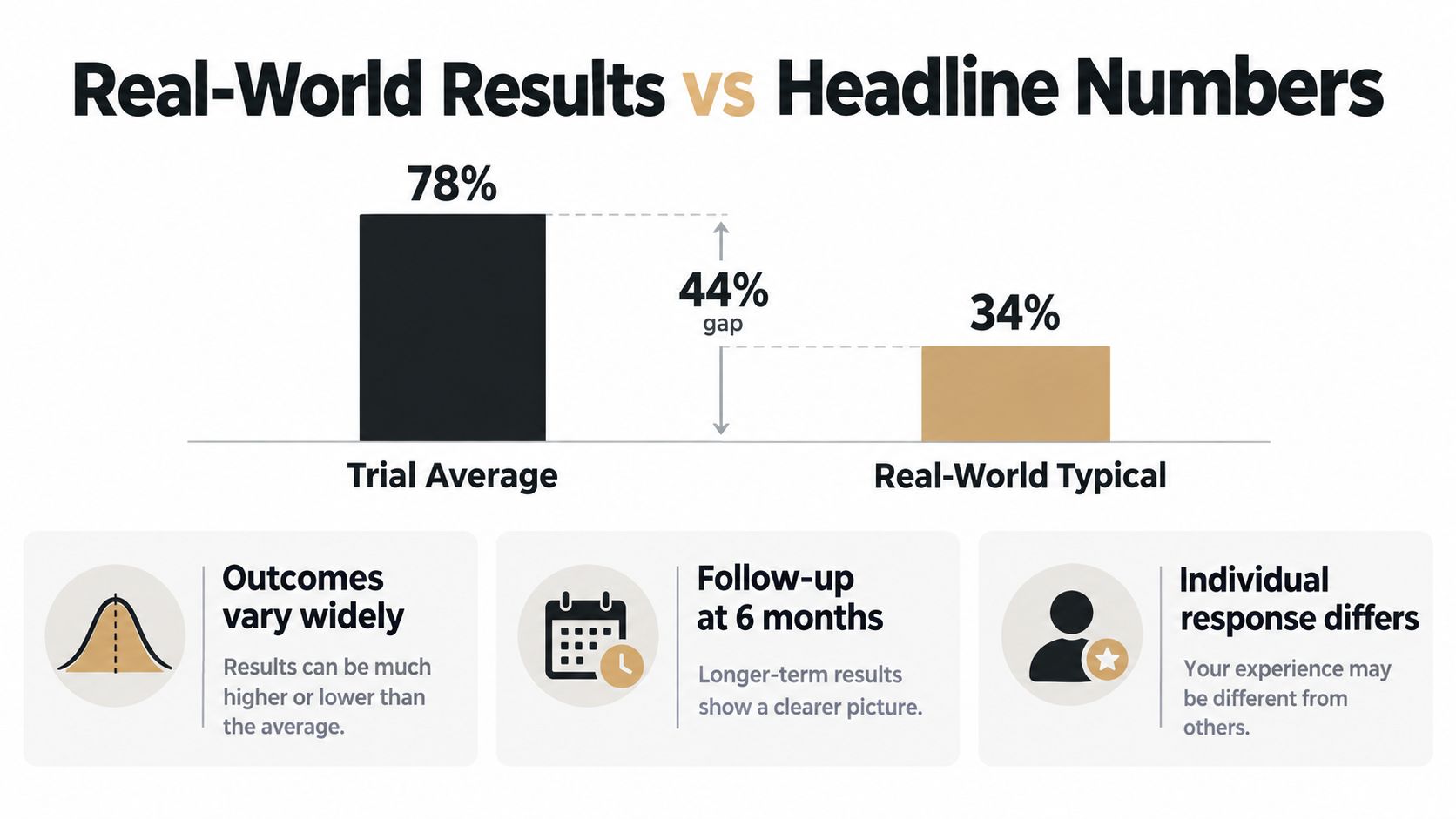
Trial averages describe what happened to a group under structured conditions. They don't promise your result, and they definitely don't describe what happens when refills slip, support thins out, or nausea makes you dread injection day. Weight loss injections reviews that quote a trial average as your expected outcome are selling certainty the data don't offer.
The persistence gap is the number I want you to remember. A synthesis of real world discontinuation data reports real world discontinuation rates of roughly 20% to 50% within one year, compared with about 10% in randomized trials, with gastrointestinal effects as the leading driver. Read that again before you trust any testimonial. A drug can look outstanding in a trial and still underdeliver in ordinary life if people stop early.
How to Interrogate a Result
Ask four blunt questions of every review you read.
- How long was treatment: A first month update during dose escalation isn't comparable to a result after many months at a maintenance dose, and a realistic GLP-1 weight loss timeline will show you why early results mislead.
- Was the person still on therapy: A photo taken at peak loss tells you nothing about maintenance, regain, or whether side effects forced a stop weeks later.
- What support surrounded the drug: Meal structure, protein intake, activity, and follow up all shape whether reduced appetite becomes sustainable habits, which is why practical resources like protein packed dinner ideas matter more than another motivational quote.
- Why did anyone stop: Side effects, cost, supply problems, lack of perceived benefit, and reaching a goal are different failures with different fixes.
Practical rule: Staying on the drug is the underrated metric. Short term loss is easy to advertise.
Set your expectation accordingly. You aren't buying an average. You're buying a probability that depends on tolerability, access, cost, and whether someone competent adjusts your dose when the first plan stops working.
Side Effects and Who Should Not Take These Injections
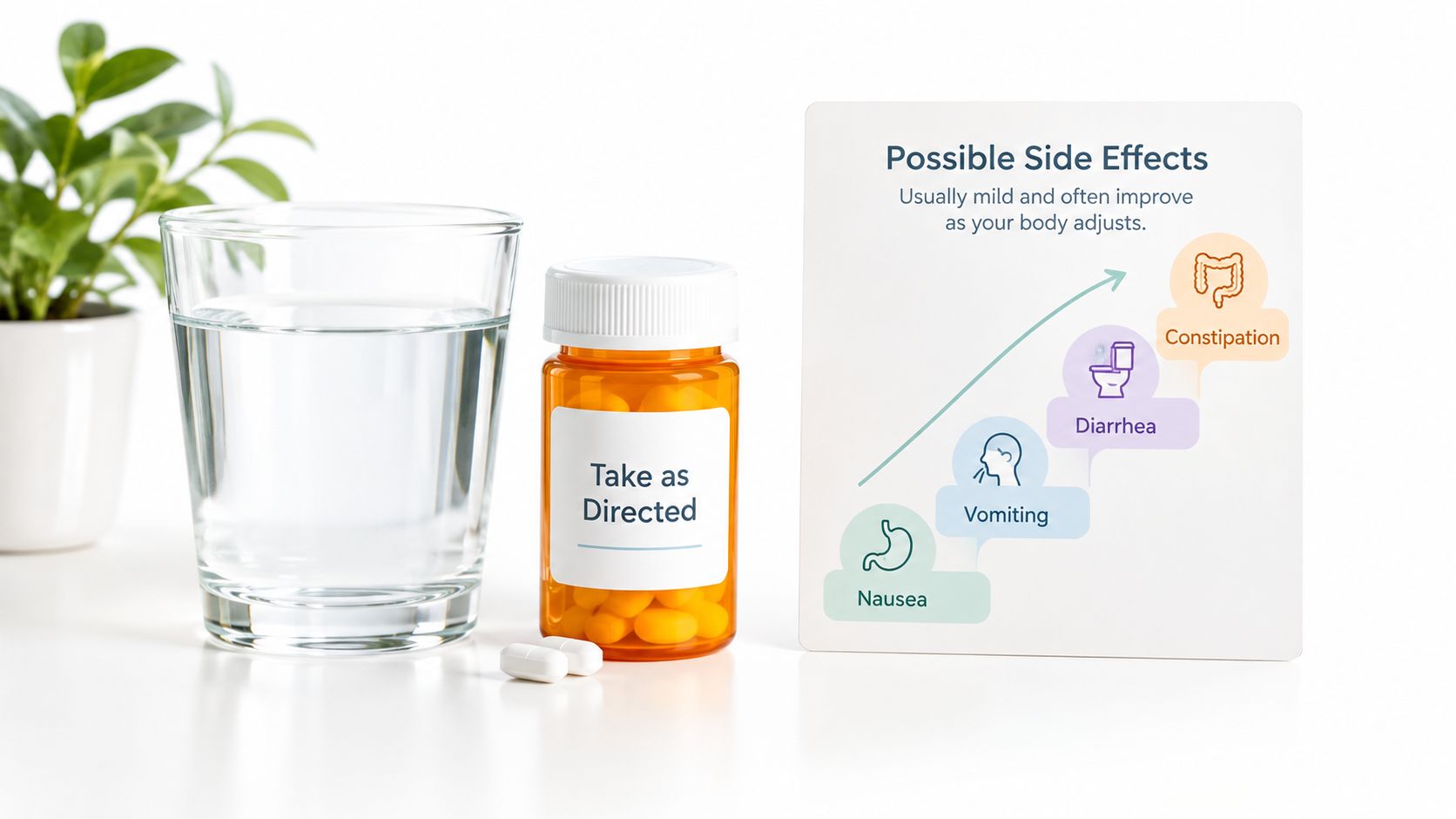
Reviews go vague exactly where you need specifics. They'll say mild stomach upset when the useful question is whether nausea, vomiting, diarrhea, or constipation disrupted work, meals, hydration, or the next scheduled dose. Tolerability isn't a footnote with these drugs. It's often the reason treatment ends.
The Gastrointestinal Ladder
Most patients who struggle do so during dose escalation, when the body is adapting to slower gastric emptying and stronger appetite suppression. Nausea tends to come first. Vomiting, diarrhea, constipation, reflux type discomfort, and food aversion can follow, and the pattern varies by person and by dose step. That's why escalation is gradual by design, not because your provider is being cautious for fun.
A credible program tells you in advance what to do when symptoms spike. You'll get guidance on smaller meals, stopping when full, hydration, and when to message the prescriber instead of pushing through. If the only advice is to tough it out until the next refill, walk away. Persistent vomiting or inability to keep fluids down needs clinical attention, especially because dehydration can create kidney problems.
Screening That Should Happen Before Dose One
Bring this list to any consultation and expect direct questions about each item.
- Medullary thyroid carcinoma: Personal or family history requires careful screening before treatment is considered.
- Multiple endocrine neoplasia type 2: This history is a major warning area your prescriber must ask about.
- Pancreatitis: Prior pancreatic inflammation changes the risk conversation and shouldn't be buried in a long intake form.
- Gallbladder disease: Existing disease and new gallbladder symptoms both need explicit discussion.
- Severe gastrointestinal disease: Serious GI conditions can make slowed gastric emptying a poor fit.
- Serious hypersensitivity: Prior severe allergy to the drug or its components is disqualifying territory.
- Kidney injury risk from dehydration: Your provider should explain what symptoms demand urgent contact.
A provider who skips this screen isn't saving you time. They're transferring risk to you. Good weight loss injections reviews mention the consultation quality because patients remember whether anyone asked hard questions. If reviews only praise shipping speed and discount codes, assume the medical part was thin until you prove otherwise.
Red Flags in Weight Loss Injection Providers
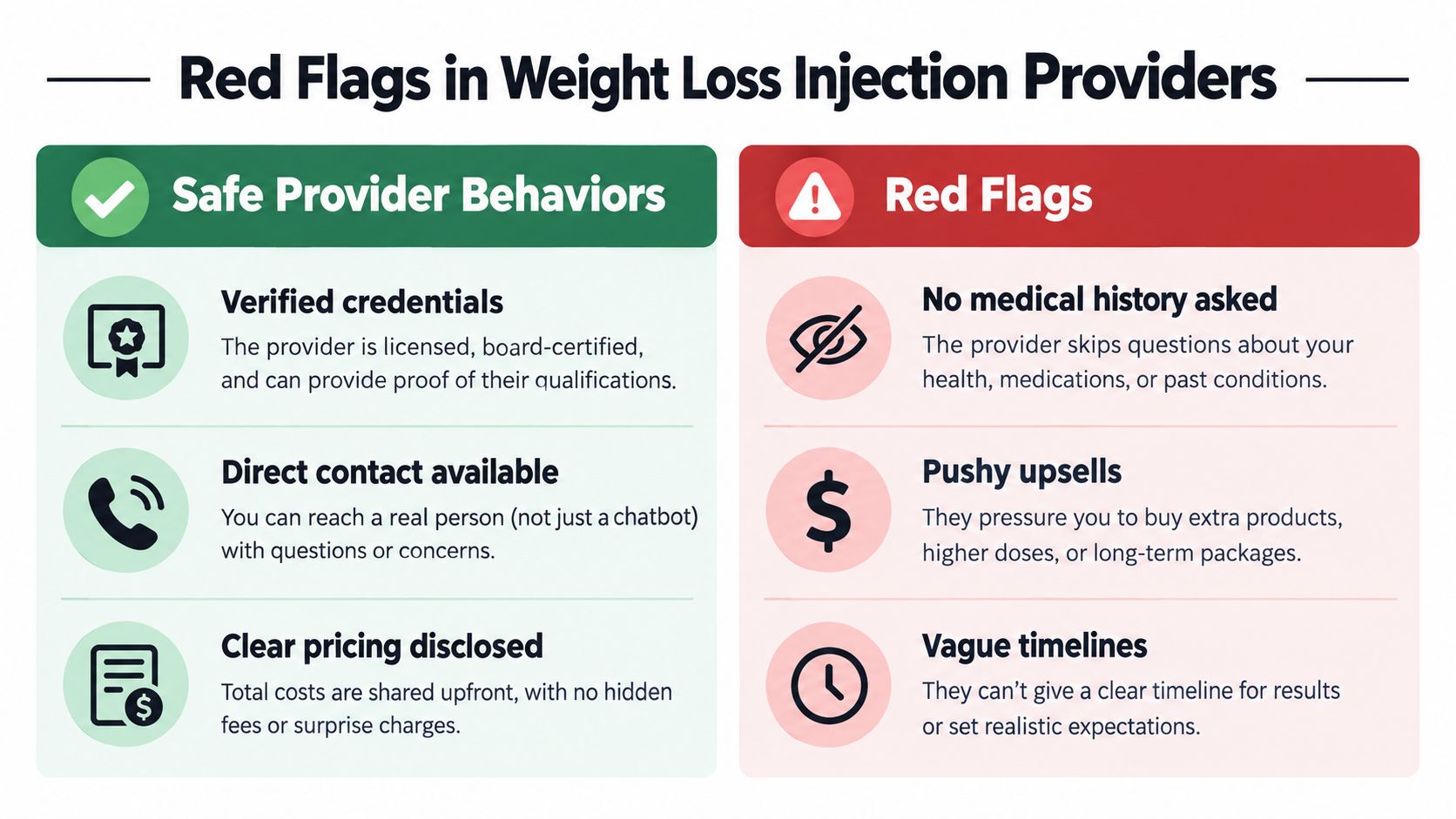
Star ratings are a weak safety signal. Patients rate friendliness, shipping, and early weight change long before they can judge prescribing quality or pharmacy legitimacy. I'd take five verifiable provider behaviors over a wall of five star reviews every time.
Five Behaviors That Should End the Purchase
No licensed prescriber conducts the consult. A sales representative can explain pricing. They can't clear you medically, adjust titration, or own the consequences of a bad screen. The green flag is a named, licensed clinician who reviews your history and remains reachable for follow up, the standard you'd expect from any legitimate GLP-1 for weight loss online program.
No identifiable US licensed pharmacy. You should be able to learn whether medication comes from an FDA approved product channel or a US licensed 503A compounding pharmacy, and how that pharmacy is identified. Vague language about partner pharmacies with no name, license, or location is a sourcing failure, not a branding choice.
Sourcing isn't disclosed. FDA approved and compounded products aren't interchangeable terms. Semaglutide was removed from the US shortage list on February 21, 2025, and enforcement discretion periods for compounded semaglutide and tirzepatide subsequently ended, details summarized in a review of withdrawal and product availability issues. If a seller won't say exactly what's being dispensed and under what legal basis, don't inject it.
- No HIPAA grade privacy terms: Your intake contains diagnoses, weight history, and medication lists, so encryption, consent, and data handling should be explicit before you upload anything.
- Pressure to pay before medical clearance: Legitimate care can end with a no. A checkout flow that treats approval as guaranteed is ecommerce wearing a white coat.
A provider that hides the prescriber, pharmacy, or product source has already answered your safety question.
How Telehealth Fulfillment Actually Works
Legitimate telehealth isn't magic and it isn't just a quiz. It's a chain of handoffs, and your result depends on every link holding. When weight loss injections reviews complain about delays or confusion, they're usually describing a break in that chain.
The Normal Sequence
You complete a medical intake covering history, current medications, allergies, and contraindications. A licensed provider reviews it, ideally by video, asks follow up questions, and decides whether treatment is appropriate. If you're cleared, the prescription goes to a US licensed pharmacy, the pharmacy dispenses and ships it to your home with appropriate handling, and your dose increases gradually under supervision with check ins along the way.
That sequence should feel slightly slower than buying supplements. Medical review takes time. Pharmacy verification takes time. A provider who promises instant approval for everyone is telling you the review step is decorative.
Where Fulfillment Breaks
Friction becomes structural when the same failure repeats.
- Delayed first shipment: Occasional carrier delays happen, but silence from support while your start date drifts is an operations problem.
- Refill gaps after titration: Your next dose level should be planned before the current supply runs out, not improvised after you complain.
- Cancelled or skipped follow ups: Dose escalation without symptom review leaves you managing adverse effects alone.
- Pharmacy ambiguity: An overseas pharmacy posing as domestic fulfillment is a disqualifier, not a shipping quirk.
- No interruption plan: Supply and legal availability can change, especially with compounded products, so continuity planning matters before you start.
Judge reviews for these operational details. Comments about responsive dose adjustments, clear refill timing, and a prescriber who returns messages predict your experience better than comments about a sleek dashboard. Smooth fulfillment is boring in the best way. You know who prescribed it, who dispensed it, when it arrives, and who to contact when something feels wrong.
Cost, Insurance, and FSA/HSA Coverage
Cost reviews fall apart because they quote one monthly number as if it meant the same thing everywhere. It doesn't. Your real cost depends on whether you're buying an FDA approved brand through insurance, paying cash at a retail pharmacy, or enrolling in a telehealth program that bundles consultations, medication, shipping, and follow up.
Build the price in layers. Brand name pricing starts with the manufacturer's list price, then moves through pharmacy acquisition and dispensing, benefits design, deductibles, and specialty tier copays if your plan covers the drug at all. Two insured patients can face completely different out of pocket costs for the same prescription because one has met a deductible and the other hasn't, or because one plan excludes weight management treatment outright.
Cash pay telehealth flips that complexity into a flat monthly fee, which many adults find easier to budget. Simpler isn't automatically cheaper or better. You still need the published fee schedule, what happens to price at higher doses, whether consultations and shipping are included, and what introductory promotions revert to after month one. A low first month price with no disclosed ongoing rate is a teaser, not transparency.
Using Pretax Dollars Correctly
GLP-1 medication prescribed for weight management generally qualifies as an eligible medical expense, which means FSA and HSA funds can be used for it. Keep your prescription records and receipts for substantiation, and confirm your plan administrator's documentation rules before you pay. Don't assume a debit card approval ends the paperwork.
Budget for duration, not initiation: The relevant question is whether you can afford the month you reach a maintenance dose, not the discounted month you start.
That long view matters because efficacy builds over months. In a randomized 68 week trial of semaglutide 2.4 mg with lifestyle intervention, mean body weight reduction was 14.9% with semaglutide compared with 2.4% with placebo, a placebo adjusted difference of 12.4 percentage points. You don't get a 68 week result on a one month budget. Weight loss injections reviews that celebrate cheap starts without discussing ongoing cost are setting you up for the most preventable reason people quit.
The Pre-Purchase Checklist for Choosing a Provider
Run any provider through this checklist before you pay. It takes minutes, and each item has a clear disqualifier so you don't have to negotiate with yourself at checkout. If a seller fails an item, pause there instead of averaging it against good reviews.
Ten Checks Before Dose One
- Licensed prescriber verified: You can identify who evaluates you and prescribes. Disqualifier, only sales staff or an anonymous medical team.
- Pharmacy verified: The dispensing pharmacy is US licensed or FDA registered and identifiable. Disqualifier, unnamed partner pharmacy.
- Product sourcing disclosed: You know whether you're receiving an FDA approved product or a compounded alternative, and why it's legally available. Disqualifier, brand names used loosely for non brand products.
- Safety screen completed: Thyroid cancer history, MEN2, pancreatitis, gallbladder disease, severe GI disease, allergy, and dehydration risk are addressed. Disqualifier, approval with no medical questions.
- Titration plan explained: You know the escalation approach, who adjusts it, and how side effects are handled. Disqualifier, fixed escalation with no symptom check ins.
- Total monthly cost published: Ongoing price, dose related changes, consultation fees, and shipping are stated. Disqualifier, introductory price only.
- FSA and HSA terms clear: Eligibility and receipt documentation are explained. Disqualifier, pretax claims with no substantiation guidance.
- Privacy protections stated: HIPAA compliant handling, encryption, and consent are visible. Disqualifier, no privacy terms before intake.
- Cancellation and refund policy readable: You know how to pause, cancel, and seek a refund before the first charge. Disqualifier, support ticket required just to learn the policy.
- Continuation and stopping plan offered: The provider addresses refill interruptions, maintenance, supervised stopping, and what non drug support continues afterward. Disqualifier, goal weight presented as a simple finish line.
That last item deserves emphasis. Withdrawal evidence summarized from the STEP 1 extension indicates weight regain began soon after semaglutide cessation and most weight lost was regained within a year, with similar regain patterns reported after tirzepatide withdrawal. A provider who won't discuss maintenance before selling you month one is planning the sale, not your outcome.
Use weight loss injections reviews as leads, never as verdicts. Verify the prescriber, pharmacy, sourcing, cost, and follow up yourself, then decide whether the testimonials even matter.
Weight Method offers US based telehealth weight management with a brief online intake, video consultation with a licensed provider, and semaglutide or tirzepatide shipped to your door with ongoing messaging, progress tracking, and supervised dose adjustments. If you want a provider you can run through the checklist above, including transparent pricing and FSA/HSA eligibility, visit Weight Method to check whether medically supervised GLP-1 treatment fits your history and goals.