You're staring at a hotel mini-fridge at midnight, working out whether it's cold, while your phone shows a flight home tomorrow and a dose due somewhere in between. That's the starting point for how to travel with semaglutide. It isn't a packing puzzle you solve once. It's heat, paperwork, and a weekly calendar all demanding attention while you're tired, jet-lagged, and away from your usual routine.
The Travel Reality Every Semaglutide User Faces
Travelers rarely search for this from a calm desk three weeks before departure. They search from an airport seat, a rental car, or a bathroom counter covered with toiletries, alcohol swabs, and a pen they suddenly aren't sure they packed correctly. The worry usually sounds specific. Can this go through security, did the gel pack freeze it, and is today dose day in this time zone or tomorrow?
Those questions feel separate, but they're really three versions of the same problem. You're trying to protect a temperature-sensitive prescription outside the controlled environment where it normally lives. At home, the refrigerator, the calendar reminder, and the pharmacy label do most of the thinking for you. On the road, you have to replace each of those systems with something portable and deliberate.
The Three Things That Break a Trip
Heat is the first threat, and it rarely announces itself. A pen left in a warm car, a checked suitcase, or pressed against a frozen pack can look completely normal afterward. Appearance doesn't prove it's still fine to use, which is why prevention matters more than inspection later.
Paperwork is the second threat. A labeled carton and a prescription that matches your passport turn a detailed bag search into a brief explanation. Loose, unlabeled supplies invite exactly the delay you're hoping to avoid.
- Storage: Keep the pen protected, accessible, and within its labeled conditions from door to door.
- Screening: Make the medication easy to identify, declare, and inspect without unpacking your whole bag.
- Schedule: Decide your injection day before departure, not after crossing several time zones.
The calendar is the quiet third threat. Red-eye flights, lost sleep, and a phone that updates local time automatically can make a weekly routine strangely hard to reconstruct. Plenty of travelers remember the dose perfectly at home, then spend a foreign morning trying to work backward from a boarding pass.
Treat semaglutide like a perishable prescription, document it like you're crossing a border, and schedule it like a meeting that matters.
That mindset makes the whole trip simpler. You don't need elaborate gear or constant vigilance. You need one reliable place for the pen, one set of documents that travels with it, and one dosing plan you can follow even when you're exhausted. Once those pieces are in place, travel stops feeling like a threat to treatment and becomes another setting where your routine works.
Packing and Cold-Chain Storage That Actually Works
Start with the product in your refrigerator and the instructions on its carton, not with generic advice copied from a forum. Different presentations can have different handling details, so confirm anything unclear with your prescriber or dispensing pharmacy before you leave. For the storage conditions listed for Wegovy pens, normal refrigeration is 2–8°C (36–46°F), and before cap removal a pen may be kept at 8–30°C (46–86°F) for up to 28 cumulative days. Freezing or direct contact with a frozen pack can damage it.
That room-temperature allowance gives you flexibility, but it also creates a record-keeping job. Write the date and time the pen leaves refrigeration on the carton or in your phone. Don't rely on memory after two flights, a hotel change, and a week of sightseeing.
Build One Medication Kit
Keep unopened pens in the original carton, with the pharmacy label visible. The carton protects the pen from light, prevents it from rolling around your bag, and gives security or customs staff the medication name without a speech from you. If you use an insulated medication case, place a cloth, foam insert, or the carton itself between the pen and any frozen gel pack.
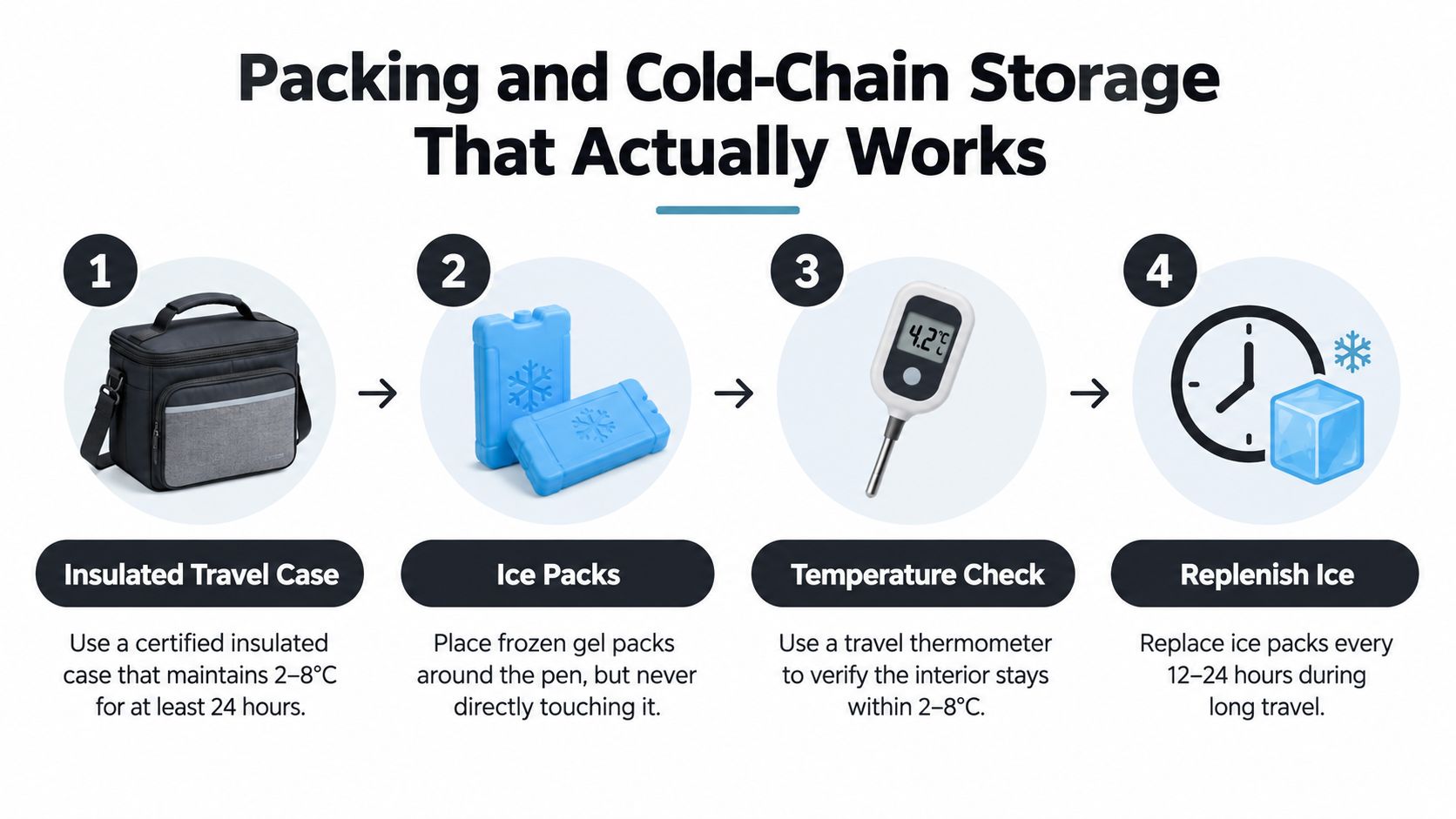
Pre-cool the empty case only if the manufacturer directs it, and don't drop a refrigerated pen directly onto a rigid frozen block. Buffering matters more than making the case as cold as possible. A small thermometer card can help you learn whether your setup runs warm or cold, but it doesn't rescue a pen after a serious excursion.
- Original carton: Keep the label, expiration date, and light protection together.
- Insulated case: Choose one sized for pens rather than burying them in a lunch cooler.
- Barrier layer: Separate every pen from frozen packs with packaging or fabric.
- Exit note: Record when refrigeration ended and where you'll refrigerate it next.
Carry It With You
Put the kit in your carry-on, where you can monitor it and retrieve it during delays. Checked baggage can be lost, delayed, or exposed to damaging temperatures, and you lose access the moment the bag disappears behind the counter. Keep the medication out of parked cars and sunny window ledges, and identify your destination refrigeration before you depart.
Practical rule: Cold enough is good. Frozen against a gel pack is a failed system.
Good packing lists make this easier to repeat, whether you're using a trip-specific resource like what to pack for Japan in spring or checking how refills are handled in a practical overview of medication shipping. Build the kit the same way every time, then pack enough medication for the itinerary plus an allowance for disruption. If you suspect freezing or prolonged excessive heat, don't judge the pen by how it looks. Call the pharmacist or prescriber before using it.
Navigating TSA, Airline Rules, and Sharps
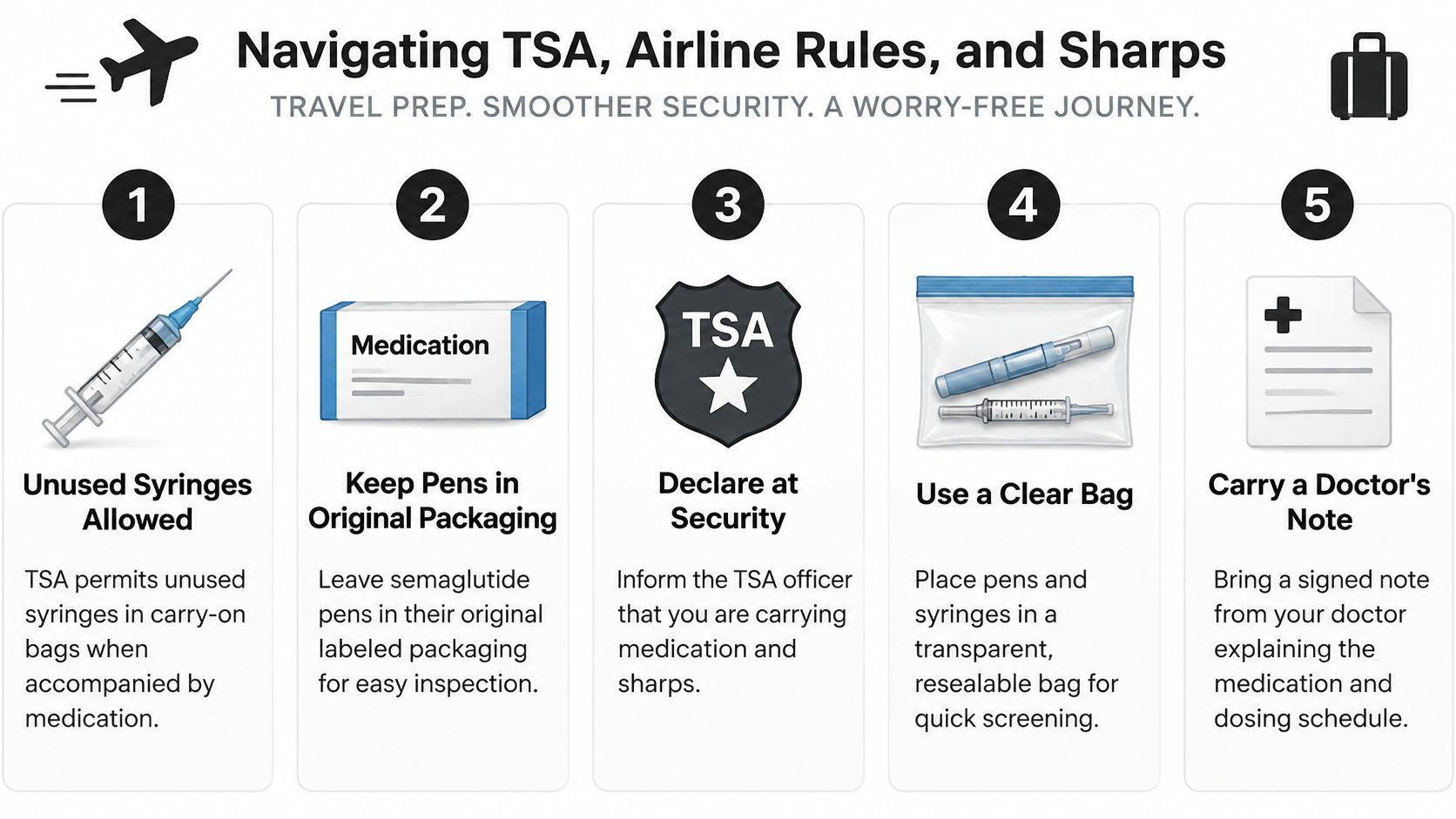
Security goes best when the officer can understand your kit in a few seconds. Keep the pen in labeled pharmacy packaging, group needles and cooling accessories with it, and place the whole case where you can remove it without emptying your carry-on. Tell the officer you're carrying injectable medication before screening begins, then follow their direction if they want the items inspected separately.
TSA guidance on unused syringes permits them in both carry-on and checked bags when they're accompanied by injectable medication, but you must declare them to security officers for inspection. Used syringes should travel in a sharps-disposal container or another hard-surface container. That permission doesn't make checked baggage a sensible choice for the medication itself.
What to Do in the Lane
Use plain language and don't bury the lead. Say that you have a prescribed injectable medication, pen needles or syringes, and a cooling case in your carry-on. Offer the labeled carton first, because the medication name, your name, and the prescriber details answer most questions before they become a longer inspection.
- Declare early: Mention the medication and sharps before your bag enters screening.
- Present the kit together: Keep pens, needles, cooling packs, and label in one accessible case.
- Allow extra time: Secondary inspection can happen even when everything is permitted.
- Contain used sharps: Never drop a loose used needle into a pouch or toiletry bag.
Don't mix loose pens into the ordinary toiletries bag with toothpaste and shampoo. That makes the setup look improvised and forces you to explain each object separately. A dedicated case signals that the supplies belong together and are there for a medical purpose.
A calm declaration and a readable pharmacy label will do more for you than a detailed explanation of how the medication works.
Cruise terminals and other transport hubs create similar moments, even when the screening organization differs. Reviewing the Nordmoose cruise packing guide can help you think through what belongs in hand luggage before boarding, but your medication routine shouldn't change with the vehicle. Keep it on your person or in your cabin bag, keep sharps contained, and assume someone may ask to see the label.
International Trips, Prescriptions, and Border Rules
Crossing a border changes the question. Airport security asks whether an item can travel safely, while customs and immigration may ask whether you're entitled to import it, in what quantity, and under what documentation. A medication that's routine at home may use another name abroad, face local restrictions, or trigger requirements in a transit country you'd barely planned to think about.
Your safest default is continuity with traceability. Carry only medication prescribed for you, keep it in the original labeled container, and bring a valid prescription or provider letter that connects your name to the product and dose. CDC guidance reflecting U.S. Customs and Border Protection expectations notes that documentation should generally be in English for visitors entering the United States, and the commonly cited U.S. rule of thumb is no more than a 90-day supply. Destination rules may be stricter, so that figure isn't a universal permission slip.
Prepare the Paper Trail Before the Flight
Check every destination and transit country, not just the place where you'll spend most nights. The destination embassy or consulate is the right place to verify current requirements, particularly if your itinerary involves an extended stay, work authorization, or relocation. Someone sorting out a longer stay might pair that research with a practical 2026 France visa breakdown, but visa eligibility and medication import rules remain separate questions.
- Pharmacy label: Preserve your name, prescriber, medication, and dosage on the container.
- Prescription copies: Carry paper and phone copies in case one bag or device disappears.
- Provider letter: Ask for a concise letter identifying the medication as prescribed for personal use.
- Supply calculation: Bring enough for the trip and plausible delays without exceeding local limits.
Don't transfer pens or supplies into an unmarked organizer to save space. It may look tidy in your suitcase, but it strips away the evidence an inspector needs. The modest bulk of the original packaging is the price of a faster, less ambiguous encounter.
Two Mistakes to Avoid
Don't ask a friend or relative to mail a refill to your hotel. Importing or exporting medication can require specific authorization, and a parcel that looks helpful at home can be delayed or seized abroad. Plan the supply before departure instead, and carry it onto the plane with your documents.
If you can't show whose medication it is, what it is, and why you have it, your documentation isn't finished.
International travel doesn't require legal expertise. It requires finishing a defined project early enough to fix gaps: verify the rules, preserve the label, gather prescription evidence, and store the medication as directed. Do that country by country, including layovers, and the border becomes an administrative checkpoint rather than a gamble.
Adjusting Your Weekly Dose Across Time Zones
Your usual injection time is probably anchored to ordinary life, perhaps Sunday breakfast or Monday after work. Travel removes those anchors. You land before you've technically left, lose a calendar day, or wake up convinced it's Tuesday when your hotel television insists it's Wednesday.
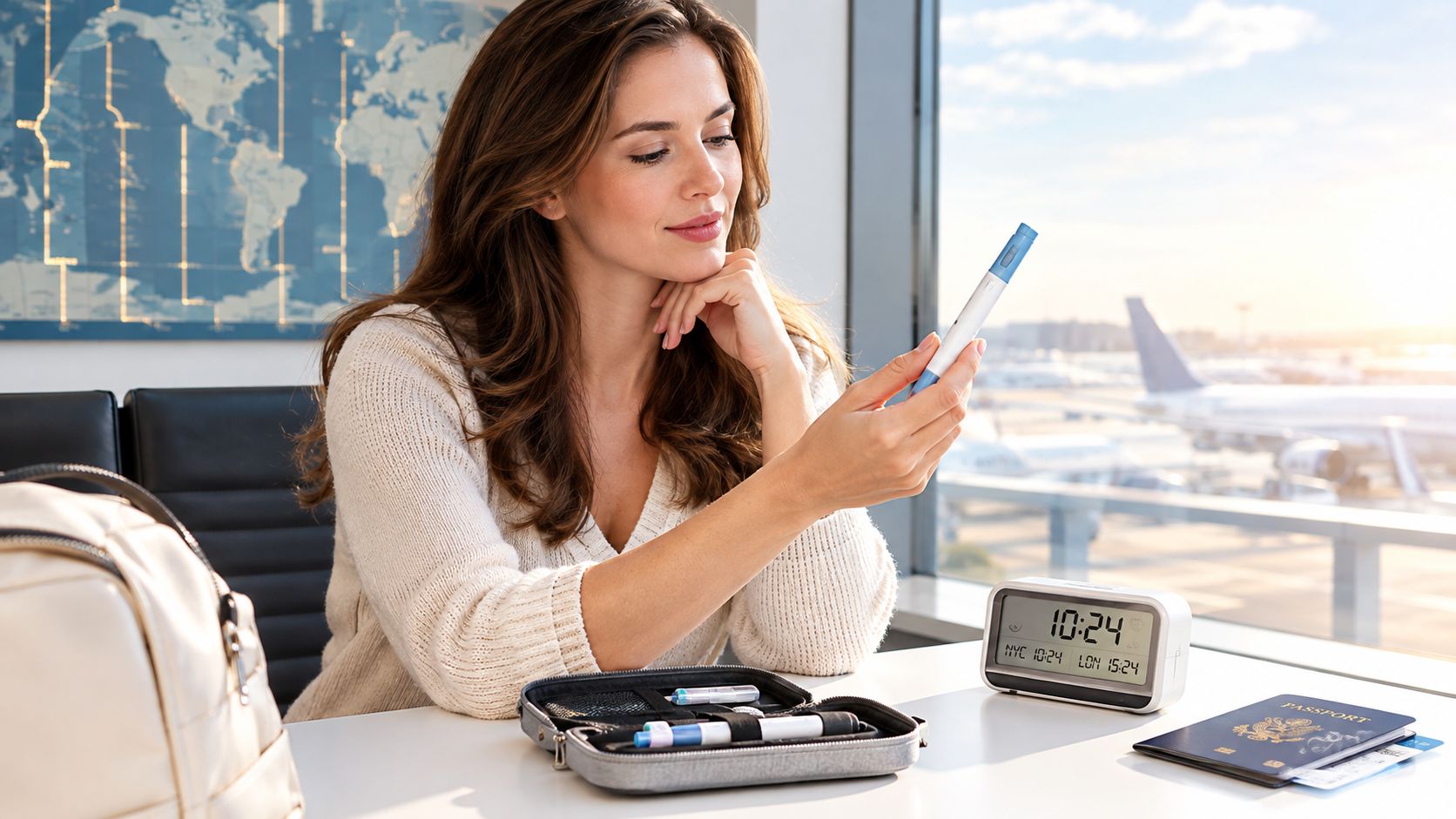
Solve that before departure by writing one instruction you can obey when tired. Note your last injection date, the next planned date, and whether you'll dose before leaving, during a layover, or after arrival. Keep that note beside the pen rather than in a calendar app that may adjust events when the phone changes time zone.
Use Elapsed Time, Not Local Confusion
Think in time elapsed since the previous dose, then translate that into a local plan at the destination. Using your home time zone as a temporary reference can help during the journey itself. Once you've arrived and settled on the next injection day, make that local day your new anchor if your prescriber agrees with the adjustment.
For an eastbound overnight flight, consider whether arriving exhausted, possibly nauseated, and short on privacy makes that morning a sensible injection moment. Dosing before departure may be cleaner in some itineraries. For a westbound trip that stretches the day, waiting until you've reached the hotel may preserve your usual rhythm without forcing an injection in an airport restroom.
| Situation | Practical approach |
|---|---|
| Short trip | Keep your home injection day if it fits the itinerary comfortably |
| Long stay | Reset to a convenient local day after discussing the shift with your provider |
| Dose day in transit | Decide in advance whether departure or arrival gives you privacy and reliable supplies |
| Uncertain timing | Message the prescriber rather than guessing or doubling a dose |
If the Day Slips
Don't panic-dose in a departure lounge merely because the calendar changed. Don't take two doses close together to force the schedule back into place, and don't assume an internet chart knows your dose, escalation stage, or medical history. A short message to your provider is safer than improvising around fatigue and time-zone arithmetic.
If you need the clinical context behind dose strength and escalation before asking that question, review an explanation of GLP-1 dosage for weight loss and bring your exact last-dose time to the conversation. Write down the answer in plain language, including the next date. The goal isn't mathematical elegance. It's a sustainable weekly day you can remember on both sides of the trip.
Contingency Plans for Lost Pens, Delays, and Refills on the Road
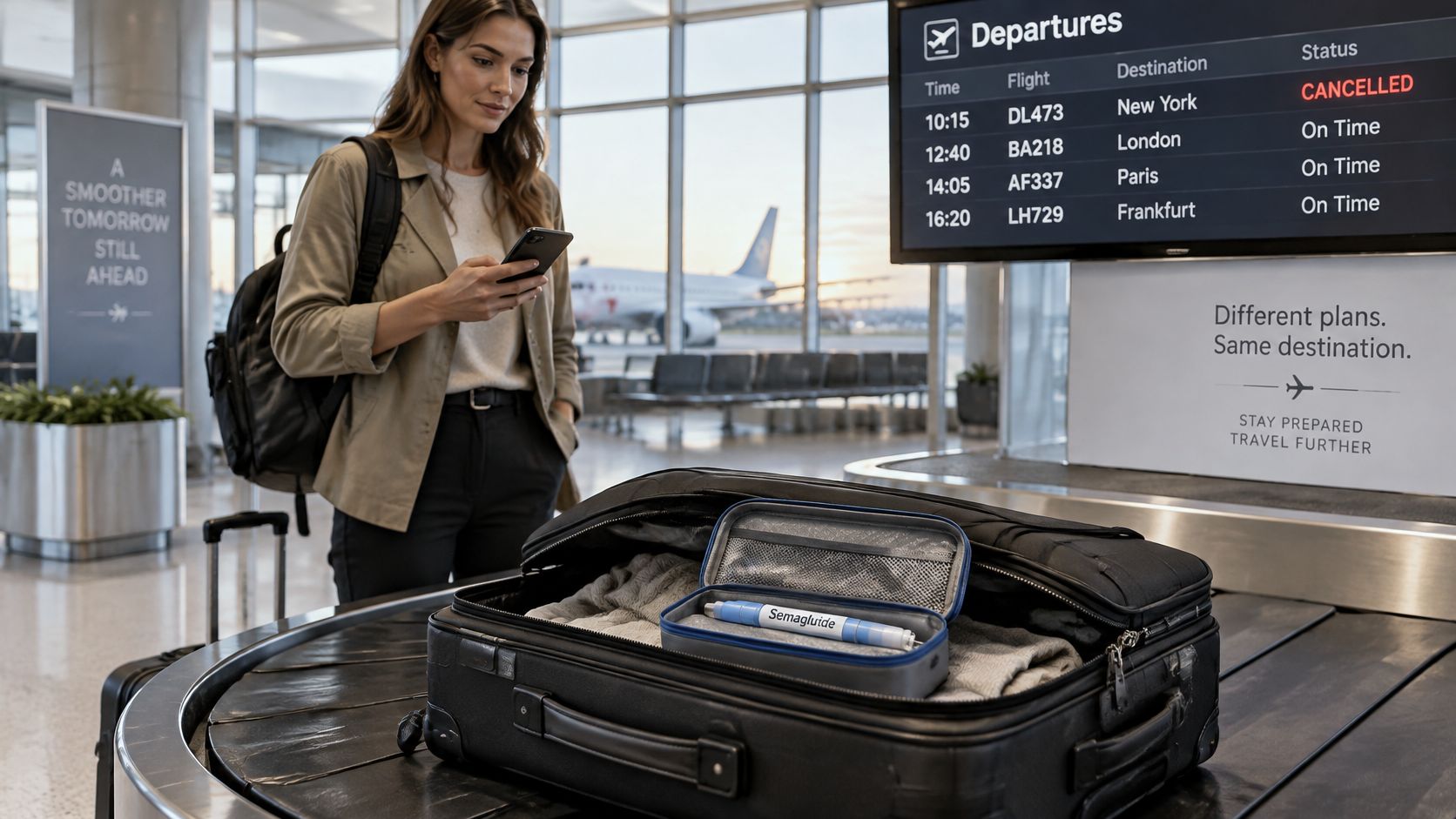
A diverted checked bag is annoying when it contains sandals. It's a treatment problem only if you ignored the carry-on rule and put your semaglutide inside. Keep the pen with you, split nothing essential across bags you may surrender at the gate, and photograph the pharmacy label so you can identify the exact product if the physical carton is damaged.
Three Failures, Three Responses
If a return flight disappears and the trip stretches, first recalculate the supplies you already have, including the extra medication you packed for delays. Find reliable refrigeration, update the note tracking time out of the refrigerator, and contact your provider before the last dose becomes urgent. Waiting until the pen is gone removes every calm option.
If a pen freezes against a gel pack or bakes in a vehicle, separate it from usable supplies and label it clearly so nobody injects it by habit. Contact the dispensing pharmacist or prescriber for product-specific advice. Clear liquid and an intact pen don't settle the question.
- Lost carry-on: Use your prescription copies and label photo to contact the provider and insurer promptly.
- Extended delay: Confirm storage, count remaining doses, and ask about a local or transferred refill early.
- Temperature incident: Quarantine the pen, record what happened, and get professional advice before use.
Telehealth helps because the clinical conversation doesn't depend on reaching an office during local business hours. Weight Method is one telehealth program that pairs provider oversight and messaging with medication delivery, which can make the pre-trip supply plan easier to coordinate than chasing records from several places. Whatever service you use, keep an active prescription, recent provider note, pharmacy details, and a label photo available offline.
When a replacement isn't practical, ask the prescriber whether skipping until you're home is safer than sourcing medication through an unfamiliar channel. Never buy an unlabeled pen locally or borrow someone else's supply. Before any makeup injection, review step-by-step semaglutide injection instructions once you're rested and have proper sharps disposal. A boring, well-documented delay beats a heroic workaround.
Bringing the Travel Routine Home
Travel exposes weak habits quickly. If the pen only works when it's in one refrigerator, one bathroom, and one phone reminder, an ordinary busy week can disrupt it too. Keep using the portable system after you return: original carton, confirmed refrigeration, visible weekly reminder, labeled sharps container, and an easy route to your provider.
Check the pen back into its normal storage as soon as you arrive, record the last dose, and replace used supplies before the suitcase goes into a closet. A routine that survives airports and borders will handle a hectic Tuesday without drama.
If changing plans make refills, dose timing, or provider access harder than they should be, Weight Method offers medically supervised GLP-1 care with online provider consultations, ongoing messaging, and medication shipped to your door. Visit the site to check eligibility and build a routine that stays consistent at home and on the road.