Semaglutide produced an average 14.9% weight loss, while tirzepatide produced up to 22.5% over roughly 72 weeks in clinical trials. Those results make both serious options for medically supervised weight management, but the medication that works best for you depends on your health, response, side effects, and ability to continue treatment.
You may be reading this after trying meal plans, exercise programs, calorie tracking, or a cycle of starting over every Monday. The frustration is understandable. Weight regulation involves appetite signals, digestion, energy balance, genetics, sleep, stress, and other health factors, so treatment shouldn't reduce the issue to willpower.
Prescription medications such as semaglutide and tirzepatide can change the biological signals that make weight loss difficult. They aren't shortcuts or substitutes for medical care. They're tools that can make lower-calorie eating more manageable while a clinician monitors your safety and progress.
The most important question isn't only, “Which drug causes the most weight loss?” It's also, “What happens after treatment, and how will I maintain the result?” This guide explains the leading options, how to access care, what side effects to expect, and why a long-term plan matters.
Why Standard Diets Often Fail
Maria had done everything people usually recommend. She bought a food scale, prepared salads on Sunday, joined a gym, and followed a restrictive plan that worked briefly. After several weeks, hunger became distracting, social meals became stressful, and the weight returned. She concluded that she lacked discipline. A better interpretation is that the plan didn't adequately address the biology driving her appetite.
For adults living with obesity, the body can defend a familiar weight through stronger hunger signals and reduced fullness. Stress, poor sleep, medications, medical conditions, and an environment filled with highly palatable food can add further pressure. A person may make consistent efforts and still find that maintaining a lower weight demands an exhausting level of restriction.

A useful reframing: Difficulty losing weight doesn't prove that someone is lazy. It may show that the treatment approach hasn't matched the person's biology or medical needs.
Appetite is a medical target
GLP-1 medicines act on receptors involved in appetite and fullness. Semaglutide, for example, can reduce energy intake by suppressing appetite and cravings rather than by making the body burn more energy, as described in the randomized obesity trial published in Nature Medicine. That distinction helps explain why people often describe less food noise, earlier fullness, or less interest in energy-dense foods.
Medication still doesn't remove the need for nourishing meals, movement, sleep, or emotional support. Instead, it may lower the intensity of hunger enough for those habits to become practical. The treatment also needs a prescription, dose adjustments, and follow-up, not an online purchase without clinical review.
People who want a plain-language overview of how these medicines fit into care can read this patient guide to GLP-1 therapy. A qualified provider can then determine whether medication is appropriate, identify contraindications, and discuss alternatives if it isn't.
Why older strategies may feel unsustainable
A diet can produce weight loss while it's followed, yet fail as a long-term treatment if it leaves you constantly hungry. Repeated restriction may also create an all-or-nothing pattern: strict rules during the week, followed by overeating when hunger and fatigue become overwhelming.
That doesn't mean lifestyle treatment has no value. It means lifestyle changes work better when they're realistic and supported by an approach that addresses appetite. Medical weight management treats obesity as a chronic condition rather than a personal failure, which gives patients room to ask for effective help without shame.
Comparing Semaglutide and Tirzepatide
Semaglutide and tirzepatide are the two names that often come up when searching for a weight loss medication that works. Both are given once weekly for obesity treatment, but they activate different hormone pathways.
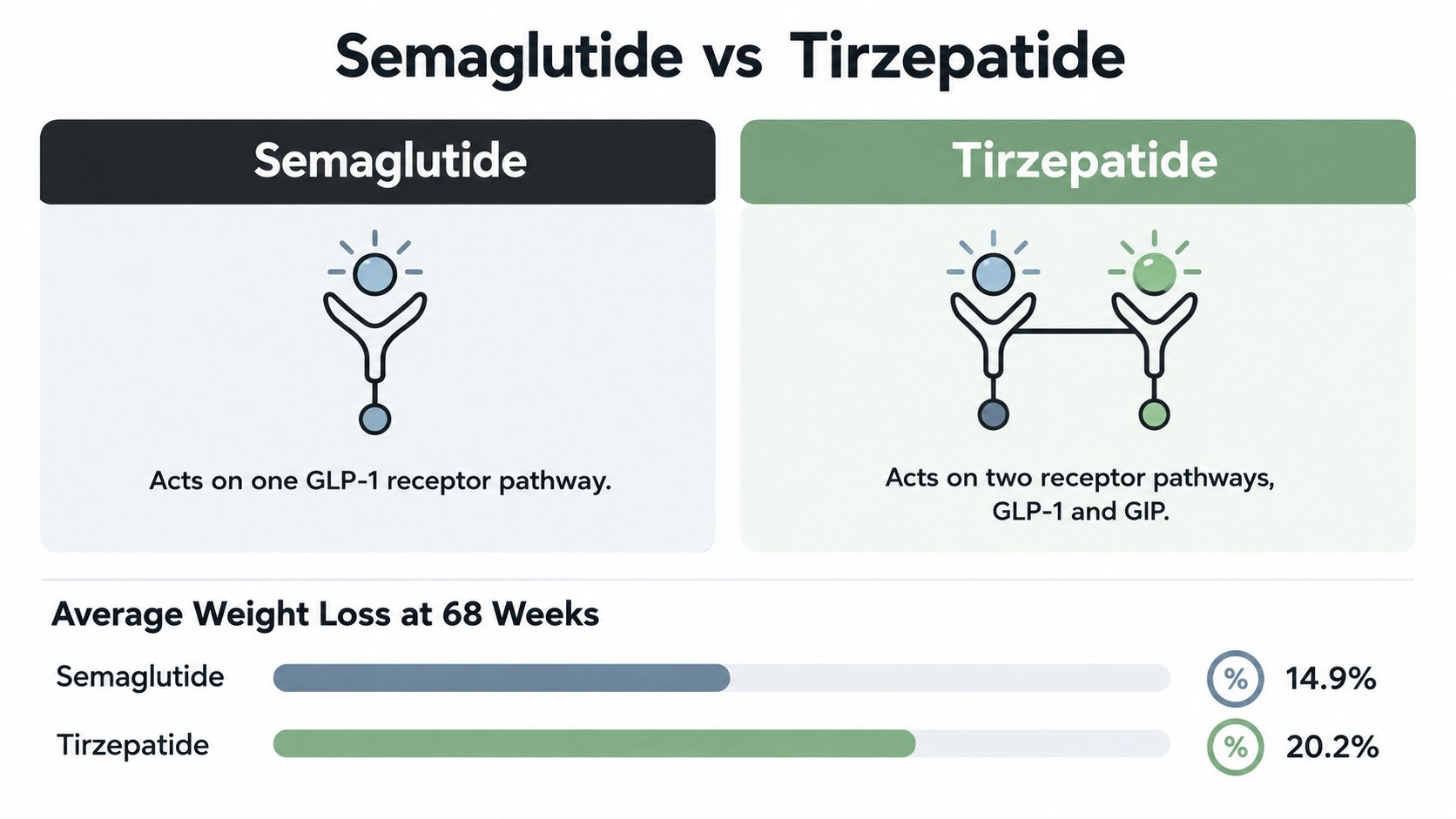
Semaglutide acts as a GLP-1 receptor agonist. GLP-1 signaling helps regulate appetite, slows the movement of food through the stomach, and supports fullness. In the STEP 1 trial, once-weekly semaglutide 2.4 mg produced a mean body-weight reduction of 14.9% over 68 weeks, compared with 2.4% with placebo, and 86% of participants achieved at least 5% weight loss, according to the American College of Cardiology's trial summary.
Tirzepatide activates both GIP and GLP-1 receptors. This dual action may produce a stronger average effect for some patients. In SURMOUNT-1, adults treated for 72 weeks lost between 16.0% and 22.5% of starting body weight depending on dose, compared with 2.4% with placebo, as reported in Lilly's SURMOUNT-1 results.
The results are benchmarks, not promises
Trial averages help compare medicines, but they don't predict one individual's result. Participants followed structured protocols, attended clinical visits, and received guidance that may differ from everyday care. Your response can also depend on dose, consistency, appetite changes, medical history, other medications, and whether side effects limit escalation.
The comparison below keeps the central distinction clear:
| Medication | Mechanism | Average Weight Loss |
|---|---|---|
| Semaglutide | GLP-1 receptor agonism, which supports fullness and reduces appetite | 14.9% over 68 weeks in STEP 1, versus 2.4% with placebo (ACC trial summary) |
| Tirzepatide | Combined GIP and GLP-1 receptor agonism | 16.0% to 22.5% over 72 weeks, depending on dose, versus 2.4% with placebo (Lilly trial results) |
A separate comparison found that tirzepatide at 15 mg produced an absolute body-weight reduction 6.6 percentage points greater than semaglutide 1 mg in SURPASS-2, while obesity trial data reported average reductions of 19.5% at 10 mg and 20.9% at 15 mg versus 3.1% with placebo. Those findings appear in the New England Journal of Medicine report. The doses and study populations matter, so this isn't a direct promise that every person will see the same difference.
For a more detailed side-by-side discussion, see these tirzepatide weight loss results and the semaglutide versus tirzepatide comparison. Your clinician may favor one option because of your medical history, blood sugar needs, previous treatment response, side-effect tolerance, or coverage.
How to Access Prescription Treatment
Starting treatment should feel like a clinical process, even when care happens online. A reputable telehealth program generally follows these steps.
Begin with health information
You first complete an intake form or health questionnaire. It may ask about your weight history, current medications, medical conditions, allergies, pregnancy status, previous weight-loss attempts, and treatment goals.
Answer carefully. The purpose isn't to approve everyone. It helps the provider identify whether a GLP-1 medicine might be suitable and whether another evaluation is needed first. A useful GLP-1 eligibility guide can help you understand the kinds of information clinicians typically consider.
Meet a licensed provider
If the initial information supports further evaluation, you'll meet a licensed healthcare provider through a video consultation. This appointment gives you space to explain what has and hasn't worked, ask about semaglutide and tirzepatide, and discuss realistic expectations.
The provider should review your medical history rather than treating a questionnaire as a diagnosis. They may decide that medication is appropriate, recommend additional testing, suggest a different treatment, or ask you to consult another clinician. That judgment is an important safety feature.
Build the prescription plan
If treatment is appropriate, the provider selects a medication and starting dose. GLP-1 therapy commonly uses gradual dose escalation so your body has time to adjust. You shouldn't increase the dose faster than prescribed because faster escalation can worsen digestive symptoms.
Ask how prescriptions are fulfilled, how the medication should be stored, what to do after a missed dose, and which symptoms require urgent help. You should also know how to contact the clinical team between appointments.
Receive follow-up, not just a package
Home delivery can make treatment convenient, but delivery isn't the treatment itself. Effective care includes progress tracking, medication reviews, side-effect support, and adjustments when appetite changes or weight loss plateaus.
Before enrolling, confirm whether follow-up happens through scheduled visits, secure messages, or both. You should be able to reach a clinician when a symptom is concerning, your medication is delayed, or your circumstances change.
Understanding Side Effects and Risks
The most common early problems with semaglutide and tirzepatide involve the digestive system. Patients may experience nausea, diarrhea, vomiting, constipation, bloating, abdominal discomfort, or reduced appetite, particularly while the dose is increasing.
These effects can be unpleasant without being dangerous. Still, “common” doesn't mean you should endure severe symptoms. Tell your provider if you can't keep fluids down, symptoms persist, or eating becomes difficult.

Why dose escalation matters
Providers usually increase the dose gradually. This gives the gastrointestinal tract time to adapt and lets the clinician assess whether a lower dose is already helping. A higher dose isn't automatically better if it causes symptoms that make continued treatment impossible.
Practical habits can also help:
- Choose smaller meals: Large portions may feel uncomfortable when fullness arrives earlier.
- Eat slowly: Slowing down gives your body time to recognize satiety.
- Limit foods that worsen symptoms: Greasy or very rich meals may intensify nausea for some people.
- Maintain fluids: Vomiting and diarrhea can contribute to dehydration, so contact your provider if you can't replace lost fluids.
- Follow the schedule: Don't double doses or make changes without medical guidance.
Call promptly: Severe or persistent abdominal pain, repeated vomiting, signs of dehydration, or symptoms that feel unusual for you deserve medical advice rather than self-treatment.
Serious risks need a real conversation
Less common but important concerns include pancreatitis and gallbladder problems. Your provider should ask about your medical history, review other medicines, and explain which warning signs require urgent evaluation.
Tell the clinician if you have had pancreatitis, gallbladder disease, severe gastrointestinal problems, or a personal or family history that could affect eligibility. Also disclose pregnancy or plans for pregnancy, because medication decisions may change.
A safe program won't pressure you to continue through serious symptoms or raise the dose just because progress has slowed. It will balance expected benefit against tolerability and your broader health.
Long-Term Results and Maintenance
Many people begin treatment with a short-term question: “How much weight can I lose?” The more important long-term question is whether the result can be maintained if the medication becomes unavailable, unaffordable, poorly tolerated, or medically inappropriate.
A 2026 systematic review of 37 studies involving 9,341 adults found average regain of 0.4 kg per month after people stopped weight-management medication. Regain rose to about 0.8 kg per month for semaglutide and tirzepatide, and researchers projected a return to baseline weight in about 1.5 to 1.7 years, as reported by the University of Oxford.
Those findings don't mean stopping always produces the same outcome. A Cleveland Clinic analysis of nearly 8,000 patients reported only 0.5% average regain one year after discontinuation, partly because many patients restarted treatment or moved to another obesity treatment. The difference shows why “What happens when I stop?” can't be answered by one number alone.
Maintenance is part of treatment
Medication reduces appetite while you're taking it. When treatment stops, that effect may fade, hunger may increase, and the routines that felt manageable during treatment may become harder. Some people may need continued therapy, while others may transition to another medication or a structured maintenance plan.
Don't stop suddenly or because of cost or side effects. Contact your provider first so you can discuss alternatives, timing, monitoring, and support. Your plan may need to account for weight, appetite, blood sugar, mental health, nutrition, and any condition that improved during treatment.
A long-term safety discussion should include the GLP-1 maintenance and safety guide. It can help you prepare questions for a clinician, but it can't replace individualized medical advice.
Practical ways to protect progress
Maintenance isn't only about staying on a prescription. It also involves eating enough protein and fiber-rich foods for your needs, preserving strength through appropriate activity, recognizing returning hunger early, and scheduling follow-up before a small change becomes a major setback.
Ask your provider:
- What is our maintenance target? Clarify whether the aim is continued loss, weight stability, or improvement in another health measure.
- What happens if I miss doses? Know the approved instructions for your specific medicine.
- What is the backup plan? Discuss switching, pausing, or other treatments before an interruption occurs.
- How will we monitor health? Agree on the symptoms, measurements, and medical markers that matter.
Needing ongoing treatment isn't a personal failure. Chronic conditions often require ongoing management, and obesity can behave the same way.
Choosing a Safe and Reputable Provider
The growing demand for GLP-1 treatment has created many online options. Convenience matters, but the provider's clinical standards matter more. A polished website can't tell you whether a service performs an adequate evaluation or offers meaningful follow-up.
Start with clinical oversight
Look for licensed providers who review your history, answer questions, and explain why a particular medication is appropriate. The service should make it clear who prescribes, how you communicate with the care team, and what happens when you report side effects.
Be cautious if a program promises a specific result, approves treatment without meaningful health questions, or treats dose increases as automatic. A safe provider can also tell you when medication isn't appropriate.
Examine the pharmacy and prescription details
Ask whether the program uses FDA-approved branded medication or compounded medication, who dispenses it, and how the pharmacy is verified. Don't assume that two products with the same active ingredient have identical oversight, instructions, or availability.
Before paying, confirm the complete price structure:
- Medication costs: Determine whether the quoted amount includes the prescription, supplies, and shipping.
- Clinical fees: Ask whether consultations, follow-up visits, or dose changes cost extra.
- Cancellation terms: Find out how to pause or end the program and whether unused medication can be refunded.
- Coverage questions: Check whether your insurance, FSA, or HSA can be used, and get the answer in writing.
People seeking local context can also review information about medical weight management in Pennsylvania, then compare those services with licensed telehealth care.
Protect your information and continuity of care
A reputable platform should explain its privacy practices and use secure systems for health information. It should also provide a clear process for urgent concerns, medication delays, changes in health, and transfer of records.
Weight Method is one telehealth option that uses an online intake, a video consultation with a licensed provider, home delivery of semaglutide or tirzepatide, progress tracking, secure messaging, and dose management. Evaluate it alongside local clinics and other services using the same questions about clinical review, pharmacy fulfillment, costs, privacy, and follow-up.
Choose the program that gives you a medically supervised plan you can realistically continue, not merely the fastest sign-up process.
Weight Method can connect eligible adults with licensed-provider consultations, semaglutide or tirzepatide treatment, home delivery, progress tracking, and ongoing messaging support. Visit Weight Method to complete the health intake and learn whether a supervised weight-management plan fits your needs.