At the standard 0.25 mg weekly starting dose, first-month semaglutide weight loss has no reliable fixed amount, and a small change on the scale doesn't mean the medication has failed. The strongest trial benchmark is 14.9% mean weight loss after 68 weeks, not a guaranteed result during the first four weeks.
The most popular advice about semaglutide weight loss first month is also the most misleading: it tells you to judge the medication by how many pounds disappear immediately. That approach ignores why the dose starts low, how tolerability shapes treatment, and why early appetite changes can matter more than the scale.
The first month is usually a dose-titration and adaptation period. Your prescriber is looking for evidence that you can tolerate treatment, maintain hydration and nutrition, follow the injection schedule, and progress safely. Weight may change during this period, but the absence of dramatic loss isn't a verdict on your long-term response.
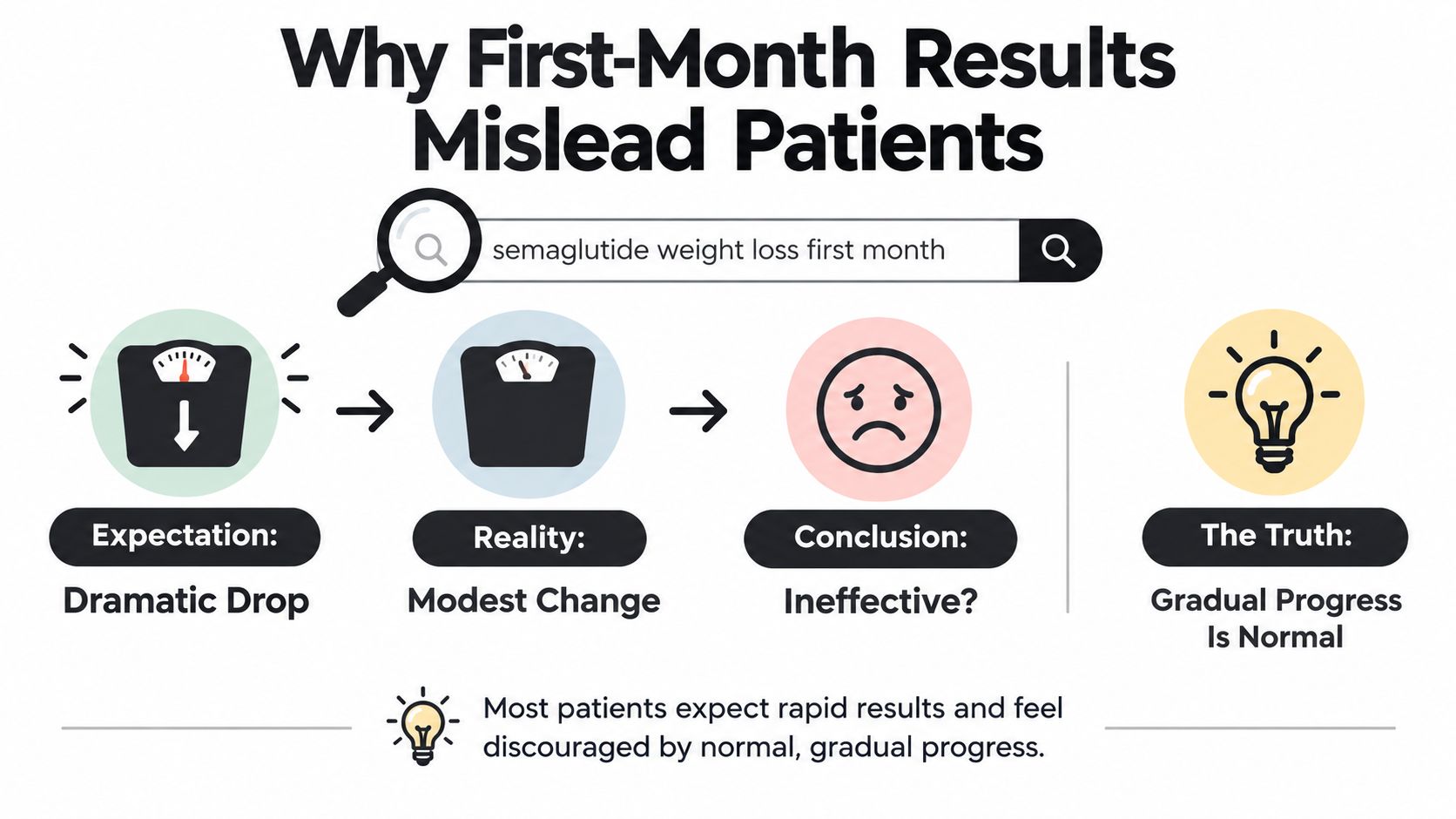
Why First-Month Results Mislead Patients
The first month is a poor test of semaglutide's full weight-loss potential. It is mainly a period for adapting to treatment, assessing tolerability, and deciding whether dose escalation can proceed safely. A dramatic drop on the scale is neither required nor a reliable early benchmark.
For FDA-approved Wegovy, treatment begins with 0.25 mg subcutaneously once weekly during weeks 1 through 4, followed by 0.5 mg in month two. This lower dose is intentional. Gradual escalation is designed to improve gastrointestinal tolerability, and the prescribing information allows clinicians to delay an increase when the current dose is not well tolerated. The approved schedule is described in the Wegovy prescribing information.
The starter dose has a specific job
The first four injections introduce semaglutide gradually. You may notice less hunger, fewer cravings, smaller portions, or a different response to familiar foods. Nausea, vomiting, diarrhea, constipation, and reduced oral intake can also occur. Some patients notice little change in appetite or weight.
These outcomes carry different clinical meanings. Someone who loses little weight but tolerates the starter dose may be progressing appropriately. Someone who loses weight quickly but cannot maintain fluid or food intake may need prompt clinical guidance. During this stage, hydration, nutrition, side effects, and adherence deserve as much attention as the scale.
The STEP 1 trial found measurable weight loss by the first post-randomization assessment at week four. Participants, however, were following a progressive dosing schedule toward the 2.4 mg maintenance dose. The STEP 1 trial report supports interpreting early change as one point in a longer treatment trajectory, not as the point of maximum effect.
Early progress may also appear in eating behavior before body weight changes clearly. A clinical infographic on first-month expectations illustrates why dramatic early loss is an unreliable expectation.
Practical rule: A quiet first month can fit a successful treatment plan. Confirm tolerability and safe progression before treating the scale as the main scorecard.
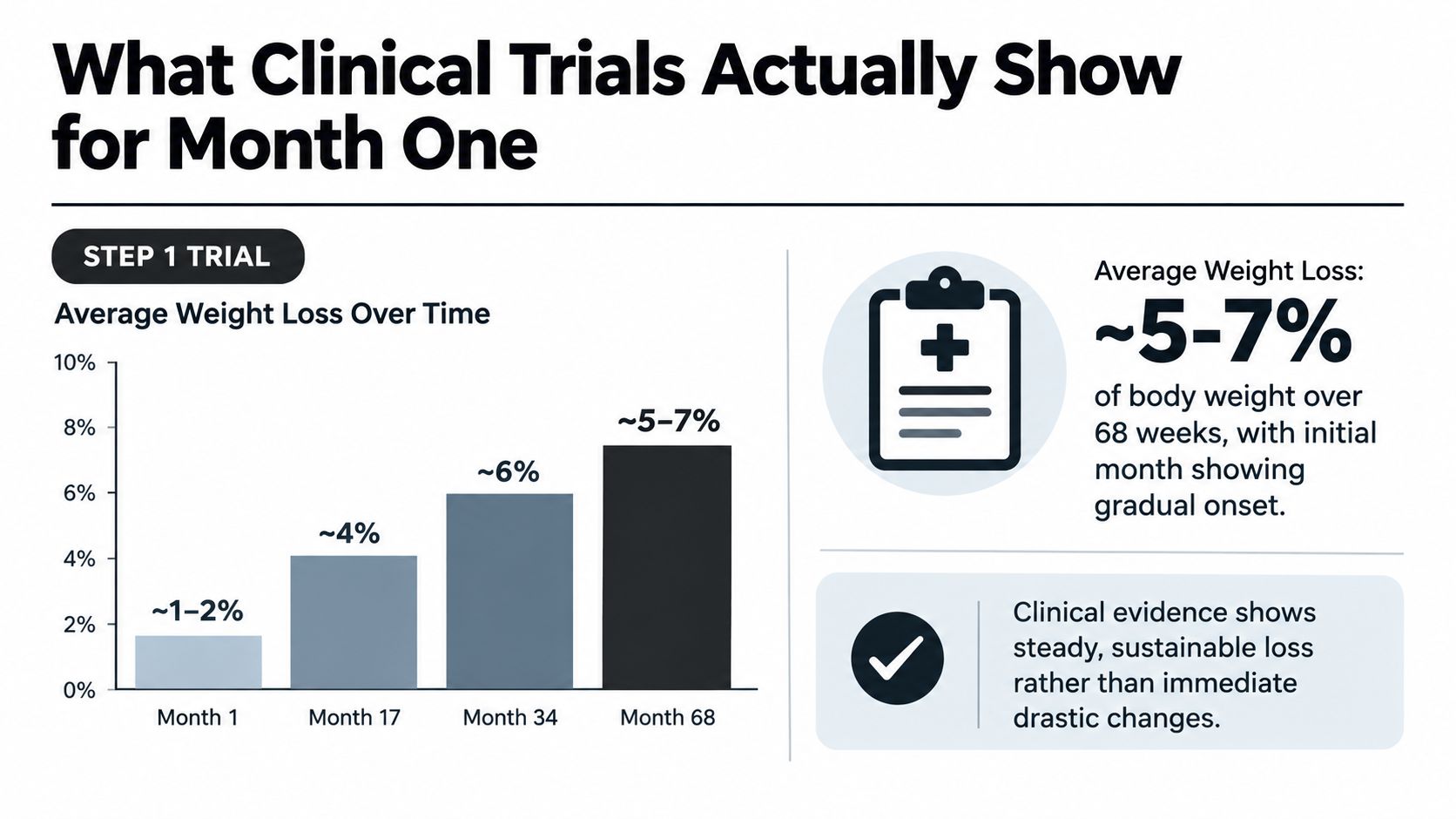
What Clinical Trials Actually Show for Month One
Clinical trials are useful for setting expectations, but they do not establish a universal first-month weight-loss target. In the STEP 1 trial, adults with overweight or obesity without type 2 diabetes received once-weekly semaglutide alongside lifestyle intervention. Weight loss was measurable by week four, while the dose continued to increase over several months. The early result therefore represented an initial response, not the medication's full effect.
The trial's longer follow-up provides the clearer benchmark. After 68 weeks, mean weight loss was 14.9% with semaglutide and lifestyle intervention, compared with 2.4% with placebo and lifestyle intervention. Those figures describe sustained treatment under trial conditions. They should not be converted into a first-month promise, especially while a patient is still adapting to the starter dose.
Why real-world results look different
Clinical trials provide scheduled follow-up, defined dosing, and structured support. Routine care rarely looks identical. Side effects, cost, supply interruptions, competing health needs, and limited appetite improvement can lead to early discontinuation. Some patients also remain on lower doses longer because tolerability determines how quickly treatment can advance.
A 2025 Cleveland Clinic analysis reported one-year average loss of 3.6% among people who stopped early, 6.8% among those who stopped later, and 13.7% among semaglutide users who continued on high maintenance doses. The Cleveland Clinic analysis of real-world injectable weight-loss treatment shows how treatment duration and dose exposure influence outcomes.
A modest first-month response does not by itself indicate treatment failure. A GLP-1 weight-loss timeline can help frame changing expectations, provided it is used as a guide rather than a fixed calendar. During month one, tolerability and safe dose progression often matter more than the number on the scale.
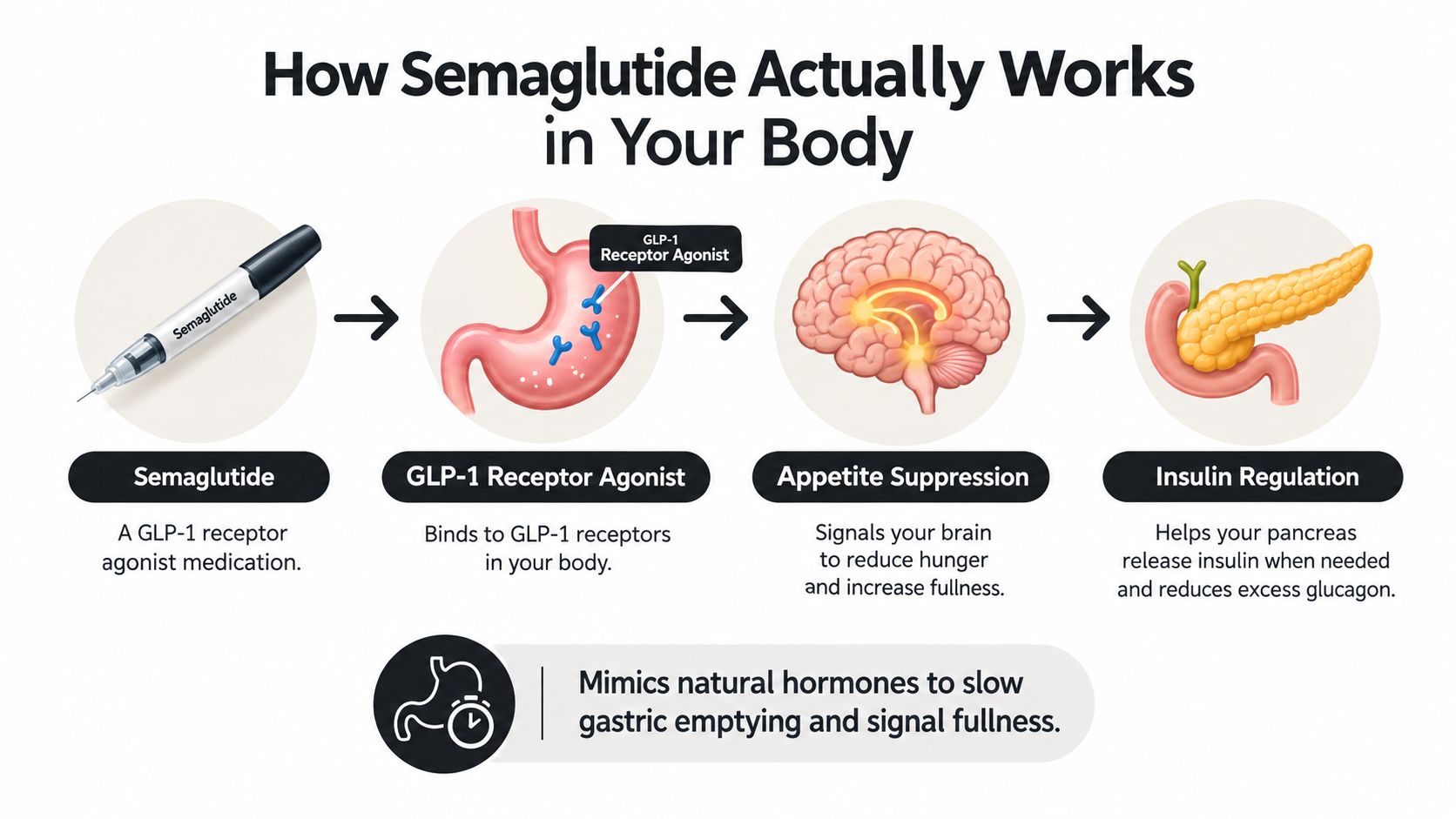
How Semaglutide Actually Works in Your Body
Semaglutide is a GLP-1 receptor agonist. It acts on pathways involved in appetite and digestion, helping some patients feel fuller sooner, experience less hunger, and reduce the intensity of food cravings. It also slows gastric emptying, which can make meals feel more satisfying for longer.
The first-month experience reflects a partial and developing response rather than the finished effect of treatment. At the low initiation dose, some patients feel a clear change in appetite, while others mainly notice gastrointestinal symptoms or no obvious difference. The scale may lag behind appetite changes because body weight reflects food intake, fluid balance, bowel patterns, activity, and individual biology.
Appetite response and scale response aren't identical
A patient may report that snacking feels less automatic before seeing a meaningful change in body weight. Another may eat less because of nausea rather than because hunger regulation has improved. Those two patterns require different clinical responses, even if the scale shows a similar result.
This is why treatment decisions shouldn't rely on weight alone. A prescribing clinician may consider whether hunger is changing, whether side effects are manageable, whether the patient can drink and eat adequately, and whether injections are being taken as directed. The guide to how GLP-1 medications work can help explain the biology, but it can't replace individual medical assessment.
The approved schedule reinforces the same point. Wegovy begins at 0.25 mg weekly for weeks 1 through 4, then moves to 0.5 mg in month two when clinically appropriate. Titration isn't a delay in treatment. It is part of treatment, intended to give the body time to adjust before higher doses are considered.
What Counts as Success in Your First Month
A successful first month isn't defined by one number. It means you and your prescriber have gathered useful information about how your body responds and whether the treatment can continue safely.
Start with tolerability. Mild symptoms may occur, but persistent or severe nausea, vomiting, diarrhea, constipation, abdominal discomfort, or reduced intake deserves communication with your clinical team. Don't increase the dose on your own to compensate for limited early weight loss. Faster escalation can make side effects harder to manage and may undermine adherence.
Use a wider first-month checklist
-
Tolerability: You can manage symptoms without routinely missing work, meals, fluids, or injections.
-
Adherence: You take each prescribed weekly dose according to the schedule and report missed doses rather than improvising.
-
Appetite signals: Hunger, cravings, or automatic snacking may become less intense, even if the scale hasn't moved much.
-
Hydration and nutrition: You continue drinking fluids and eating enough to support your health despite a lower appetite.
-
Bowel regularity: Changes in bowel habits are noticed early and discussed before they become difficult to manage.
-
Communication: You tell your prescriber what happened after each injection, including symptoms that seem minor but recur.
Meal structure often helps. Smaller portions, slower eating, and simple foods may be easier to tolerate when appetite or stomach comfort changes. Protein-containing meals and regular fluids can support a consistent routine, but your clinician should adapt recommendations to your medical history, other medications, and nutritional needs.
The better question is not only “How much did I lose?” It is “Can I continue safely, and what useful response is beginning?”
The clinical discussion of first-month success beyond pounds lost captures an important distinction. The first month is usually a titration phase, not a fair test of the medication's full potential. If symptoms are significant or oral intake falls, contact your prescriber before the next dose rather than treating discomfort as proof that the medication is working.
Semaglutide vs Tirzepatide First-Month Differences
Semaglutide and tirzepatide are often compared as if the better choice can be identified by the first few injections. That isn't a reliable way to choose between them.
Semaglutide targets the GLP-1 receptor. Tirzepatide acts through both GIP and GLP-1 pathways. Even with those mechanistic differences, both medications use gradual dose escalation, and both can produce appetite changes and gastrointestinal symptoms while the patient is adapting. The early experience depends on the prescribed product, the dose, tolerability, adherence, and individual response.
What matters during the opening phase
A patient taking tirzepatide shouldn't assume that its dual mechanism guarantees a dramatic first-month result. A patient taking semaglutide shouldn't interpret modest early scale movement as evidence that it will never work. Higher-dose effects and longer-term differences are separate questions from how either medication feels during initiation.
| Question | Semaglutide | Tirzepatide |
|---|---|---|
| Primary pathway | GLP-1 receptor activity | GIP and GLP-1 receptor activity |
| Early priority | Tolerability and adherence | Tolerability and adherence |
| What early appetite change means | A possible response, not a final outcome | A possible response, not a final outcome |
| Dose decision | Follow the prescribed escalation plan | Follow the prescribed escalation plan |
For a broader, non-prescriptive overview, readers can compare tirzepatide and semaglutide while keeping the focus on medical supervision rather than speed alone. The semaglutide versus tirzepatide guide can also help organize questions for a prescribing appointment.
The practical choice should account for eligibility, contraindications, current medications, insurance or access, side-effect history, treatment goals, and the level of follow-up available. Switching or escalating because of an early expectation gap can create confusion. Give the prescribed plan enough time for your clinician to evaluate it properly, unless symptoms require earlier review.
A Patient's Realistic First-Month Experience
Consider a composite example rather than a promised outcome. A patient begins semaglutide through a supervised program expecting the scale to change quickly after reading promotional claims online. During the opening weeks, appetite becomes somewhat quieter, but weight changes only modestly. The patient feels disappointed because the expected transformation hasn't appeared.
A closer review tells a more useful story. The injections are being taken consistently, fluid intake is adequate, portions are becoming easier to manage, and the patient notices less urge to snack between meals. Mild nausea follows injections but remains manageable, while bowel habits become slower and require attention. A clinician can use that information to decide whether to continue the current dose, provide symptom-management advice, or delay escalation.
What the patient learns
The patient stops treating every weigh-in as a verdict. Instead, they track appetite, symptoms, fluids, meals, bowel regularity, and injection dates. This record gives the prescriber more information than a single scale reading and helps distinguish a tolerable adaptation period from a problem that needs intervention.
Constipation deserves practical attention because reduced food intake, changed meal patterns, and medication effects can overlap. Patients looking for general preparation questions may find this semaglutide constipation guide useful, but persistent, severe, or concerning symptoms should be discussed with a healthcare professional.
A first month like this isn't dramatic, and it shouldn't be sold as one. Its value lies in establishing whether the patient can follow the regimen, whether appetite-related changes are emerging, and whether the next dose decision can be made safely. If the scale is quiet but the treatment is tolerable, the correct next step is usually clinical review, not self-directed escalation.
The opposite situation also needs caution. A noticeable early drop doesn't guarantee the same pace later, and it shouldn't encourage skipping the titration schedule. Semaglutide treatment works best when the patient and prescriber respond to the full pattern, not to one unusually high or low weigh-in.
Weight Method provides online evaluation with licensed-provider supervision, dose management, ongoing messaging, progress tracking, and home delivery options for prescribed semaglutide or tirzepatide treatment. If you want first-month expectations grounded in tolerability and monitored escalation, visit Weight Method to learn how the program works.