The out-of-pocket cost for Zepbound without insurance ranges from $299 to over $1,000 per month, depending on the dose, purchase channel, and refill timing. LillyDirect self-pay pricing can start at $299, while the manufacturer list price is about $1,086.37 for a 28-day supply, before possible pharmacy charges.
The popular advice is to search for “the Zepbound price” and stop there. That advice is incomplete. The number you see may describe a conditional self-pay offer, a specific dose, a vial instead of a pen, or a refill completed within a required window. If you're paying cash, the practical question isn't only how much Zepbound costs. It's which route you qualify for, what you'll pay after the first fill, and whether you can maintain that price over time.
The Real Retail Price of Zepbound
The unfiltered retail picture is expensive. Eli Lilly's official consumer pricing information places the manufacturer list price at approximately $1,086.37 for a 28-day supply, and the final pharmacy bill may include dispensing charges set by the pharmacy. Lilly's coverage and savings information explains that people without commercial insurance should expect to pay close to the listed price, plus applicable pharmacy fees. See the official Zepbound coverage and savings information before assuming a quoted online price applies to you.
That figure is a baseline, not a universal checkout total. The exact amount can vary with the product format, dose, pharmacy channel, and access program. A cash-paying patient who receives no eligible discount can therefore face a monthly expense above $1,000, with the possibility of additional pharmacy charges.
Dose affects the old list-price structure
Lilly's earlier official pricing page documented regular monthly prices of $599 for 7.5 mg, $699 for 10 mg, $849 for 12.5 mg, and $1,049 for 15 mg for patients without commercial insurance, before pharmacy charges. Those figures show why higher-dose brand treatment created such a severe burden for uninsured patients. The price wasn't merely high in the abstract. It increased substantially across the documented higher strengths.
This is why a single headline answer to “how much does Zepbound cost without insurance” can mislead. A person searching for a starting dose may see a lower price than someone prescribed a higher maintenance strength. A person using a self-pay channel may see a different figure from someone filling a standard retail prescription.
Practical rule: Treat the advertised price as a starting point for verification, not as your guaranteed monthly budget.
Your annual budget needs room for fees
At the official list price of $1,086.37 per 28 days, continuous treatment can amount to more than $13,000 before taxes or fees, based on the manufacturer pricing information. That calculation matters because patients often plan around one monthly number without accounting for a full year of treatment or pharmacy-specific charges.
If you're comparing options, write down the dose, format, pharmacy, refill conditions, provider fee, shipping fee, and any required supplies. The tirzepatide injection price guide can help you think beyond the medication's sticker price and compare the complete purchase path.
The retail route makes sense when your clinician specifically recommends branded Zepbound and you can comfortably sustain the cash price. It's a poor budgeting choice when you start treatment based on a temporary discount without confirming what happens after eligibility changes or a refill deadline passes.
Understanding Self-Pay Discounts and Refill Rules
The lower self-pay prices are real, but they aren't universal price cuts. Lilly's 2026 self-pay materials and retail announcements documented $299 for 2.5 mg, $399 for 5 mg, and $449 for 7.5 mg through 15 mg when the prescription is refilled within 45 days. These offers apply through LillyDirect and partner pharmacies for eligible uninsured and cash-paying patients, subject to the program's terms.
That condition changes the meaning of “without insurance.” You may not need insurance to access the lower tier, but you do need the right product channel, an eligible prescription, and compliant refill timing. Miss the timing requirement, and the discounted price may no longer apply.
The comparison patients actually need
| Dosage | Self-Pay Price, Within 45 Days | Standard Retail List Price |
|---|---|---|
| 2.5 mg | $299 | About $1,086.37 for a 28-day supply |
| 5 mg | $399 | About $1,086.37 for a 28-day supply |
| 7.5 mg | $449 | $599 under Lilly's documented regular monthly pricing |
| 10 mg | $449 | $699 under Lilly's documented regular monthly pricing |
| 12.5 mg | $449 | $849 under Lilly's documented regular monthly pricing |
| 15 mg | $449 | $1,049 under Lilly's documented regular monthly pricing |
The figures in the self-pay column come from Lilly's announcement about Zepbound KwikPen self-pay availability, while the documented regular prices come from Lilly's Zepbound pricing information. The retail list-price reference is a manufacturer figure and may not match every pharmacy's final cash quote.
The hidden condition is continuity
A lower first-month price doesn't guarantee a lower long-term cost. Refill timing can determine whether you remain in the discounted tier, and dose escalation can change which product and price apply. Lilly's self-pay materials have also documented a $499 monthly refill price when the prescription is refilled within 45 days of the prior delivery, showing that program terms themselves can change over time.
Before ordering, ask the dispensing channel four direct questions:
- Product format: Am I receiving a vial or a pen?
- Refill deadline: What date controls the 45-day requirement?
- Fallback price: What will I pay if I refill late?
- Total checkout cost: Are shipping, supplies, and pharmacy charges separate?
Use the guide to saving on GLP-1 treatment as a checklist, but verify current terms directly with the manufacturer or dispensing pharmacy. The lowest advertised number is useful only if you can reliably meet its conditions.
Comparing Brand Zepbound to Compounded Tirzepatide
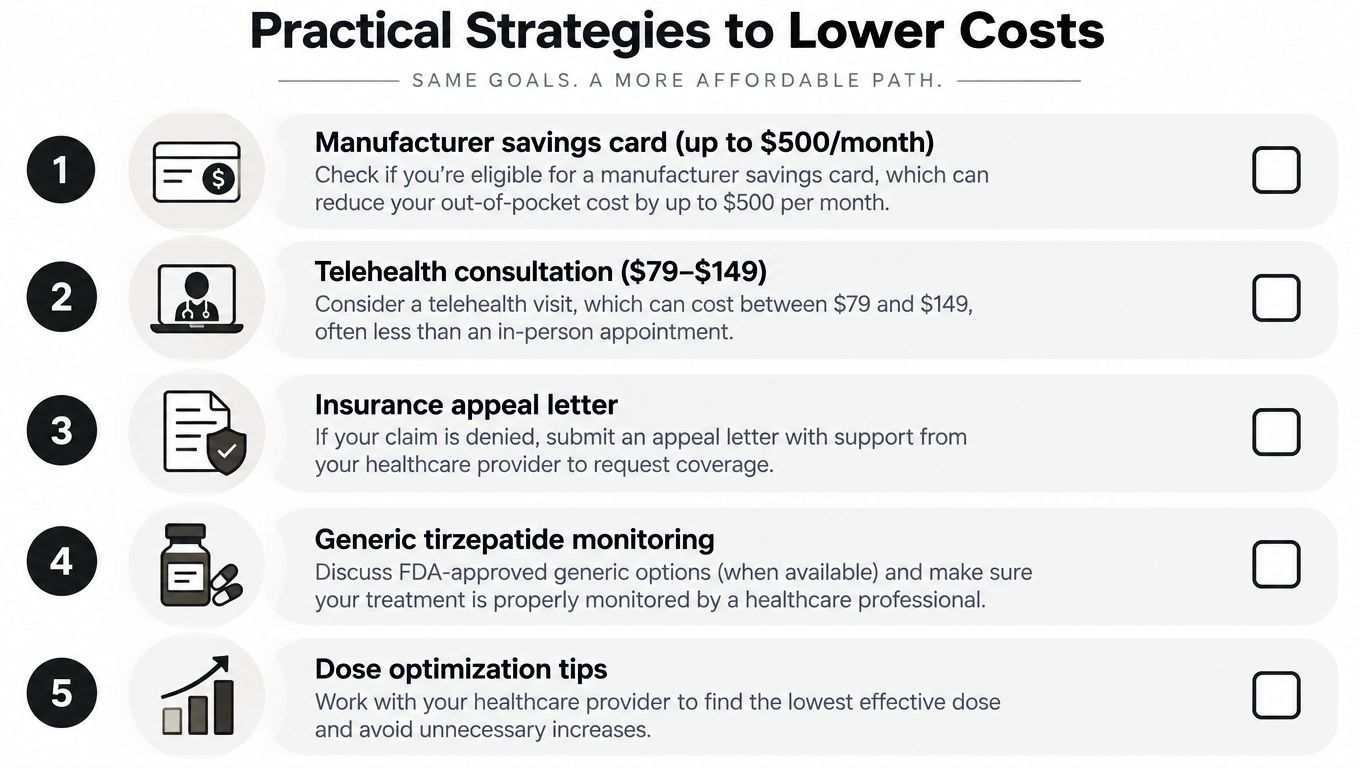
Brand Zepbound and compounded tirzepatide involve different purchasing models. Brand Zepbound gives you a manufacturer-produced product through a branded access channel. Compounded tirzepatide may be provided through a telehealth program that combines a clinical evaluation, prescription process, medication fulfillment, shipping, and follow-up support into one recurring fee.
That structure can make the budget easier to understand, but it doesn't eliminate the need for medical judgment. A licensed provider must decide whether treatment is appropriate, and compounded medications aren't FDA-approved for safety, quality, or effectiveness in the same way FDA-approved products are. Ask which pharmacy fulfills the prescription, what monitoring is included, how dose changes are handled, and what happens if you experience side effects.
Compare total cost, not just medication cost
A brand self-pay quote may exclude provider visits, shipping, or pharmacy charges. A low-looking compounded quote may exclude consultation fees, supplies, or follow-up care. You need the full monthly commitment before choosing either path.
| Cost question | Brand Zepbound self-pay | Compounded tirzepatide telehealth |
|---|---|---|
| Medication source | Manufacturer product | Compounded medication from a dispensing pharmacy |
| Price behavior | Can vary by dose, channel, and refill timing | May use a program fee, depending on provider |
| Clinical care | Prescription and care may be arranged separately | Often integrated into the telehealth program |
| Refill administration | Program rules may apply | Provider and pharmacy policies apply |
| Main risk | Losing a conditional discount | Assuming a bundled price means identical regulatory status |
Insurance terminology also affects the decision. If your plan excludes weight-management medication, learning what a formulary is can help you understand how your insurer categorizes covered drugs, restrictions, and alternatives.
Weight Method is one cash-pay telehealth option. Its program materials describe provider evaluation, ongoing access, dose management, home shipping, and compounded tirzepatide as part of an all-inclusive treatment model. Review the comparison of compounded and brand-name GLP-1 options and confirm current pricing, pharmacy details, eligibility, and terms before enrolling.
My recommendation is straightforward. Choose branded Zepbound if you want the manufacturer product and can verify a sustainable access route. Consider compounded telehealth only after reviewing the clinical safeguards and confirming that the all-in price is predictably consistent for your situation.
Practical Strategies to Lower Your Out-of-Pocket Costs
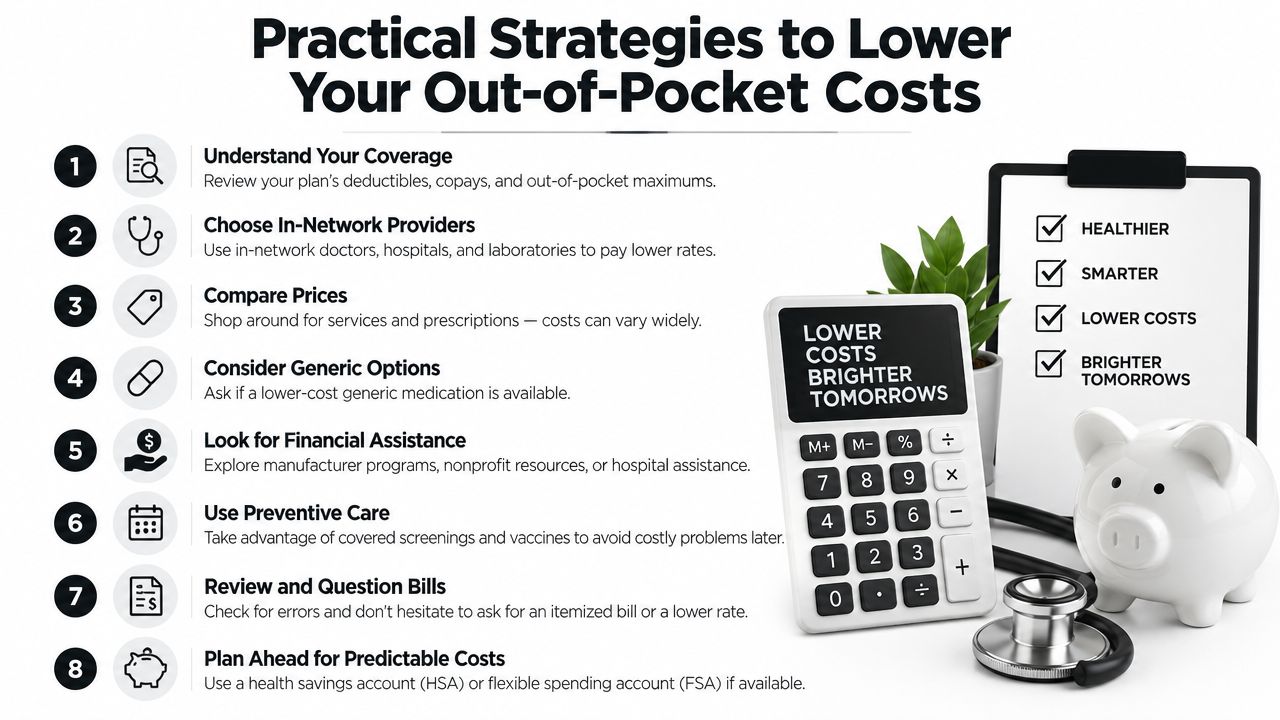
Start with eligibility, not coupons. Manufacturer savings programs generally distinguish between commercial insurance, government coverage, uninsured status, and patients whose plans don't cover the medication. A savings card that works for one category may not work for another, so enter your actual coverage status and read the current restrictions before relying on the advertised reduction.
Use a disciplined cost-audit process
-
Confirm your insurance category. Ask whether Zepbound is excluded, covered with prior authorization, or covered only under specific plan conditions. If your plan denies coverage, request the denial reason in writing.
-
Check the manufacturer channel. Compare the current LillyDirect self-pay terms with your local pharmacy quote. Confirm the dose, product format, refill deadline, and whether any pharmacy or delivery charge is added.
-
Compare pharmacies carefully. Cash prices can vary by pharmacy and location. Ask each pharmacy for the complete amount due, not only the medication's listed price.
-
Use eligible tax-advantaged funds. If your plan permits prescription purchases through an FSA or HSA, those funds may reduce the effective financial burden. Check your account rules before treatment begins.
-
Price the care around the medication. Include provider consultations, follow-up visits, shipping, injection supplies, and any lab or monitoring costs required by your clinician.
Don't stretch doses on your own
A lower monthly spend isn't a bargain if you change the prescribed schedule without medical guidance. Don't skip injections, alter the dose, or extend intervals to make the medication last longer unless your prescriber gives you a safe plan. Those decisions can affect tolerability, treatment response, and continuity.
If your current route is unaffordable, tell your provider before you start. A clinician may discuss a different FDA-approved treatment, a clinically appropriate compounded option, or a monitored change in the treatment plan. The right answer depends on your health history, prescribed medication, and access rules.
Document every quote in one place. Record the date, dose, pharmacy, product format, refill requirement, consultation fee, shipping charge, and renewal price. This simple comparison prevents a low introductory figure from hiding a monthly obligation you can't maintain.
Evaluating the Total Value of Medical Weight Loss
The cheapest medication invoice isn't automatically the cheapest treatment. Weight-management medication requires a prescription, clinical screening, dose decisions, side-effect management, and a plan for monitoring progress. If those services are missing, you may save at checkout while taking on more uncertainty and administrative work elsewhere.
A provider should evaluate whether the medication fits your health situation and explain how to use it safely. Ongoing care matters when you need help with gastrointestinal symptoms, dose tolerance, progress that slows, or a decision about continuing treatment. Medication access without a usable care pathway is a fragile bargain.

Calculate value through support
Before selecting a program, ask what the monthly fee buys:
- Clinical evaluation: Does a licensed provider review your medical history and determine whether treatment is appropriate?
- Dose management: Can the care team adjust treatment based on tolerance and response?
- Communication: Is messaging available when questions arise between scheduled visits?
- Fulfillment: Does the program explain which pharmacy dispenses the medication and how shipping works?
- Continuity: What happens if the medication is delayed, unavailable, or no longer affordable?
A bundled model can be easier to budget because one monthly payment may cover several parts of care. That doesn't make every bundled program equivalent. Read the prescribing process, pharmacy disclosures, cancellation rules, refund policy, and clinical support terms before paying.
Lifestyle support still belongs in the financial calculation. A supervised treatment plan may include nutrition guidance, movement goals, and progress tracking. Some people also use structured community activities, such as a plan to run a gym weight loss challenge, to create accountability outside the prescription itself.
Better value means fewer surprises: Count the medication, the care, the logistics, and the support you'll need to stay consistent.
The key question is not whether a program promises the lowest price. Ask whether its pricing and clinical structure give you a realistic chance of following the plan safely over time. A transparent program with a clearly defined monthly fee may be more useful than a cheaper medication quote that leaves every other cost uncertain.
Choosing the Right Path for Your Budget and Health
Your decision should follow a simple priority order: clinical appropriateness first, total cost second, convenience third. A discount doesn't make a medication suitable, and a low monthly price doesn't help if you can't refill it consistently or obtain support when problems arise.
Choose a brand self-pay route when all of these conditions are true:
- You want the FDA-approved branded product.
- You qualify for the specific self-pay channel.
- You understand the dose and format being dispensed.
- You can meet the refill requirements.
- You can afford the price if the discount changes or ends.
This path offers product clarity, but its pricing can be conditional. Verify every term before the prescription is sent, especially if your dose may change or your schedule could make a refill deadline difficult.
A compounded telehealth route may fit better when predictable budgeting and integrated care matter most. Evaluate it as a healthcare service, not just a cheaper vial. Confirm that a licensed provider performs an individual assessment, that a state-licensed pharmacy fulfills prescriptions, and that the program clearly discloses the medication's compounded status.
Use this decision test
Ask yourself three questions:
- Can I maintain this monthly cost? Use the highest realistic price you might face, not only the introductory offer.
- What happens if my dose changes? Find out whether pricing changes with strength or remains tied to a program structure.
- Who helps me if treatment becomes difficult? Identify the provider, messaging process, refill support, and side-effect guidance before starting.
Don't begin a treatment plan that depends on perfect timing, uninterrupted cash flow, or an unclear discount. If the manufacturer route works for your budget and clinical needs, use it with a written understanding of the terms. If not, compare transparent telehealth programs and discuss the available options with a licensed clinician.
The answer to “how much does Zepbound cost without insurance” is therefore a range, not a single price. $299 can be attainable through a specific self-pay path, while full retail can exceed $1,000 per month, and the difference comes from eligibility, dose, product format, refill behavior, and pharmacy channel. Build your decision around the price you can sustain, the care you receive, and the safety of the treatment plan.
Weight Method offers cash-pay telehealth weight management with licensed provider evaluation, ongoing support, dose management, and home delivery, with program pricing and eligibility confirmed during enrollment. If you want a clearer alternative to navigating conditional Zepbound discounts, review the current options at Weight Method and discuss whether a prescribed treatment path is appropriate for you.