If you've spent months trying to lose weight while juggling work, family, and a schedule that never really slows down, the appeal of semaglutide weight loss online is easy to understand. You want medical help that fits into real life, not a waiting room, and you want it to feel private, structured, and grounded in science rather than hype.
That's exactly where the conversation should begin, with convenience, but not end there. Online semaglutide can be a legitimate medical pathway, yet it only works well when the program includes licensed oversight, careful dosing, and a plan for what happens if side effects, cost, or long-term maintenance become part of the picture.
Why Online Semaglutide Appeals to Busy Adults
A lot of people reach this search after the same pattern. They've tried eating plans that worked for a while, then stalled. They've read enough to know they don't want another vague promise, but they also don't have time for repeated in-person visits just to ask basic questions.
Online care makes the first step simpler. A brief intake, a video visit, and home delivery can remove the friction that stops people from starting at all. For a parent, a manager, or anyone with a packed week, that alone can make medical treatment feel possible instead of exhausting.
The real job behind the search
Most readers are not looking for a miracle. They're looking for a supervised way to lower appetite, eat less without feeling constantly deprived, and stay accountable while the medication is being adjusted. That's a reasonable goal, and it's why semaglutide weight loss online has become such a common search phrase.
The main point is that convenience cannot replace assessment. A responsible online program still needs to screen for eligibility, check medications and health history, and explain what kind of follow-up is included. If a site skips those steps and jumps straight to payment, that's not simple care, it's a shortcut.
Practical rule: if a program can't explain who reviews your health history, how dose changes are handled, and where the medication comes from, keep looking.
A useful way to think about it is this, you're not buying a box of medication, you're entering a clinical process. That process should feel calm, clear, and a little slower than the marketing suggests. If it feels rushed or overly sales-driven, that's usually the wrong sign.
How Semaglutide Supports Weight Loss
Semaglutide works by talking to appetite pathways in the body, especially the GLP-1 system that helps regulate hunger and fullness. In plain language, it helps lower the volume on cravings and makes smaller meals feel more satisfying. People often describe it as finally not thinking about food every few minutes.
A simple analogy helps. Think of your appetite like a thermostat that has been set too high. Semaglutide doesn't remove the thermostat, it helps reset the signal so your body isn't pushing you toward the fridge all day.
Why weekly dosing matters
The medication is used once a week, which matters more than it sounds. Weekly dosing is easier to keep up with than a daily injection routine, and consistency is important because the body needs stable exposure over time. That's one reason online programs emphasize reminders, follow-up messaging, and dose check-ins.
The dose is also usually increased gradually. That slow increase gives your body time to adapt and helps reduce early intolerance. It's one reason a real medical program should talk about escalation, not just shipping.
Food habits still matter here. Medication can make it easier to stop eating past fullness, but it doesn't plan meals for you. If you want a practical companion tool, the best meal planner for weight loss can help you keep meals simpler while you learn what hunger feels like on treatment.
What patients usually notice first
People often notice that portions feel big sooner, snacking becomes less automatic, and meals stop feeling like a constant negotiation. That doesn't mean hunger disappears entirely. It means the signal is usually more manageable, so behavior changes feel less forced.
The key is that semaglutide supports the work, it doesn't replace it. The medication makes the plan easier to follow, but the plan still has to exist.
How Well Semaglutide Works for Weight Loss
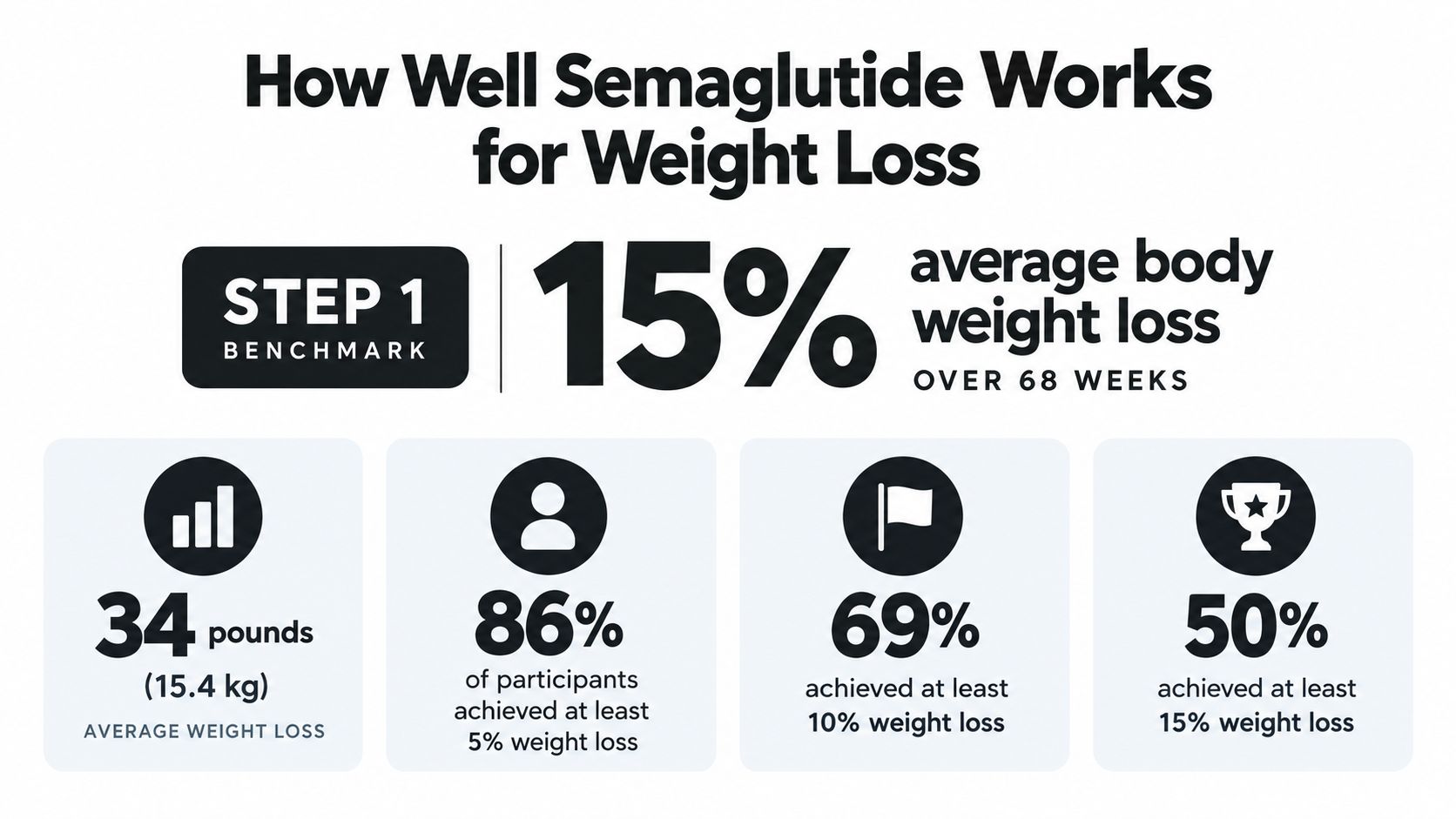
The best benchmark comes from the STEP 1 randomized trial of 1,961 adults without diabetes, which studied once-weekly semaglutide 2.4 mg alongside lifestyle counseling for 68 weeks. In that study, average body weight fell by 14.9% with semaglutide compared with 2.4% with placebo, for a placebo-adjusted difference of 12.4 percentage points (ACC trial summary). The difference was statistically significant, and the trial completion rate was high enough to support the reliability of the 68-week findings.
That average is useful, but it's still an average. Some people lose more, some lose less, and a realistic online program should never promise that your result will match the trial line by line. It should use the trial as a benchmark and then explain how adherence, dose escalation, and clinical follow-up affect your own path.
What the responder rates mean in real life
The same trial showed that 86.4% of semaglutide participants achieved at least 5% weight loss, compared with 31.5% on placebo (NEJM full report). That responder data matters because it tells you the effect wasn't limited to a small subgroup. A large share of participants had clinically meaningful loss, not just a few dramatic outliers.
The bigger lesson is that trial results come from structured care. Participants received lifestyle counseling, and the dose was increased gradually before maintenance. That means an online program should be thinking the same way, prescription plus coaching, not shipment alone.
Useful benchmark: if an online provider talks only about speed, price, or discreet delivery, but never mentions dose escalation, side effects, or follow-up, it's leaving out the parts that make the treatment safer and more predictable.
For a different view of expected outcomes, it can help to compare the trial benchmark with a patient-focused explainer such as how much weight you can lose on semaglutide. The point isn't to chase a headline number, it's to understand the range of outcomes before you start.
Why the numbers shouldn't be treated like a promise
Even strong trial results don't erase individual variation. Your starting weight, medical history, habits, tolerance, and how carefully the dose is adjusted all matter. So do the practical details, like whether the medication is taken consistently and whether your clinician checks in before each increase.
That's why the most honest online conversations sound measured. They give you a target, then explain the work required to reach it.
How Online Prescribing and Delivery Work
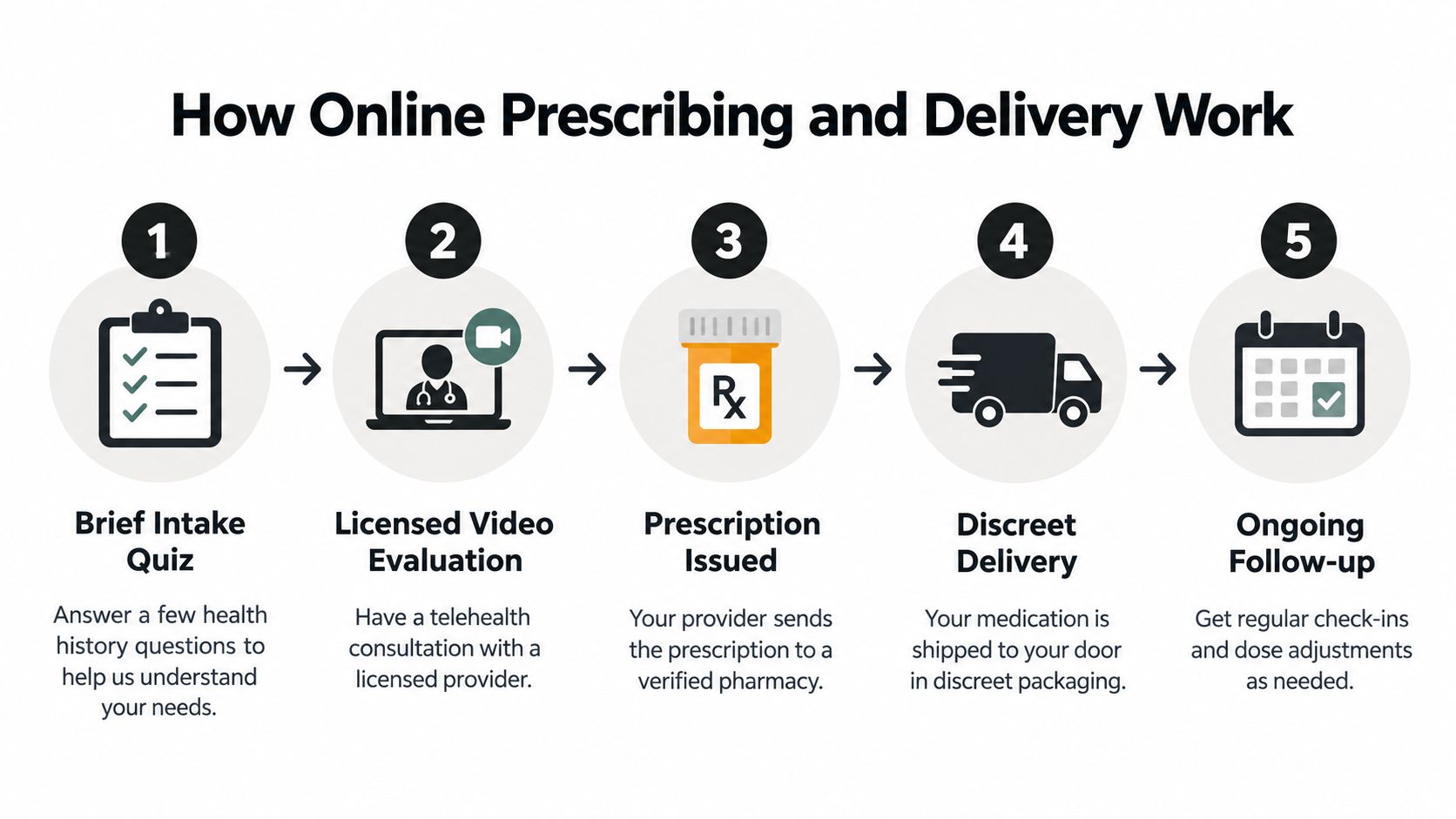
Before choosing semaglutide weight loss online, picture the first appointment as a clinical screening, not a shopping trip. A legitimate telehealth pathway usually begins with a health questionnaire, followed by a video evaluation with a licensed clinician. The clinician reviews your medicines, asks follow-up questions, and decides whether semaglutide fits your health needs.
If it is not appropriate, the provider should explain why and suggest what to discuss next. If it is appropriate, the prescription should go to a verified pharmacy. Before anything ships, the program should explain the formulation, delivery process, follow-up, and how dose changes will be handled.
What a good intake should ask
A careful intake covers more than weight. It should ask about current medicines, previous GLP-1 use, major medical conditions, pregnancy status when relevant, past side effects, and your ability to follow injection instructions safely. These questions help identify people who may need another treatment or closer monitoring.
Good screening is focused. A short form that a clinician reviews can be more useful than a long questionnaire treated as a box-ticking exercise. Your answers should shape the video visit and prescribing decision.
Why the video visit matters
A video visit adds clinical judgment that a checkbox form cannot provide. The prescriber can ask about appetite, eating patterns, symptoms, and risks that may be unclear in written answers. You can also ask how dose escalation works, what to do after a missed dose, and how nausea or constipation will be handled.
A video visit should feel like a conversation, not a formality. If the clinician never asks a follow-up question, the visit probably isn't doing much clinical work.
Some programs combine the initial evaluation with ongoing messaging and dose management. Weight Method is one example, offering virtual evaluation and continued supervision with home delivery through its care workflow. The relevant point is the prescription oversight and follow-up, rather than the brand name alone.
What happens after delivery
Before your first shipment arrives, review the full semaglutide injection online process, from prescription to delivery. The package should include clear instructions identifying the exact formulation, dose in milligrams, injection volume when applicable, escalation schedule, and steps to take after a missed dose.
Follow-up should remain part of the service. Dose increases need review because tolerability can change as treatment progresses. A shipment starts treatment, it does not replace monitoring or an exit plan for deciding what happens if the medicine is stopped.
Trustworthy Online Options Versus Risky Offers
A late-night search for semaglutide can make every site look similar. The difference shows up in the details. Real care names the clinician, explains the formulation, identifies the pharmacy, and leaves a clear path for follow-up after you place an order. Sales-first sites usually leave one or more of those pieces vague.
| Trust signal | What good looks like | Red flag |
|---|---|---|
| Licensed evaluation | A clinician reviews your history and asks follow-up questions | No real medical review, just a quick checkout |
| Formulation clarity | The site clearly says whether the medication is FDA-approved or compounded | Vague wording about “semaglutide” with no formulation detail |
| Pharmacy transparency | The pharmacy name and dispensing pathway are explained | No clear pharmacy information |
| Follow-up access | You can message a care team or return for dose review | No way to reach a clinician after purchase |
| Dosing instructions | The plan explains mg, volume, and escalation in plain language | Confusing syringe instructions or no titration guidance |
If a site promises results while avoiding safety, that is a warning sign. Pressure tactics matter too. Urgency, discounts, and scarcity should never replace a review of your medical history. Good treatment sounds calm because it is built around judgment, not theatrics.
Compounded and FDA-approved are not the same thing
The formulation question matters enough that it deserves its own safety discussion below.
A trustworthy program should still be plain about what it can and cannot claim. Home delivery does not remove the need for medical judgment, and not every product sold as semaglutide should be treated as interchangeable. Convenience is useful, but chronic care still needs careful dosing, follow-up, and a clear exit plan if treatment stops.
What to verify before you enroll
Check that a licensed clinician is involved. Confirm that the medication path is explained in direct language. Make sure you know how questions are handled after delivery.
You should be able to answer three simple questions before you start. Who is prescribing, what exactly is being dispensed, and how do you reach someone if the dose needs review or a side effect appears? If those answers are missing, the offer is built more like a storefront than a care program.
Safety Side Effects and Long Term Planning
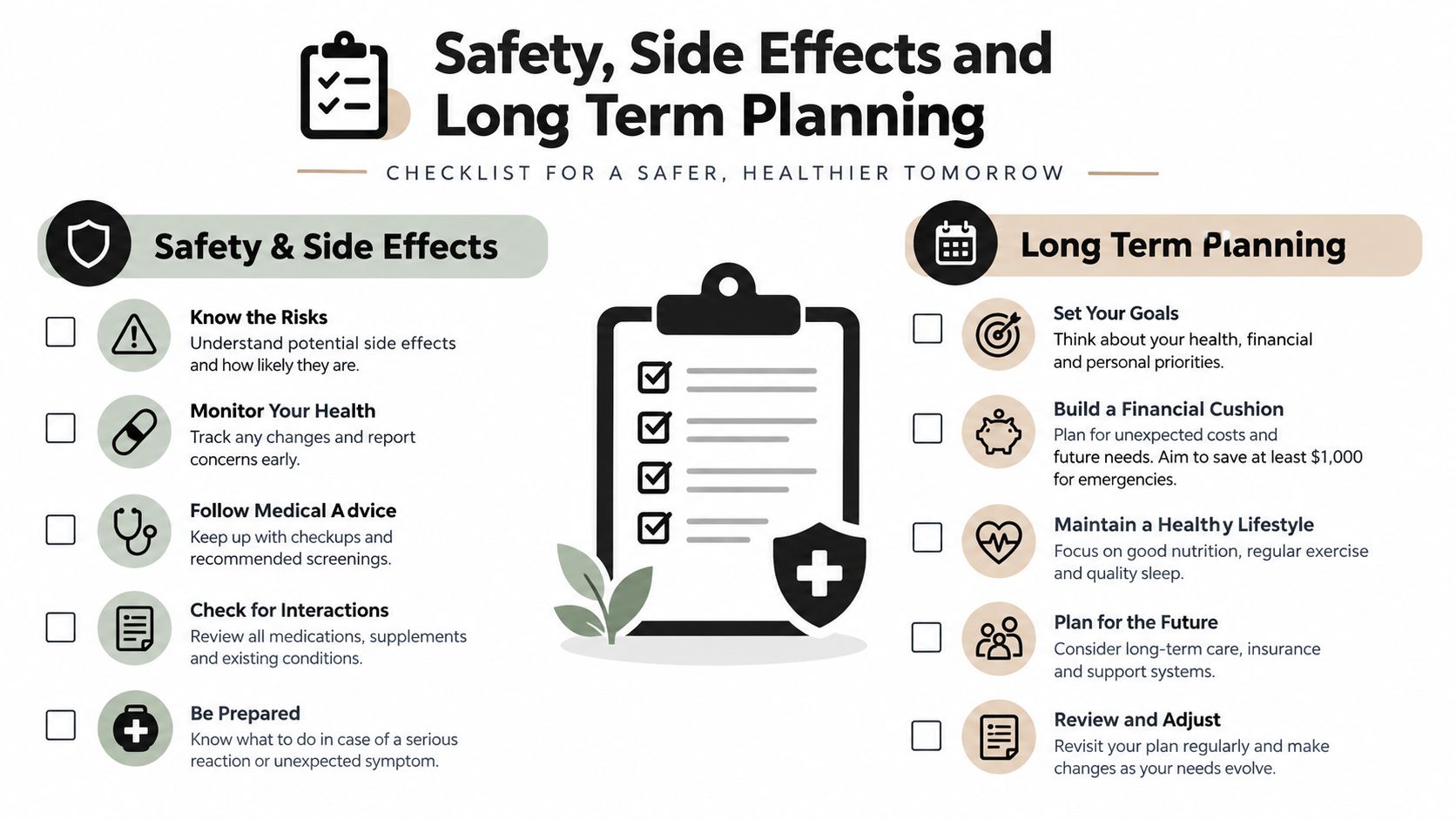
Consider a patient whose nausea begins after a dose increase. The symptom may be expected, but it still needs a response. Gastrointestinal effects such as nausea, diarrhea, vomiting, and constipation are common with semaglutide. They are often mild to moderate and temporary, yet persistent symptoms can affect hydration, nutrition, and willingness to continue. A practical overview of semaglutide side effects and symptom management can help patients prepare questions for their clinician.
Hydration matters, and a dose increase may need to slow or pause when symptoms linger. An online program should explain what to monitor, when to contact the care team, and how symptom changes affect the next dose. Treating side effects as part of routine follow-up is safer than treating them as an unexpected interruption.
Dosing errors are a real safety issue
FDA safety communications describe dosing errors involving unapproved compounded injectable semaglutide, including cases linked to confusion among milligrams, milliliters, and syringe markings (FDA safety alert). The risk is practical: a patient can draw the wrong volume even when the syringe appears familiar.
A safe telehealth workflow should state the dose in milligrams, the injection volume when applicable, the relevant syringe marking, the escalation interval, and instructions for a missed dose. These details work like labels on a measuring cup. Each unit must refer to the same quantity. If the instructions seem unclear during the consultation, ask for clarification before injecting.
What to do if symptoms don't settle
Persistent vomiting or diarrhea can cause dehydration. A clinician may need to pause escalation, adjust treatment, or reassess whether semaglutide remains appropriate. Severe abdominal pain, signs of an allergic reaction, or an inability to keep fluids down require prompt medical attention.
As covered in the section on trustworthy offers, formulation clarity is a safety issue, not just a marketing one. Patients should know exactly what product they are being offered and should not assume that products with similar names are interchangeable.
Symptoms are easier to manage when the program gives patients a clear route to advice. That route should remain available after delivery, because the correct response can depend on the timing, severity, and duration of the problem.
Planning for stopping matters as much as starting
Stopping semaglutide can change the weight-management equation. In the STEP 1 extension, people who stopped semaglutide regained an average of 11.6 percentage points of body weight over the following year, while placebo participants regained 1.9 percentage points. The retained loss from baseline was only 5.6% (STEP 1 extension). These findings support viewing treatment as chronic care rather than a short burst.
A stopping decision should be supervised. Some patients may need maintenance treatment, while others may need a different approach or time to adjust expectations about appetite and regain. Before starting, ask what happens if the medication is reduced, paused, or stopped. The useful question is not only whether a goal can be reached, but how health and weight will be supported if treatment changes.
Your Practical Next Steps Toward Care
Before booking, gather your current medications, a short weight history, and notes on prior diet attempts or side effects from any previous treatment. Those details make your consult more useful and help the clinician decide whether semaglutide is a good fit. If you use FSA or HSA funds, ask early how the program handles eligible payments.
Think about three questions before you start. Is the provider clearly licensed? Is the medication path clearly identified as FDA-approved or compounded? Is there a real follow-up process if your dose needs to change?
A good first month should feel measured, not dramatic. You should expect a structured review, a careful start, and a plan for checking how your body responds before the dose goes up. That's how online care stays medical instead of becoming mail-order guesswork.
If you want medically supervised semaglutide care with a clear intake, licensed follow-up, and a process that treats dosing and safety seriously, Weight Method is one place to start. It offers a telehealth path built around screening, provider review, and ongoing support, which is the kind of structure this treatment deserves.