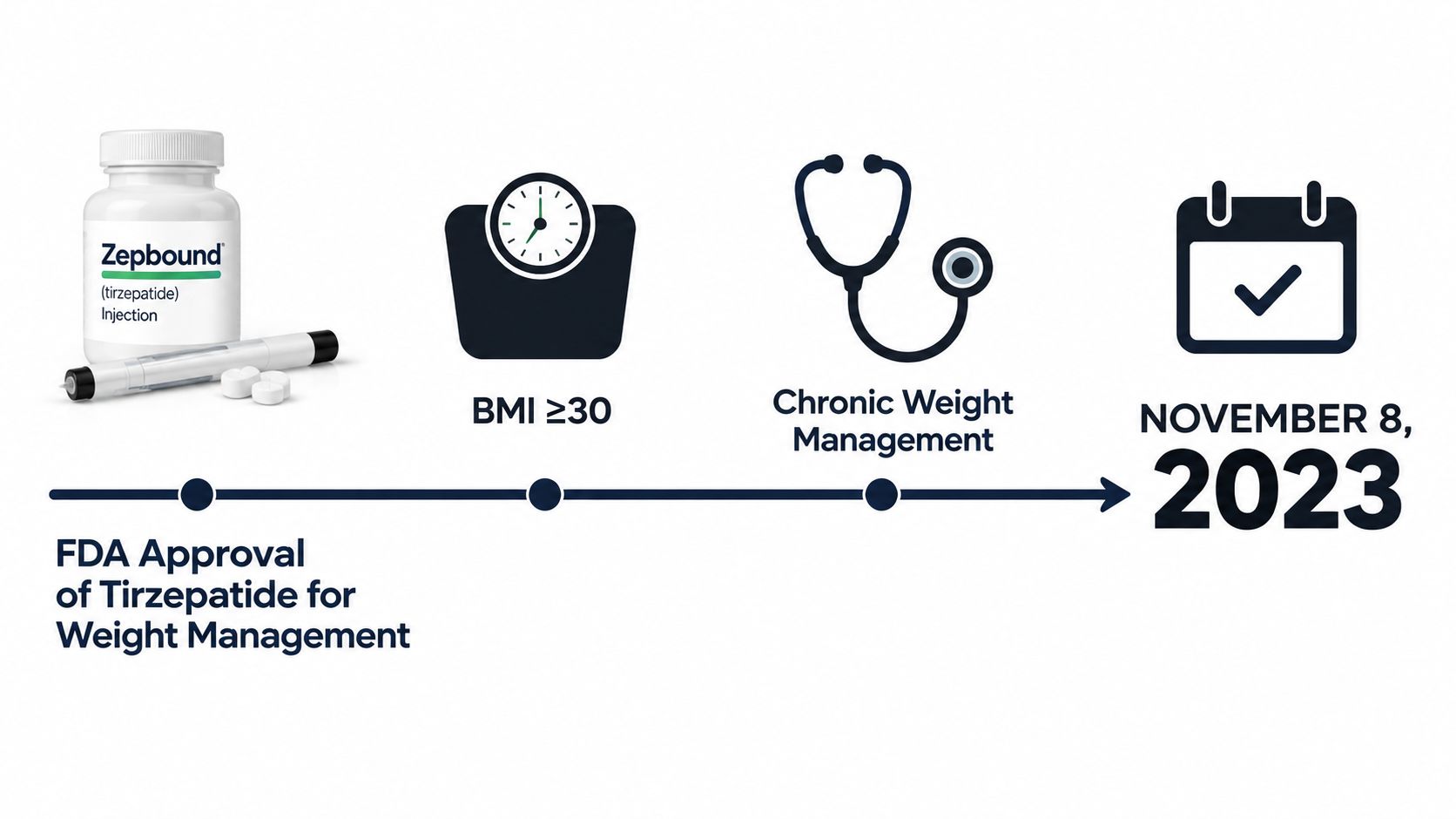
On November 8, 2023, the FDA approved tirzepatide for chronic weight management under the brand name Zepbound for adults with obesity, or adults with overweight who also have a weight-related condition. In the obesity trial, people taking the 15 mg dose lost an average of 22.5% of body weight over 72 weeks, which explains why this approval drew so much attention.
That headline, though, only tells part of the story. The more useful question for most adults isn't just whether tirzepatide can work under trial conditions. It's what the FDA approved, who qualifies, what the numbers mean in plain language, and what happens if treatment stops.
A lot of coverage treats tirzepatide weight loss FDA approval as a single news event. In practice, it's better understood as the start of a longer conversation about chronic obesity treatment, maintenance, access, and expectations that need to stay grounded.
The FDA Approval Decision for Tirzepatide
On November 8, 2023, the FDA approved Zepbound (tirzepatide) for chronic weight management in adults, as described in the FDA approval announcement for Zepbound. The label covers adults with obesity, defined as BMI of 30 kg/m² or greater, and adults with overweight, defined as BMI of 27 kg/m² or greater, if they also have at least one weight-related condition such as hypertension, dyslipidemia, type 2 diabetes, obstructive sleep apnea, or cardiovascular disease.
That sounds simple on paper. In practice, FDA approval works more like opening a new treatment lane than flipping a switch. The agency decides who the drug can be prescribed for, under what conditions, and with what warnings. It does not decide whether a given patient can afford it, whether a pharmacy has it in stock, or whether a health plan will cover it without delays.
This image helps place the timing and criteria in one view.
What the FDA decided
The late 2023 decision did not introduce tirzepatide to medicine for the first time. Clinicians already knew the molecule from Mounjaro, its diabetes brand. What changed was the approved use. The FDA gave tirzepatide a formal place in obesity treatment under the Zepbound name, which matters because prescribing for weight management now rests on a specific label rather than on workarounds or off-label habits.
That distinction shapes real care. Obesity is treated as a chronic disease, so the approval is less like a short-term diet aid getting a green light and more like a blood pressure medicine gaining a defined role in long-term management. The central question becomes whether the expected benefit outweighs the risks for a patient who fits the label and can stay on treatment long enough to maintain results.
Practical rule: FDA approval means regulators found that the benefits outweighed the risks for a defined group of patients when the drug is used as labeled.
Why this decision mattered
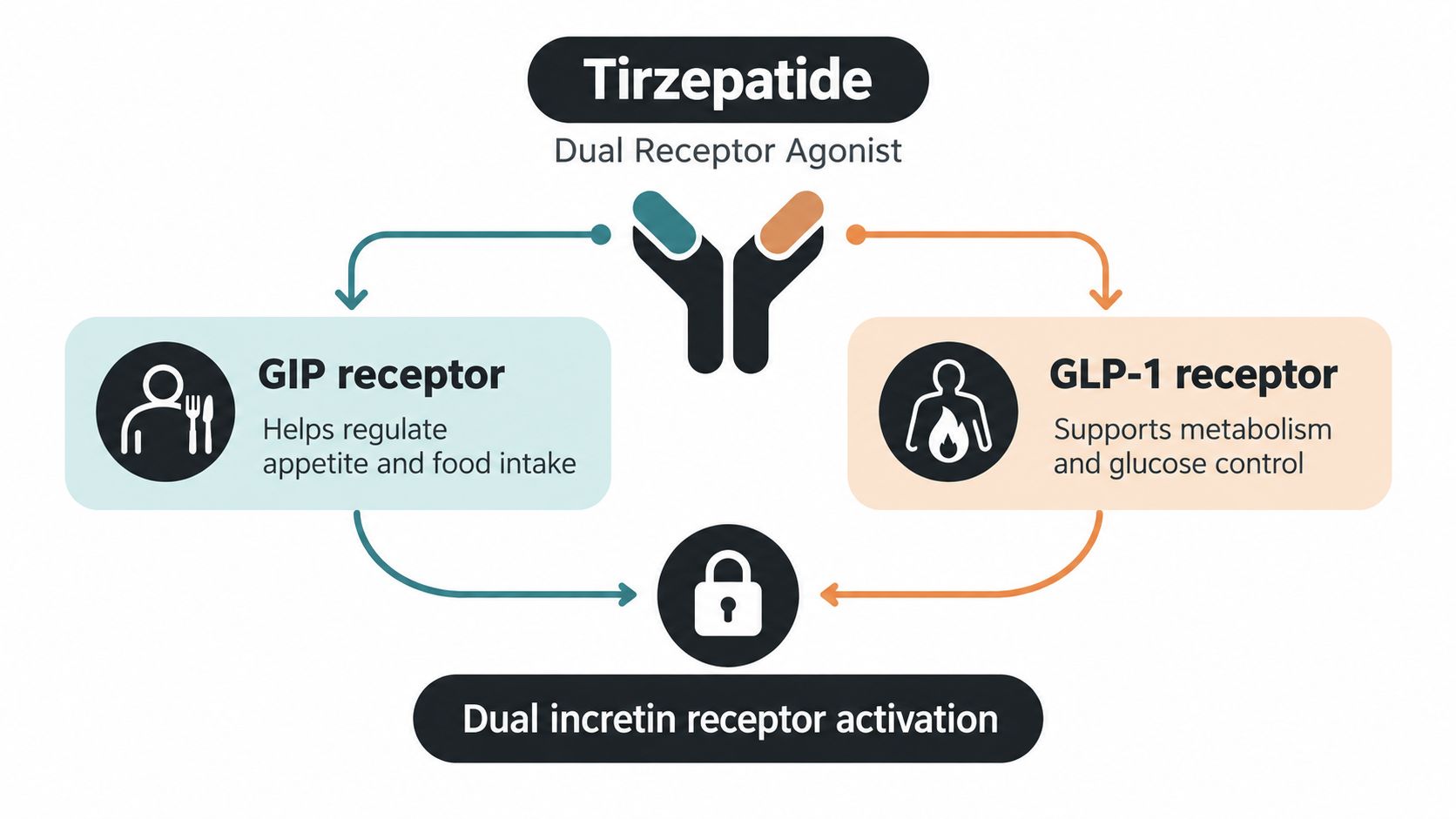
Zepbound also entered the market as the first FDA-approved obesity medication in the United States that acts on both GIP and GLP-1 receptors. That point can sound technical, but the practical message is straightforward. Clinicians were not seeing another small variation on an older obesity drug. They were seeing a new approved option built around two hormone pathways tied to appetite and metabolism.
The approval also changed the conversation beyond the headline date. News coverage often treats approval as the finish line. For patients and prescribers, it is the starting point. The harder questions come after the prescription is written: who meets criteria, how much weight loss is likely to last, and what happens when coverage stops or the medication is discontinued.
That last issue is easy to miss. FDA approval confirms that tirzepatide can be prescribed for chronic weight management. It does not mean the benefit is permanent after stopping treatment. In everyday practice, that gap between approval, access, and long-term maintenance often matters as much as the approval itself.
How Tirzepatide Works as a Dual Receptor Agonist
Tirzepatide acts on two hormone receptors involved in appetite, digestion, and blood sugar control: GIP and GLP-1. That is what clinicians mean by a dual receptor agonist.
For readers who want the basic medication overview before getting into receptor biology, this guide to what tirzepatide is gives that foundation in plain language.
One drug, two hormone pathways
The GLP-1 side is more familiar because other weight loss and diabetes drugs also use that pathway. GLP-1 receptor activation can slow stomach emptying, increase fullness after meals, reduce appetite, and improve insulin release when a person eats.
The GIP side is less intuitive. GIP is another gut hormone signal tied to how the body responds to food. Researchers are still working out every detail, but the practical point is clear enough for patients: tirzepatide was designed to affect more than one biologic system that influences hunger and metabolic control.
A simple comparison helps here. A single-pathway drug is like adjusting one dial on a control panel. Tirzepatide adjusts two. That does not mean the drug overrides biology or makes weight loss automatic. It means the treatment may reduce some of the constant biological pressure that pushes people to eat, stay hungry, or regain weight.
Why dual action matters in practice
Mechanism matters because it helps explain why the results seen in obesity trials were larger than many clinicians had come to expect from older medications. The drug does not replace eating patterns, activity, sleep, or follow-up care. It changes the background conditions those efforts are working against.
That distinction matters even more once treatment is stopped.
If a medication lowers hunger signals while a person is taking it, then stopping the medication can remove that support. In real practice, that is one reason the maintenance question becomes so important. The same biology that helped produce weight loss during treatment can reassert itself after discontinuation. Coverage stories often skip that point, but patients feel it quickly when access changes or therapy ends.
So the mechanism is not just a chemistry detail. It helps explain both sides of the story: why tirzepatide can produce substantial weight loss during treatment, and why keeping that weight off may be harder after the drug is withdrawn.
Key Trial Evidence Behind the Approval
In SURMOUNT-1, adults with obesity or overweight lost an average of 16.0% to 22.5% of body weight over 72 weeks on tirzepatide, versus 2.4% on placebo in the New England Journal of Medicine trial report. Those numbers are the backbone of the FDA's decision.
SURMOUNT-1 was the large phase 3 trial that tested once-weekly tirzepatide at 5 mg, 10 mg, and 15 mg against placebo. For readers trying to make sense of approval language, the simplest way to read it is this: the FDA did not approve tirzepatide because of small shifts on a scale. It approved a drug that, in a controlled trial, produced average weight loss that was far larger than many older obesity medications had shown.
How to read the trial without getting lost in averages
Average weight loss is useful, but it can also hide what patients usually want to know. A person sitting in an exam room is rarely asking, "What was the mean percentage change?" They are asking, "How likely is it that I will lose enough weight to notice it in daily life?"
That is why milestone results matter. In SURMOUNT-1, higher-dose groups were more likely than placebo to reach targets such as 5%, 10%, 15%, and 20% weight loss. Averages tell you the center of the class. Milestone thresholds tell you how many people passed a mark that tends to matter clinically.
SURMOUNT-1 Weight Loss Results at 72 Weeks
| Dose | Mean Weight Loss | ≥5% Loss | ≥20% Loss |
|---|---|---|---|
| Placebo | 2.4% | 27.9% | 3.1% |
| 5 mg | 16.0% | 85.1% | 30.0% |
| 10 mg | 21.4% | 88.9% | 50.1% |
| 15 mg | 22.5% | 90.9% | 56.7% |
One caution helps keep these results in perspective. Trial participants receive structured follow-up, dose escalation, and close monitoring. That setup is a bit like testing a car on a closed track instead of rush-hour streets. The trial still matters enormously, because it shows what the medication can do under good conditions, but it does not answer the full question of what happens when treatment is interrupted, stopped, or made hard to continue.
That gap matters for understanding the approval story. The headline number explains why the FDA said yes. The maintenance question explains why life experience can drift away from the headline later on, especially once access problems or discontinuation enter the picture.
A separate report on the approval package and later labeled data also highlighted how strongly tirzepatide performed during active treatment, including findings from withdrawal-design research summarized in MedPage Today's coverage of the approval data. That is useful context because approval was built on strong efficacy during treatment, while day-to-day practice has to deal with what happens after that treatment pattern changes.
Approved Indications and Prescribing Criteria
A large share of adults asking about tirzepatide never get stuck on the science first. They get stuck on a more basic question. Do I qualify for the drug the FDA approved?
For weight management, the label uses the standard BMI framework. Adults generally fit the indication with a BMI of 30 kg/m² or higher, or 27 kg/m² or higher if they also have a weight-related condition such as high blood pressure, abnormal cholesterol, type 2 diabetes, sleep apnea, or cardiovascular disease. Those cutoffs matter because they define who is on-label. They do not guarantee coverage, and they do not answer whether the medication is a good fit for a given person.
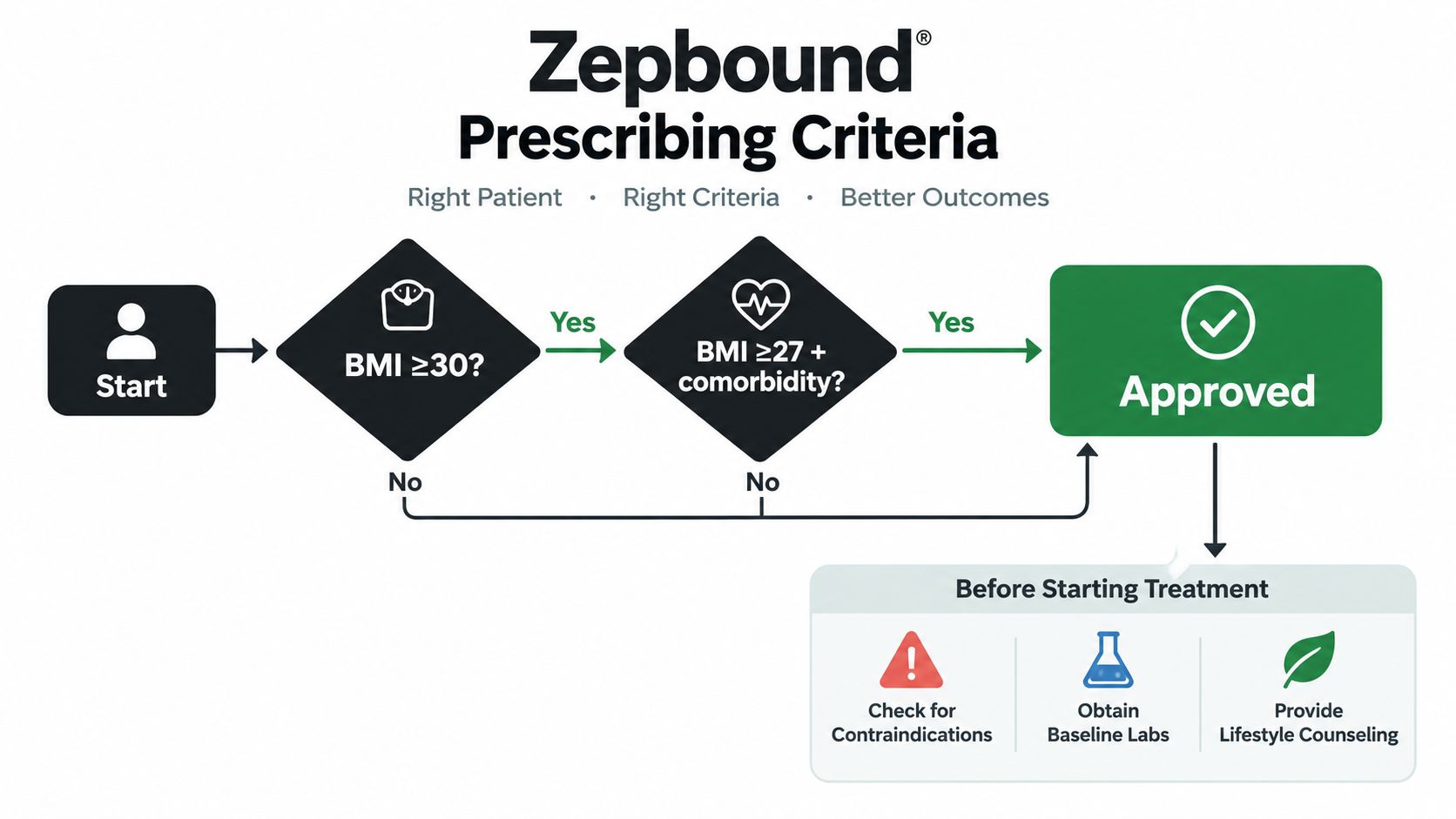
What prescribing usually involves beyond the BMI cutoff
BMI is the front door, not the whole house.
A prescribing visit usually has four parts:
- Confirming label fit: The clinician checks height, weight, and whether a weight-related condition is present when BMI is between 27 and 30.
- Screening for reasons not to use it: This includes reviewing pregnancy plans, prior pancreatitis, significant gastrointestinal symptoms, gallbladder history, and whether there is a personal or family history of medullary thyroid carcinoma or MEN 2, which are major reasons for caution or avoidance.
- Reviewing other medications and risks: This matters most if the patient also uses diabetes drugs that can cause low blood sugar, or if delayed stomach emptying could interfere with other treatment plans.
- Setting expectations for titration and follow-up: Tirzepatide is started low and increased gradually to improve tolerability, not rushed to the highest dose on day one.
That last point is easy to underestimate. The step-up schedule works like easing into an exercise program instead of sprinting on the first day. The goal is to give the body time to adapt, especially because nausea, vomiting, constipation, or diarrhea are common reasons people struggle early. If you want a practical overview before that visit, this tirzepatide dosing chart shows the dose-escalation pattern clinicians commonly review.
What changes in real practice
The label says chronic weight management. In plain language, that means treatment is usually discussed as ongoing care, not a short course with a clear finish line.
Many people get surprised. They hear the approval news and focus on who qualifies to start. In clinic, the harder question often comes right after that. Can this person stay on therapy long enough to maintain the benefit if it works?
That question affects prescribing from the first appointment. A careful clinician often asks about cost, insurance rules, supply interruptions, side effects, and the patient's willingness to treat obesity like a long-term condition. Those details sound administrative, but they shape outcomes. A patient who qualifies on paper but cannot continue treatment may have a very different result from the trial experience.
Another common confusion is mixing up FDA labeling with insurer rules. A patient may meet the approved indication and still face prior authorization, step therapy, or an exclusion from the pharmacy benefit. Approval defines the medical use. Access determines whether that use is realistic.
That gap between eligibility and continuity matters more for tirzepatide than many first-time readers expect, because the benefit depends on continued treatment rather than a one-time reset.
The Durability Problem After Stopping Tirzepatide
Among 308 SURMOUNT-4 participants who had already lost at least 10% of body weight, 82% regained at least 25% of that initial loss within one year after stopping tirzepatide, according to The Pharmaceutical Journal's report on the SURMOUNT-4 withdrawal analysis. That number matters because it shifts the conversation from starting treatment to maintaining results.
A useful way to frame this is with blood pressure treatment. The medication can control the condition while it is being used, but stopping it does not erase the underlying tendency. Tirzepatide works in a similar way for many patients. It changes appetite signals, fullness, and food intake while treatment continues. After withdrawal, the biology that pushes weight back up often returns.
Patients usually feel that biology before they see it on a scale. Hunger increases. Food thoughts become louder. Portion control takes more effort. What sounds like a motivation problem from the outside is often a physiology problem in real life.
Stopping tirzepatide is often less a test of willpower than a return of the body's prior weight-regulating signals.
SURMOUNT-4 also gives a cleaner lesson than many approval summaries do. The big question is not only how much weight people can lose during treatment. The harder question is whether those benefits hold once treatment stops. In this withdrawal analysis, many participants regained enough weight to give back a meaningful share of the earlier benefit, and the report also noted worsening in measures tied to metabolic health after discontinuation.
If you want a plain-language explanation of what happens when you stop GLP-1 treatment, this guide walks through the pattern patients commonly ask about after the first prescription discussion.
That is why clinicians often present obesity treatment as chronic management rather than a one-time reset. For a patient deciding whether to start tirzepatide, the practical issue is not only "Can I lose weight on this drug?" It is also "What is my plan if I need to stay on it, pause it, or stop it?"
Real World Outcomes Versus Trial Headlines
Nearly 8,000 patients can teach a different lesson than a tightly run clinical trial. In a 2026 real-world analysis from Cleveland Clinic, people with obesity lost an average of 8.4% before stopping GLP-1 therapy, then regained 0.5% one year later on average, according to the Cleveland Clinic report on stopping GLP-1 drugs. The same analysis found that 55% gained weight after stopping, while 45% maintained their weight or kept losing.
Those numbers deserve a slower read.
At first glance, the average regain looks small. But averages can hide two very different paths, much like saying a class average was 75% without mentioning that some students scored in the 90s and others barely passed. In practice, that split matters more than the single summary number. A patient wants to know which group they are more likely to resemble.
Why trial results and clinic results can diverge
Trials are designed to answer, under favorable conditions, how much weight a medication can produce. Routine care answers a rougher question: what happens once treatment runs into copays, refill delays, side effects, travel, competing illnesses, and ordinary human inconsistency.
Several factors push real-world results away from headline trial outcomes:
- Tolerance limits: Some patients stop early or stay at lower doses because nausea, constipation, or other gastrointestinal effects make dose escalation hard.
- Coverage interruptions: Insurance approval can change midcourse, and even a short gap can disrupt momentum.
- Irregular dosing: Missed injections and delayed refills are common outside a study protocol.
- More complex patients: Community clinics treat people with broader medical and social challenges than many trial populations.
The result is not that the trial data were wrong. The settings were different. A treadmill stress test and a walk through an airport both involve movement, but they do not measure the same thing in the same environment.
How to read the headlines without missing the real question
Trial headlines often focus on peak weight loss. Real-world care puts more pressure on maintenance. That is the part many approval stories skip. The harder question is not only whether tirzepatide can lower weight. It is whether a patient can stay on treatment, afford it, tolerate it, and hold onto the benefit over time.
Clinical perspective: A useful expectation sits between the ideal trial result and the cynical reaction that "people just regain it all." Outcomes vary widely, and long-term follow-through often shapes the result as much as the prescription itself.
For a patient considering tirzepatide, the practical takeaway is straightforward. Ask about the maintenance plan before the first dose, not after a disruption. In everyday practice, the long-term strategy often determines whether the early weight-loss phase becomes a durable result or a short-lived one.
Practical Checklist Before Starting Therapy
Early weight loss gets the attention. The setup work usually decides whether treatment stays workable six or twelve months later.
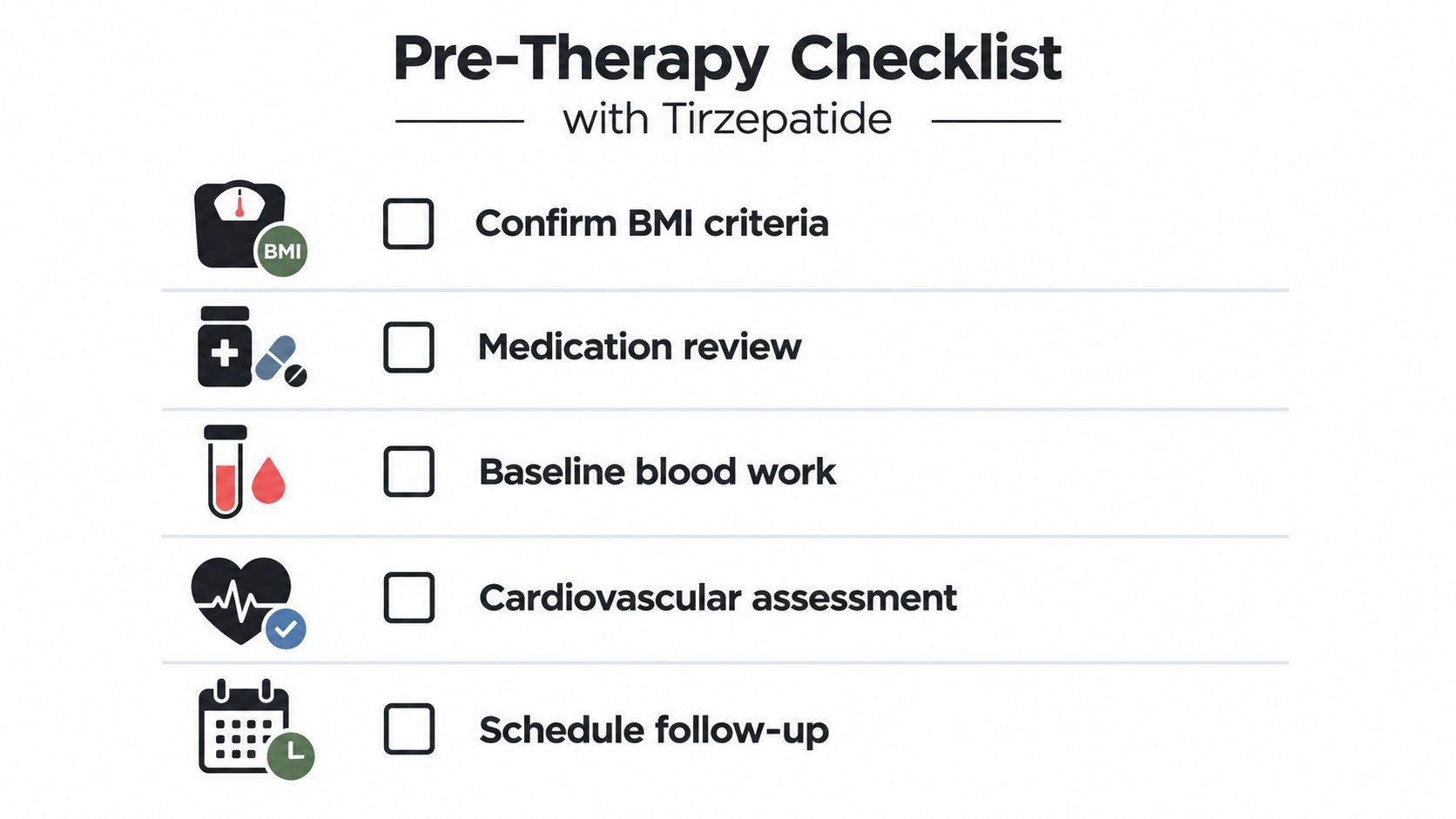
Starting tirzepatide works a bit like starting blood pressure treatment. The prescription matters, but so do the follow-up plan, refill reliability, side effect management, and the question of how long therapy is likely to continue. Patients often focus on whether the drug can work. A safer first question is whether the treatment plan is realistic in everyday life.
Questions to settle before the first dose
- Do you meet the FDA label criteria? Confirm whether your BMI falls in the obesity range, or in the overweight range with a related medical condition.
- Is there any reason this drug class may not fit your history? Review personal and family history, current medications, prior pancreatitis or gallbladder problems if relevant, and other issues your prescriber wants to screen for before treatment.
- What is the intended duration of therapy? Ask whether the plan assumes long-term maintenance, a trial period with reassessment, or another approach. Weight often returns after treatment stops.
- What is the backup plan if coverage changes or the medication becomes hard to get? A treatment that works on paper can still fail in practice if refills become irregular.
- How will side effects be handled? Nausea, constipation, reflux, vomiting, and reduced appetite can shape dose escalation and determine whether a patient can stay on treatment.
- What will be monitored over time? Weight trend, waist change, blood pressure, glucose measures when relevant, symptoms, and tolerability should all have a schedule.
Practical details that affect real use
The mechanics matter. Tirzepatide is a once-weekly injection, and clinicians usually raise the dose gradually to improve tolerability. Before the first prescription is sent, patients should know how to store the pen, when to take the weekly dose, what to do after a missed dose, and whom to contact if side effects become hard to manage.
This is also the moment to discuss expectations. Trial headlines highlight how much weight people can lose under structured conditions. Real practice asks a different question. Can you stay on the medication consistently enough to maintain the benefit?
If you're looking at telehealth options, Weight Method is one example of a program that connects adults with licensed providers for GLP-1 treatment evaluation and ongoing follow-up through an online process rather than a traditional office visit.
One question often clarifies the whole decision: What is the plan if this works well? That prompts a useful conversation about maintenance, cost, refill continuity, and what happens if treatment has to pause.
What Tirzepatide Approval Means Going Forward
Long-term obesity treatment rarely turns on the approval date alone. What matters next is whether people can start therapy, stay on it, and keep access when insurance rules, supply changes, or side effects interfere.
That is the practical meaning of tirzepatide weight loss FDA approval. The decision opened the door to wider prescribing, but a prescription is only the first step. In real care, this drug works less like a one-time intervention and more like a long-term treatment that has to be supported over months and years.
Several changes are likely to shape what patients see next. Coverage policies may keep shifting as insurers decide who qualifies, which prior authorizations are required, and whether older weight-loss drugs must be tried first. Clinicians may also become more selective about who is a good fit, not because the medication is less useful, but because success often depends on follow-up, dose adjustments, refill continuity, and a clear maintenance plan if treatment is interrupted.
Competition will matter too. As more obesity medications enter the market, the conversation may gradually shift from "Does this drug work?" to "Which patient does best on which drug, and who can realistically stay on treatment?" That is a more useful question. It treats weight management the way medicine usually treats chronic conditions, with matching, monitoring, and course correction rather than a single dramatic result.
The underappreciated issue is durability.
Headline coverage often stops at average weight loss during active treatment. Patients usually need a different answer. They want to know what happens in month 12, month 18, or after an insurance denial, a supply gap, or a decision to stop because the side effects are too disruptive. As noted earlier in this article, that is where the gap between trial conditions and ordinary life becomes hard to ignore.
So the approval means more than broader legitimacy for obesity medication. It also forces a more honest standard for success. A good outcome is not only losing weight. A good outcome is finding a treatment plan that a patient can tolerate, afford, continue, and adapt when circumstances change.
If you're weighing whether tirzepatide fits your situation, Weight Method offers educational resources and telehealth-based access to licensed providers who evaluate FDA-approved GLP-1 treatment options for adults seeking medical weight loss care. It's a practical place to learn how eligibility, prescribing, follow-up, and long-term planning work before you decide on your next step.