You've read about semaglutide, watched people describe smaller appetites, and may be wondering whether a weekly injection could finally make weight management feel less like a daily argument with hunger. You may also have practical concerns that promotional summaries often skip: What happens during dose increases? Which symptoms are expected? What if the medication becomes unaffordable, unavailable, or impossible to tolerate?
Using semaglutide for weight loss can be effective, but it works best as a supervised, adaptable treatment plan, not as a shortcut detached from nutrition, activity, and follow-up. The useful questions aren't only how much weight someone might lose. They're also how the medicine works, how to respond safely to symptoms, and how to protect progress if treatment changes.
How Semaglutide Works for Weight Loss
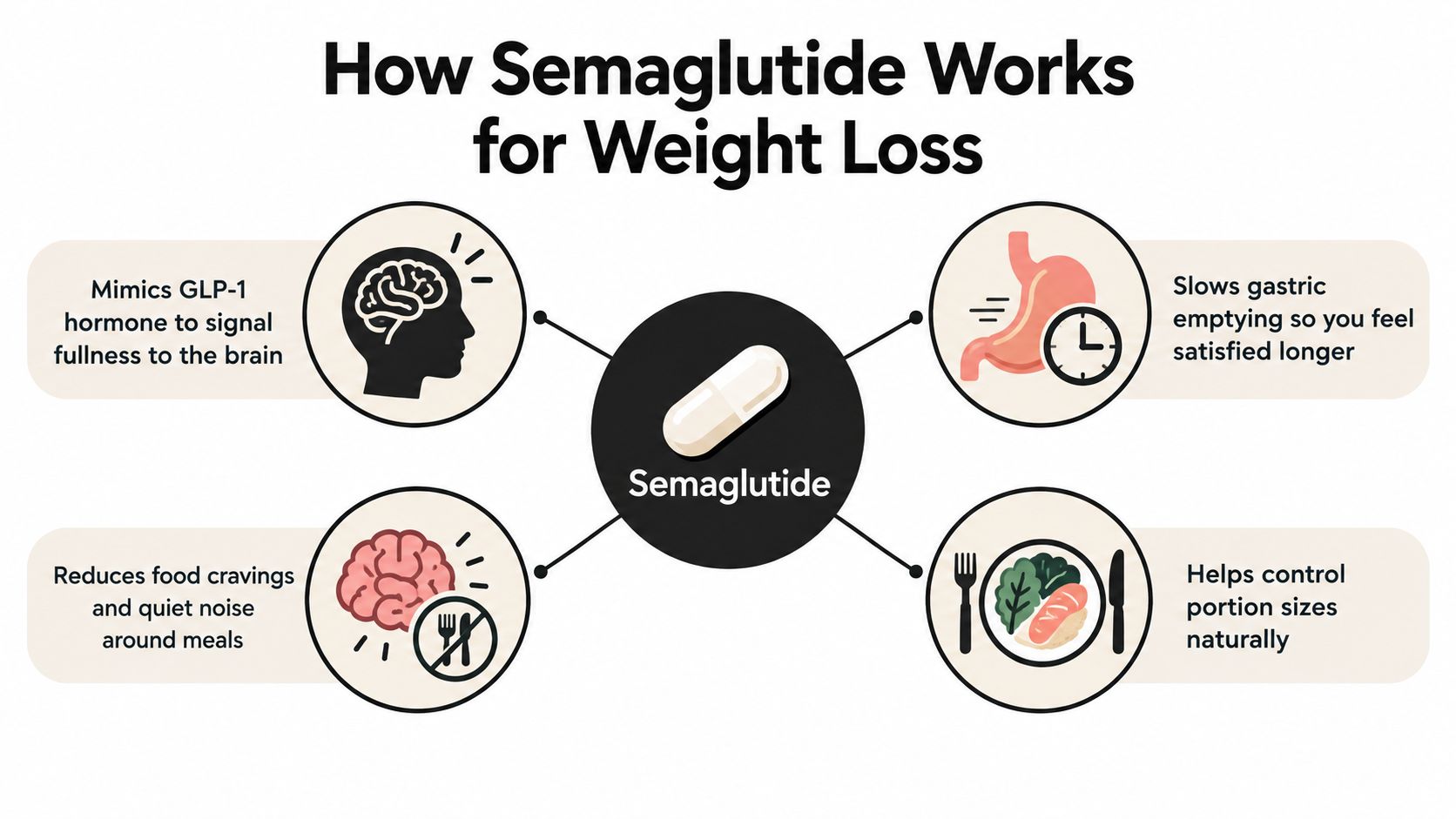
Semaglutide acts like a naturally occurring gut hormone called GLP-1. After eating, GLP-1 helps coordinate several signals involved in appetite, fullness, and digestion. Semaglutide extends and strengthens those signals, giving the brain and digestive system more time to register that a meal has been satisfying.
A simple way to understand it is to think of appetite as a control panel rather than a character flaw. Hunger signals can turn up the volume on food thoughts, cravings, and portion sizes. Semaglutide helps lower that volume for many patients by activating GLP-1 receptors involved in appetite regulation. You may notice less persistent hunger, fewer cravings, or more comfort with a smaller meal.
The medication also slows gastric emptying, meaning food generally moves from the stomach more gradually. That can lengthen the period of fullness after eating. It doesn't make every person feel full in exactly the same way, and it doesn't remove the need to choose nourishing foods, but it can make a reduced-calorie eating pattern easier to sustain.
Why appetite biology matters
Traditional dieting often assumes that someone can permanently override hunger through discipline. That approach overlooks the biological systems that influence appetite and energy balance. Semaglutide doesn't create weight loss without an energy deficit. Instead, it can help reduce appetite enough for a person to eat less without fighting intense hunger at every meal.
The best results still depend on what replaces the food that has been reduced. Meals should include adequate protein, fiber-rich foods, fluids, and essential nutrients. If appetite falls sharply, a patient may need smaller, more nutrient-dense meals rather than eating as little as possible.
For a deeper explanation of the hormone pathway, see this guide to how GLP-1 medications work. Understanding the mechanism helps set realistic expectations: semaglutide supports appetite control, but it isn't a substitute for medical assessment or a complete eating and activity plan.
Clinical Efficacy and Cardiovascular Benefits
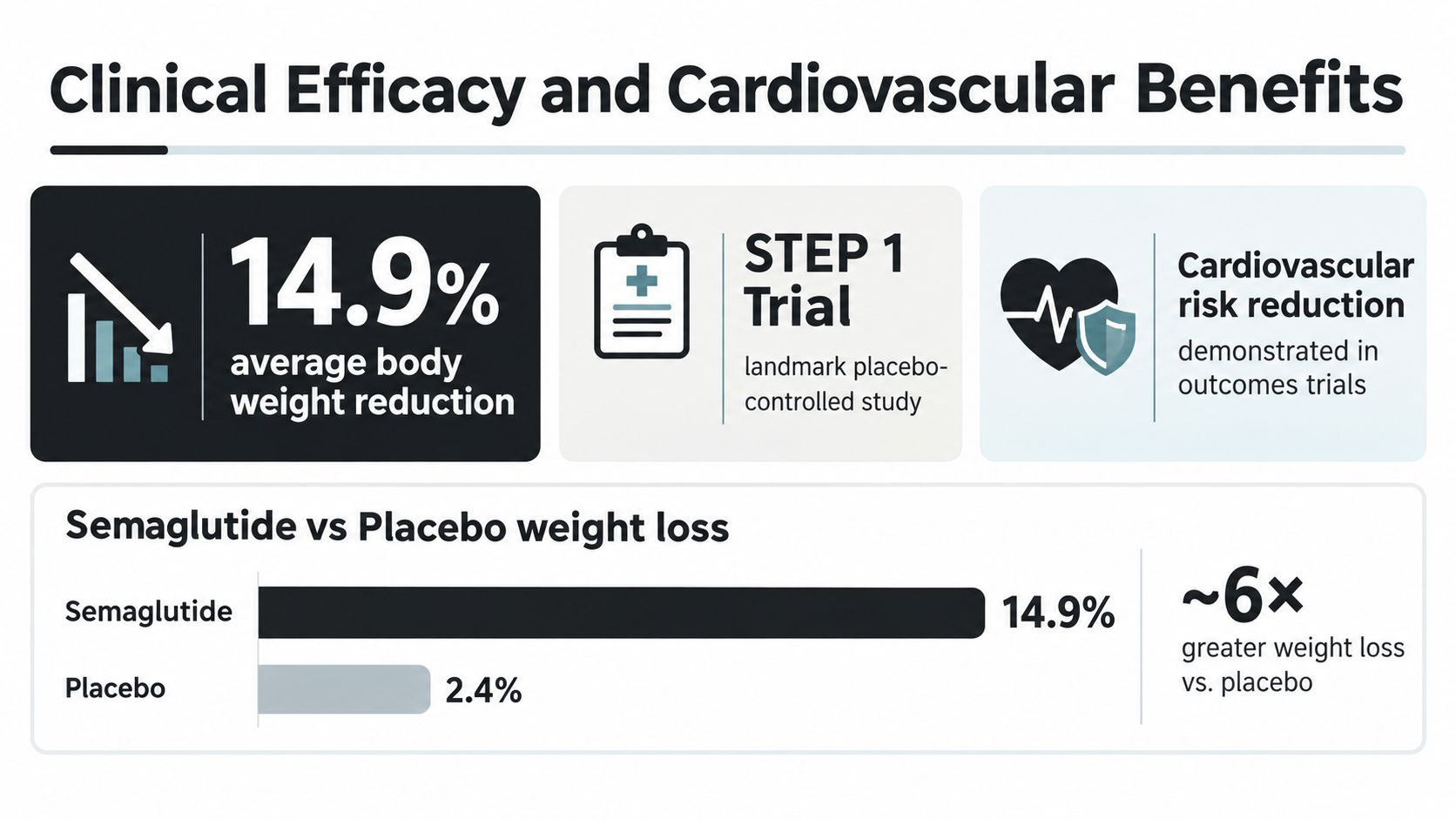
The strongest early evidence for prescription-dose semaglutide came from the STEP 1 randomized trial, published in 2021. It included 1,961 adults with overweight or obesity who didn't have diabetes. Participants received weekly semaglutide 2.4 mg or placebo, alongside lifestyle intervention, for 68 weeks.
The difference between the groups was substantial. Participants receiving semaglutide lost an average of 14.9% of baseline body weight, compared with 2.4% in the placebo group, a treatment difference of 12.4 percentage points. The trial also found that 86.4% of participants receiving semaglutide achieved at least 5% weight loss, compared with 31.5% receiving placebo. These figures come from the STEP 1 trial report.
Reading trial results responsibly
An average isn't a promise. Some people lose more, some lose less, and some stop because of side effects, access problems, or changing health priorities. Trial participants also received lifestyle support, so the results shouldn't be interpreted as evidence that the injection works independently of eating patterns and physical activity.
The timing matters, too. STEP 1 evaluated a gradual treatment process that led to a weekly maintenance dose. Early results during dose escalation shouldn't be compared directly with the final trial average. Your starting weight, health conditions, tolerability, adherence, and treatment duration all influence your experience.
The cardiovascular question
Semaglutide's relevance extends beyond body weight. The SELECT trial followed more than 17,000 adults in 41 countries who were at least 45 years old, had overweight or obesity and established cardiovascular disease, and didn't have diabetes. Participants were followed for an average of about 40 months.
The combined endpoint of cardiovascular death, nonfatal heart attack, or nonfatal stroke occurred in 6.5% of participants receiving semaglutide and 8.0% receiving placebo. That represented a 20% relative reduction in major adverse cardiovascular events, with a hazard ratio of 0.80 and a 95% confidence interval of 0.72 to 0.90, as reported by Cleveland Clinic's summary of the SELECT findings.
That finding doesn't mean every person using semaglutide receives the same cardiovascular benefit. It does show why clinicians may view treatment as a health intervention rather than a purely cosmetic one.
The Standard Dosing and Titration Schedule
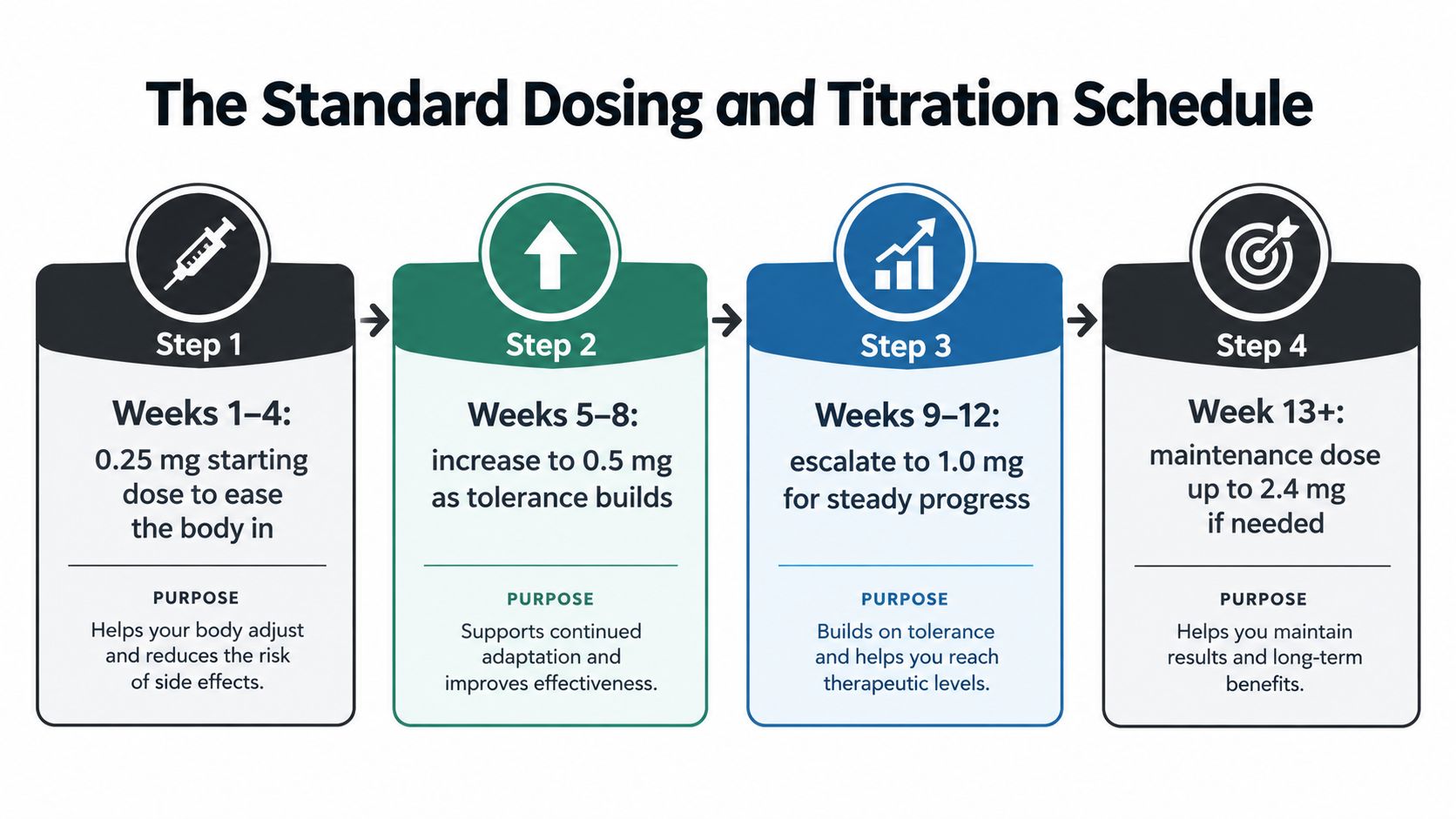
Semaglutide usually starts at a low dose and rises gradually. The purpose isn't to delay results unnecessarily. It's to give the gastrointestinal system time to adapt and to give the prescriber opportunities to hold, slow, or adjust treatment if symptoms become difficult.
The FDA-labeled schedule begins with 0.25 mg injected once weekly. After four weeks, the dose generally increases to 0.5 mg, then to 1.0 mg, 1.7 mg, and finally the 2.4 mg maintenance dose, with each increase separated by four weeks. The FDA prescribing information describes this escalation approach.
What each stage is doing
During the starting phase, the dose is primarily an introduction. You may notice appetite changes, but the early response doesn't predict the eventual maintenance response because you're still below the dose used in the main efficacy trial.
At each four-week checkpoint, the prescriber considers your appetite response, nausea, bowel habits, hydration, eating pattern, and any other symptoms. A person who is doing well may advance. Someone with persistent symptoms may remain at the current dose longer, use a lower tolerated dose, or stop treatment.
The escalation isn't a race. Increasing sooner than prescribed can intensify gastrointestinal effects and make it harder to maintain fluids and adequate nutrition.
Practical rule: Never change the dose, restart after a prolonged interruption, or combine weight-loss medicines without speaking with the prescribing clinician.
Expectations during titration
Some patients become frustrated when the first weeks don't resemble dramatic stories online. That frustration often comes from treating the starting dose as though it were the final treatment dose. A slower beginning can still be medically appropriate and may improve the chance of staying on therapy.
Keep a short record of injection dates, appetite changes, meals you tolerate, bowel symptoms, fluid intake, and questions for your clinician. This turns vague discomfort into useful information. For a more detailed explanation of the progression, review this semaglutide titration schedule, then apply it only under individualized medical guidance.
Managing Side Effects and Symptom Triage
Nausea, reduced appetite, constipation, and vomiting can occur with semaglutide, particularly while the dose is increasing. Mild symptoms may settle as the body adapts, but severity and duration matter more than the label “common side effect.”
Start with the basics. Eat smaller portions, slow down, avoid forcing a meal when you already feel full, and choose foods that are easier to tolerate. Sip fluids regularly, and discuss protein and micronutrient intake with your clinician if appetite has fallen sharply.
A nationwide Danish cohort of adults without diabetes who began semaglutide for weight loss found that 18% stopped within three months, according to coverage of the cohort findings. That figure doesn't prove side effects caused every discontinuation, but it shows why patients need a plan before symptoms appear.
Symptom Triage Guide
| Symptom Severity | Common Examples | Recommended Action |
|---|---|---|
| Mild and temporary | Brief nausea, mild appetite reduction, manageable constipation | Use smaller meals, maintain fluids, monitor the pattern, and mention symptoms at the next scheduled check-in. |
| Persistent or interfering | Ongoing nausea, repeated vomiting, worsening constipation, difficulty meeting food or fluid needs | Contact the prescriber promptly. Ask whether the dose should be held, delayed, or adjusted. |
| Concerning | Inability to keep fluids down, signs of dehydration, severe or persistent abdominal pain | Seek prompt medical assessment rather than increasing or repeating the dose independently. |
| Treatment-disrupting | Symptoms that prevent normal eating, drinking, work, or daily activities | Stop treating persistence as something to push through. Contact the prescribing team for a safety review and an alternative plan if needed. |
Why holding a dose can be appropriate
A dose increase isn't an achievement if it leaves you dehydrated or unable to eat adequately. A clinician may delay escalation, maintain a lower tolerated dose, or discontinue treatment when the risks outweigh the benefits. That isn't treatment failure. It's individualized risk management.
Don't use online anecdotes to decide whether your symptoms are safe. Contact your prescriber before increasing a dose, restarting after an interruption, or combining semaglutide with other glucose-lowering or weight-loss medicines.
Navigating Discontinuation and Weight Maintenance
Long-term treatment doesn't always continue exactly as planned. Cost, supply interruptions, side effects, changing insurance, pregnancy planning, or a shift in medical needs can all lead someone to stop semaglutide. A realistic plan treats discontinuation as a possibility to prepare for, not as a personal failure.
A large US real-world analysis found that 64.8% of adults using GLP-1 medicines for overweight or obesity stopped within one year, and only 36.3% restarted within a year, as reported in the analysis summary. Those results make follow-up especially important. A patient who stops treatment may need help with another medication, nutrition support, activity planning, or monitoring for renewed hunger and weight change.

Regain isn't one guaranteed outcome
People often hear two absolute claims: stopping always causes rapid regain, or stopping causes no meaningful change. Neither statement gives patients a useful plan. Outcomes can differ according to starting weight, treatment duration, amount lost, diabetes status, follow-up length, and whether another maintenance strategy replaces the medicine.
One newer clinical-practice cohort described in the available evidence found an average 0.5% weight change during the year after discontinuation among patients who stopped semaglutide or tirzepatide after obesity treatment. Many received additional treatment, and individual results varied substantially. A separate randomized-trial meta-analysis found an average 5.63 kg metabolic rebound after GLP-1 agonist discontinuation, with greater regain after longer follow-up and larger regain reported for semaglutide than liraglutide. These findings shouldn't be collapsed into a single prediction for every patient.
Build the off-medication plan early
Before stopping, ask the prescriber:
- Missed dose: What should you do after a missed injection?
- Interruption: Does a prolonged gap require restarting at a lower dose?
- Replacement: Would another medication or a lower tolerated dose be appropriate?
- Nutrition: How will you maintain protein, fiber, fluids, and meal structure as appetite returns?
- Monitoring: How often should weight, symptoms, blood pressure, glucose, or other health markers be reviewed?
A maintenance plan might include regular strength-focused activity, repeatable meals, sleep support, behavioral counseling, and scheduled clinical reviews. The goal isn't to prove you can manage without medication. The goal is to preserve health with the tools that remain safe, available, and realistic.
Accessing Treatment Through Telehealth Programs
Traditional care may involve a primary care visit, referral to an obesity-medicine specialist, in-person examination, and repeated appointments. That route can be appropriate, especially for patients with complex conditions, but scheduling and travel can make follow-up difficult.
A telehealth program can offer a different workflow. You complete a health questionnaire, meet a licensed provider by video, discuss medical history and treatment goals, and receive follow-up through a digital platform when the service is clinically appropriate. The key question isn't whether care happens online. It's whether a licensed clinician evaluates you, prescribes responsibly, monitors symptoms, and gives you a way to ask questions between visits.
Comparing care pathways
| Traditional route | Telehealth route |
|---|---|
| Visits occur in a clinic or specialist office. | Evaluation and follow-up occur remotely when clinically suitable. |
| Scheduling may depend on local appointment availability. | Digital scheduling can reduce travel and waiting-room barriers. |
| Medication collection may require a pharmacy visit. | Some programs coordinate shipment through a pharmacy. |
| Follow-up may occur at fixed appointments. | Some services include messaging and remote progress tracking. |
Telehealth isn't automatically safer or more thorough. Ask who prescribes, which pharmacy fulfills the medication, how dose changes are approved, what happens during an interruption, and how urgent symptoms are handled. Be cautious with any service that promises a dose without reviewing your history or treats compounded medication as interchangeable with an FDA-approved product.
Weight Method is one telehealth option that uses an online assessment, a video consultation with a licensed provider, ongoing messaging, progress tracking, dose adjustments, and home delivery when prescribed. If you also need remote behavioral or mental-health support, Wald Behavioral Health remote sessions may be a useful separate resource to consider alongside medical care.
For a closer look at questions to ask before enrolling, see this guide to telehealth for weight-loss injections. The right program should make clinical communication easier, not replace it with automated dose changes or vague instructions.
Evaluating Your Readiness for GLP-1 Therapy
Readiness for semaglutide isn't just a willingness to use an injection. It means being prepared for a treatment that requires medical screening, gradual dose changes, symptom monitoring, and a plan for nutrition and activity. A thoughtful assessment can prevent you from starting a therapy that doesn't fit your health needs or practical circumstances.
Begin with your medical context. Tell the clinician about current medicines, previous weight treatments, digestive symptoms, diabetes status, cardiovascular history, pregnancy plans, allergies, and any history that could affect prescribing. Don't leave out supplements or medications obtained from another service. Complete information helps the provider weigh potential benefits against risks.
Use this decision checklist
- Clinical fit: Can a licensed provider assess whether semaglutide is appropriate for your health profile?
- Treatment expectations: Are you prepared for gradual titration rather than immediate maintenance dosing?
- Symptom response: Do you know whom to contact if vomiting, dehydration symptoms, severe abdominal pain, or poor oral intake develops?
- Nutrition: Can you maintain nourishing meals and adequate fluids when appetite decreases?
- Lifestyle support: Are you willing to build repeatable eating, activity, and strength-focused habits alongside medication?
- Continuity: Do you have a plan for missed doses, supply problems, cost changes, or discontinuation?
- Budget: Can you understand the total treatment cost and whether your insurance or benefits apply before starting?
- Follow-up: Will the service review your response rather than increasing the dose automatically?
Choose supervision over self-management
Buying a product online without a proper evaluation creates avoidable uncertainty about dosing, storage, ingredients, interactions, and emergency support. A qualified prescriber can decide whether to continue, slow titration, change treatment, or stop when the clinical picture calls for it.
Semaglutide may be a reasonable option for some adults with overweight or obesity, but the best plan is the one you can use safely and reassess thoroughly. Bring your questions to a licensed provider, keep track of symptoms and doses, and treat long-term maintenance as part of the decision from the beginning.
Weight Method provides online clinical assessments, video consultations with licensed providers, monitored semaglutide or tirzepatide treatment when prescribed, dose adjustments, progress tracking, ongoing messaging, and home delivery. Visit Weight Method to review the program and decide whether a supervised telehealth consultation fits your weight-management goals.