Zepbound and Mounjaro contain the same once-weekly tirzepatide, but the FDA label, not expected weight loss, determines which product matches the diagnosis: Zepbound for adult chronic weight management and Mounjaro for type 2 diabetes. Advice to choose whichever brand produces more weight loss starts with the wrong comparison.
The more useful questions are what your clinician is treating, what your insurer requires, and whether your pharmacy can reliably supply the prescribed dose. A familiar brand name or a lower advertised price won't resolve those questions on its own.
Zepbound and Mounjaro Side by Side
| Feature | Zepbound | Mounjaro |
|---|---|---|
| Active ingredient | Tirzepatide | Tirzepatide |
| Drug class | Dual GIP and GLP-1 receptor agonist | Dual GIP and GLP-1 receptor agonist |
| Manufacturer | Eli Lilly | Eli Lilly |
| FDA approval | November 8, 2023 | May 13, 2022 |
| Primary labeled use | Chronic weight management | Glycemic control in type 2 diabetes |
| Labeled population | Adults with obesity, or overweight plus a weight-related condition | Adults and children aged 10 and older with type 2 diabetes |
| How supplied and used | Once-weekly injectable pen with diet and activity | Once-weekly injectable pen with diet and exercise |
| Start and labeled dose range | 2.5 mg for 4 weeks, then 5, 10, or 15 mg maintenance | 2.5 mg for 4 weeks, titrated to a maximum adult dose of 15 mg |
The regulatory milestones are distinct: Mounjaro received FDA approval on May 13, 2022, and Zepbound on November 8, 2023; the current FDA prescribing information also describes Mounjaro's diabetes indication for adults and pediatric patients aged 10 years and older. The dose framework in the table is explained more fully under titration below.
Both products activate glucose-dependent insulinotropic polypeptide, or GIP, and glucagon-like peptide-1, or GLP-1, receptors. Their shared active ingredient is the central fact, not a minor similarity between otherwise unrelated drugs.
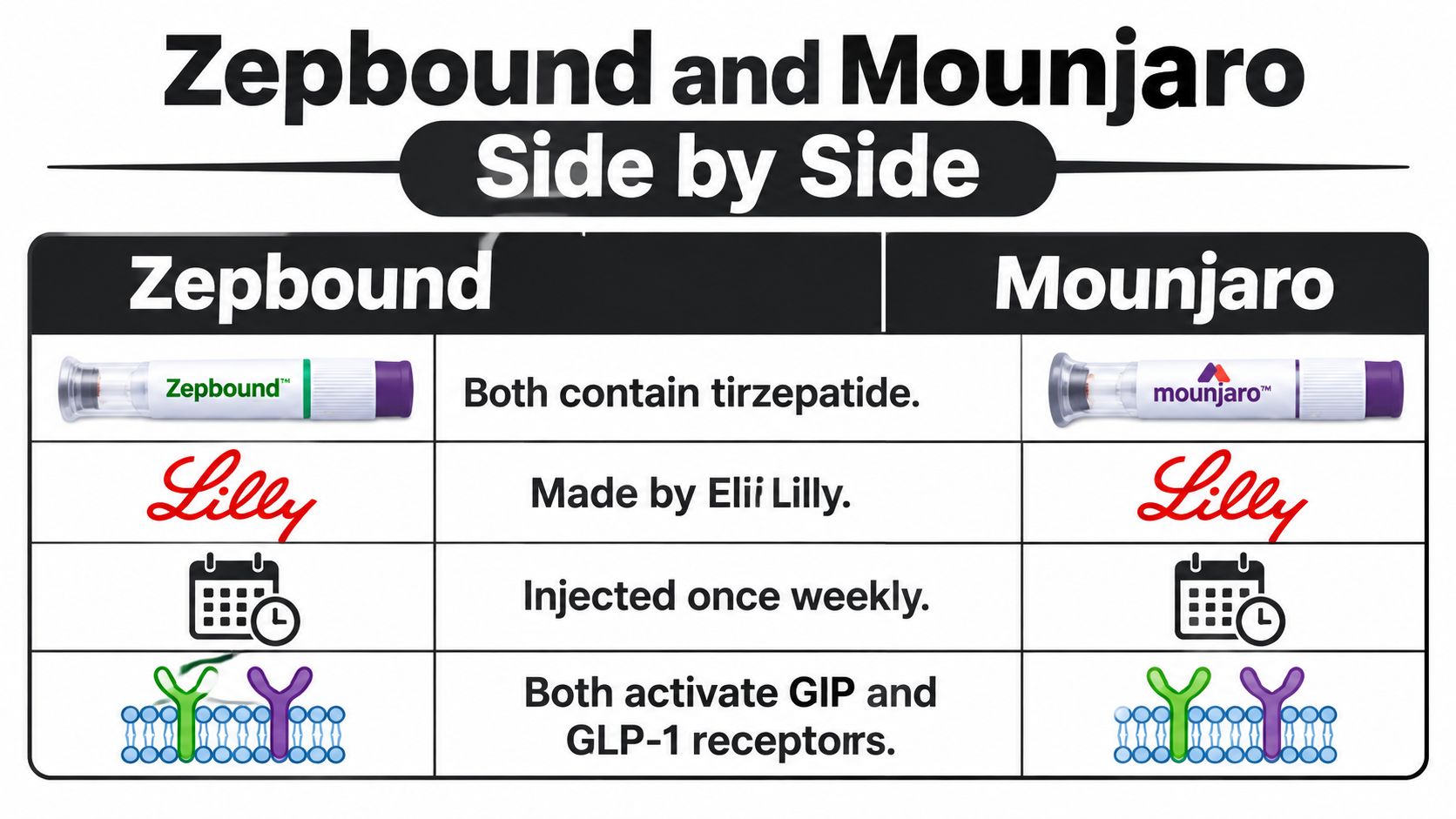
Same medicine, different treatment purpose
For Zepbound's weight-management use, the prescription accompanies a reduced-calorie diet and increased physical activity. Mounjaro is prescribed with diet and exercise to improve blood-glucose control. Neither label treats the injection as a replacement for nutrition or movement.
That distinction changes how a clinician defines success. An obesity treatment plan evaluates weight reduction and maintenance alongside tolerability and health goals. A diabetes treatment plan must evaluate glucose control, even when weight reduction is also desirable.
Consider an adult seeking treatment for obesity who doesn't have diabetes. The fact that a friend lost weight while taking Mounjaro doesn't establish that Mounjaro is the matching labeled product for that adult. Conversely, someone receiving diabetes care shouldn't assume that a weight-management brand is necessary because weight loss is part of their broader health plan.
The useful comparison is not stronger versus weaker. It's the labeled treatment purpose versus the diagnosis being treated.
If you're asking “What is Zepbound vs Mounjaro?” because the pens look similar, the answer is that the branding separates treatment indications rather than different active formulas. The next decision belongs in the medical record: which condition is the prescriber documenting, and which product supports that treatment plan?
Why the Labels Are Not Interchangeable
The same active drug does not mean interchangeable FDA indications. The FDA's Zepbound approval announcement establishes its role in chronic weight management, which is different from Mounjaro's diabetes indication.
For an eligible adult seeking obesity treatment without diabetes, Zepbound is the on-label tirzepatide product. Prescribing Mounjaro specifically for weight loss is off-label in the United States. Off-label describes the relationship between the prescription and the approved indication; it doesn't mean the molecule changes.
A cheaper or more readily available pen therefore isn't automatically an equivalent FDA-approved weight-management prescription. Your clinician still needs a clear prescribing rationale, and your insurer may review the brands under different benefits.
What changes in the paperwork
The practical consequences reach beyond the name printed on the prescription:
- The recorded diagnosis: The chart should accurately explain the condition being treated. A clinician shouldn't document diabetes to pursue coverage for a diabetes-labeled medicine.
- The authorization request: An insurer may ask for different supporting records for obesity treatment than for glucose management. Brand preference alone doesn't establish eligibility.
- The supporting evidence: The clinician should use evidence relevant to your condition, rather than borrowing the most impressive result from a different patient population.
Our explanation of tirzepatide's FDA approval for weight loss provides context for distinguishing the ingredient from its approved branded uses. That distinction matters when a pharmacy offers an alternative or an insurance representative says a different product is preferred.
A preference isn't a new indication
Say your insurer lists Mounjaro as preferred but excludes obesity medication coverage. That doesn't turn an obesity-only prescription into on-label diabetes treatment. Ask for the actual coverage rule, including whether the exclusion concerns the drug, the diagnosis, or the benefit category.
Lifestyle support remains part of either treatment plan. For readers organizing their nutrition and activity questions before a visit, GutRx's guide to daily habits for steadier blood sugar can serve as a discussion resource, not a replacement for diagnosis or prescribed treatment.
Don't combine Zepbound with Mounjaro, another tirzepatide-containing medicine, or a separate GLP-1 receptor agonist. A brand change requires a coordinated replacement plan, not overlapping injections.
The regulatory decision answers whether the product fits the intended use. It does not, by itself, predict how much weight an individual will lose.
How Much Weight the Trials Showed
| Weekly dose | Mean loss at 72 weeks | Lost at least 5% at 72 weeks | Mean loss at 176 weeks |
|---|---|---|---|
| 5 mg | 15.0% | 85% | 12.3% |
| 10 mg | 19.5% | 89% | 18.7% |
| 15 mg | 20.9% | 91% | 19.7% |
| Placebo | 3.1% | 35% | 1.3% |
The SURMOUNT-1 trial published in the New England Journal of Medicine enrolled 2,539 adults without diabetes in a 72-week randomized trial; the table shows the reported dose-specific weight reductions, response proportions, and longer-term 176-week follow-up means.
These are tirzepatide results, not evidence that Zepbound outperforms Mounjaro. The table compares doses and placebo in a defined obesity trial population. It doesn't compare the branded products against each other.
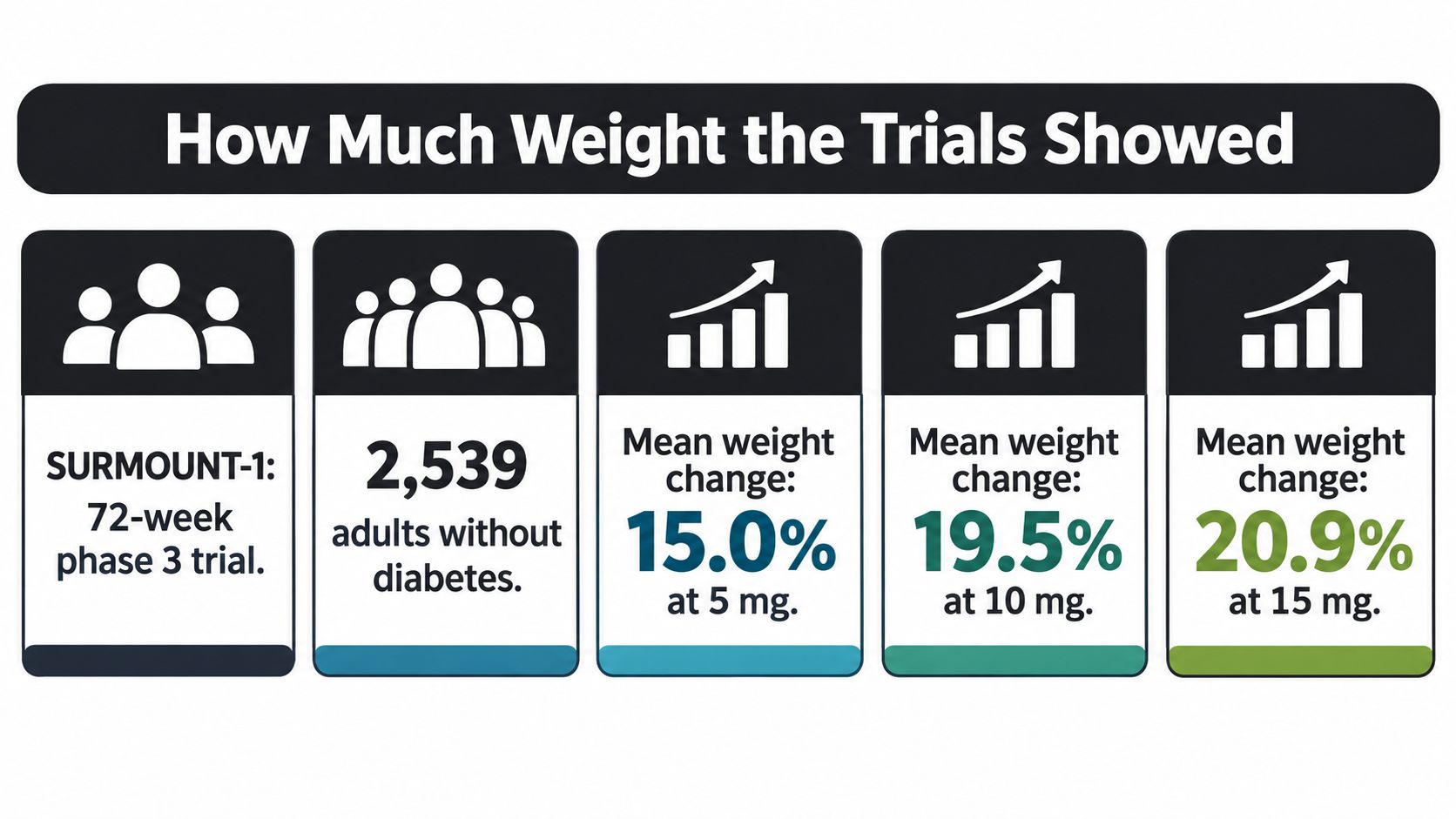
Read the population before the percentage
A trial average is meaningful only when you know who participated and what the investigators measured. Mounjaro's diabetes trials and Zepbound's obesity trials enrolled different populations and used different endpoints. Comparing headline percentages across them can make a population difference look like a brand difference.
The FDA-reviewed Zepbound evidence describes 72-week studies and reports average weight loss of 12% in the highest-dose group in the companion trial involving adults with diabetes. People with diabetes generally experienced less average weight loss than participants without diabetes, which is a reason to tailor counseling rather than promise the largest published result.
The table also separates mean weight loss from the proportion reaching a threshold. Those measures answer different questions: how much the group lost on average, and how many participants achieved a specified degree of reduction. Neither tells you exactly where your own outcome will fall.
Use trial results as a planning range
The obesity findings support substantial, dose-dependent average weight reduction. They don't establish that everyone should reach the highest dose, that every patient will respond similarly, or that a disappointing early response can be fixed by changing only the brand name.
Longer-term results also deserve careful interpretation. Follow-up findings describe outcomes at a later assessment, not a promise that weight will decline continuously at the same pace. Your clinician should assess progress, tolerability, and the feasibility of continuing treatment together.
A relevant trial average is a counseling tool. It isn't a personal forecast or a reason to accelerate treatment beyond what you tolerate.
Nutrition still belongs in that conversation. SANS Meal Bar's discussion of why Western eating patterns deserve scrutiny offers a starting point for reviewing food choices with a clinician or dietitian, rather than treating appetite reduction as a complete nutrition plan.
A useful appointment question is: “Which trial population best resembles me, and what would count as a meaningful response in my treatment plan?” That produces a more realistic expectation than asking which box has the larger advertised percentage.
Weekly Doses and the Titration Path
Both products use gradual dose escalation, but starting treatment and choosing a maintenance dose are different decisions. The FDA Zepbound prescribing information describes initiation at 2.5 mg once weekly for four weeks, escalation in 2.5-mg increments after at least four weeks at the current dose, and weight-management maintenance options of 5, 10, or 15 mg weekly, with an adult tirzepatide maximum of 15 mg.
| Step | Weekly dose | Minimum time | Role |
|---|---|---|---|
| Start | 2.5 mg | 4 weeks | Tolerability only, not maintenance |
| First increase | 5 mg | 4 weeks before another increase | Zepbound maintenance option |
| Bridge | 7.5 mg | 4 weeks before another increase | Escalation step if tolerated |
| Middle increase | 10 mg | 4 weeks before another increase | Zepbound maintenance option |
| Bridge | 12.5 mg | 4 weeks before another increase | Escalation step if tolerated |
| Top approved dose | 15 mg | Ongoing if tolerated and appropriate | Zepbound maintenance option and Mounjaro adult maximum |
The table is an escalation framework, not an instruction to complete every row. A maintenance option may remain appropriate without a further increase. For Mounjaro, the clinician also considers whether additional glucose lowering is needed.
Tolerability determines the next step
The starting dose gives the body time to adjust. It shouldn't be treated as proof that treatment has failed if the patient hasn't yet reached their eventual weight or glucose goal.
Similarly, bridge doses serve the escalation process; they aren't a reason to move forward while symptoms remain limiting. Nausea, vomiting, or diarrhea should prompt a discussion about holding the current dose, reassessing intake and hydration, or changing the treatment plan.
Our tirzepatide titration schedule can help you organize that conversation. Bring a record of injection dates, the dose used, symptoms, and any difficulty eating or drinking normally.
Practical rule: A dose increase should follow a tolerability review, not simply the arrival of the next shipment.
Make the schedule usable at home
Choose a consistent weekly injection day and follow the device instructions for the product dispensed. Confirm the prescribed strength before injecting, particularly when a new shipment arrives or the packaging changes.
Ask the prescriber for instructions before changing injection day, interrupting treatment, or replacing one brand with another. If you miss treatment, don't improvise a catch-up injection or assume you should restart at the previous dose after a prolonged gap.
The pharmacy's ability to fill the next prescribed strength is part of safe titration. Arrange refills early enough to identify a supply problem before your next injection is due, and have the care team decide what to do if that strength can't be obtained.
Side Effects and Safety Checks
Safety counseling follows the active ingredient, not the branding. Switching names isn't a dependable way to avoid tirzepatide-related symptoms, and a patient who struggled with tolerability needs a clinical review rather than a different-looking box.
Common effects include nausea, diarrhea, vomiting, constipation, abdominal pain, and reduced appetite. Gradual escalation is intended to improve tolerability, but symptoms still need attention if they interfere with eating, drinking, or daily activities.
Separate manageable discomfort from warning signs
Smaller meals, stopping when comfortably full, and avoiding large fatty meals are reasonable first adjustments for mild digestive symptoms. Don't interpret reduced appetite as a reason to stop drinking adequately or to ignore persistently poor intake.
- Persistent vomiting or dehydration: Contact your clinical team the same day if you can't keep fluids down, feel markedly dizzy, or notice substantially reduced urination.
- Severe, ongoing abdominal pain: Seek urgent assessment rather than assuming it's routine nausea. Pancreatitis or gallbladder problems need medical evaluation.
- Neck swelling or swallowing changes: A neck lump, persistent hoarseness, or trouble swallowing warrants evaluation because tirzepatide carries a warning about thyroid C-cell tumors.
- Severe allergic symptoms: Trouble breathing or swelling of the face, lips, tongue, or throat requires emergency care.
The thyroid warning requires precision: animal findings underpin the warning, and they don't establish that tirzepatide causes these tumors in humans. Nevertheless, a personal or family history of medullary thyroid carcinoma or multiple endocrine neoplasia syndrome type 2 is a contraindication.
Review risks before the prescription
Tell the prescriber if you're pregnant, planning pregnancy, or have significant gastrointestinal disease. Pregnancy requires prompt treatment review, and severe digestive conditions may make tirzepatide inappropriate.
Bring a complete medication list, including insulin and other glucose-lowering medicines. Your clinician needs to consider hypoglycemia risk and whether those medicines require adjustment, rather than evaluating tirzepatide in isolation.
A useful monitoring plan includes weight trends, glucose readings when relevant, side-effect check-ins, and clear instructions for when to hold a dose and contact the team. It should also identify whom to call outside a routine appointment.
Don't wait for a scheduled follow-up when symptoms suggest a serious problem. Routine messaging is useful for tolerability questions, but urgent symptoms need timely in-person or emergency assessment.
Cost Coverage and Staying on Therapy
A prescription is only workable if you can obtain and afford the medicine throughout treatment. Compare the ongoing cost and refill process, not just the initial quote.
Insurance review may turn on the documented diagnosis and the benefit available under your plan. Ask whether the product is covered for your intended use, whether prior authorization is required, and what records the insurer wants before the pharmacy submits a claim.

Compare the whole payment arrangement
Our GLP-1 insurance coverage guide can help you organize questions about coverage and authorization. Request a current pharmacy quote rather than relying on an old coupon, and distinguish a manufacturer offer from your actual out-of-pocket obligation.
For a transparent cash-pay comparison, Weight Method's tirzepatide monthly plan costs $119 for the first month, then $329 per month, is billed monthly, and can be canceled anytime. Introductory pricing is for new GLP-1 patients; standard pricing applies to anyone who has used a GLP-1 before.
Our plans include provider review, medication, care-team support, and shipping, with no separate membership fee. These are program prices, not a claim about the retail price or insurance coverage of a particular branded pen.
Before enrolling in any program, identify the exact medication and formulation that will be prescribed and dispensed. A program described as offering tirzepatide shouldn't automatically be interpreted as a promise to supply Zepbound or Mounjaro.
Plan for interruptions before they happen
The FDA tirzepatide shortage record has listed Zepbound-related supply constraints. A shortage record is time-sensitive, so historical listing information shouldn't be treated as confirmation of today's national status or your pharmacy's inventory.
Switching brand names isn't an automatic supply solution. The prescriber and pharmacist still need to coordinate the prescription, strength, and timing.
Before starting, settle these practical questions:
- Delayed shipment: Who should you contact if the medication won't arrive before your scheduled injection?
- Unavailable strength: Will the clinician hold the dose, redirect the prescription, or reassess treatment?
- Treatment gap: Who will determine whether restarting requires a different dose?
- Coverage change: What happens if authorization expires or the ongoing cost becomes unaffordable?
The most useful access comparison is the cost of a sustainable, monitored course, not the cheapest isolated fill. An affordable initial prescription offers limited value if you have no workable plan for the next dose.
Choose the Path That Matches the Goal
There isn't a universal winning brand. Choose the treatment pathway that fits the clinical goal, then confirm that the prescription can be documented, paid for, and filled.
For someone whose principal need is blood-glucose management, the diabetes-labeled pathway is the appropriate starting discussion. For an eligible adult seeking chronic obesity treatment, the weight-management pathway is the relevant one.
When the goals overlap
A patient with both obesity and diabetes doesn't need parallel prescriptions for both brands. The prescriber should decide which indication best supports the treatment plan and document the associated goals.
That decision should include more than what the insurer prefers. A covered prescription that doesn't reflect the patient's diagnosis isn't a sound solution, and a clinically appropriate prescription that the patient can't obtain needs an access plan.
Use these decision criteria at the visit:
- Clinical fit: What condition is being treated, and how will the clinician judge benefit?
- Safety fit: Does the medical history or medication list require a different approach?
- Access fit: Can the prescribed product and dose be obtained consistently?
- Monitoring fit: Who reviews symptoms, progress, and requests for dose changes?
A monitored route rather than a brand shortcut
Licensed telehealth care can provide a practical route for adults who prefer remote visits and home delivery. It doesn't remove the need for eligibility review, an accurate medication list, or individualized prescribing.
At Weight Method, our Zepbound results page is medically reviewed by licensed providers, and providers in our network hold American Board of Obesity Medicine certification or equivalent bariatric medicine credentials. Those qualifications support clinical review; they don't guarantee that a particular medication is right for every applicant.
Ozempic, Wegovy, Zepbound, Mounjaro, and Rybelsus are trademarks of their respective owners and are not affiliated with us.
Before the first injection, bring your medical history, current medicines, previous treatment experience, and coverage questions to a licensed prescriber. Leave with a written dose plan, a symptom-contact plan, and instructions for handling a delayed fill, not a preferred brand name.
Weight Method offers provider review, medication, care-team support, and shipping within its tirzepatide plans, helping you connect medication choice with an ongoing care plan. Visit Weight Method to explore a licensed-provider evaluation and discuss which treatment pathway fits your diagnosis, safety needs, and access situation.