Without insurance, semaglutide can cost roughly $149 to $1,350 per month, depending on the product, dose, and purchasing channel. The practical goal isn't to accept the first four-figure quote, but to work down the decision tree until you find a legitimate option that fits your budget.
You may already know how this feels. The prescription is ready, the pharmacist scans it, and the insurance rejection appears before anyone says the cash total out loud. Then the screen shows a price that looks less like a monthly medication bill and more like a rent payment.
That moment is frustrating, but it doesn't mean treatment is automatically out of reach. The question isn't one simple number. It's whether you're comparing Wegovy, Ozempic, Rybelsus, a manufacturer self-pay offer, a telehealth bundle, or a legally sourced compounded option, and whether the quoted price includes care, shipping, and dose management.
The Moment You Realize Insurance Won't Cover It
You're standing at the pharmacy counter with a Wegovy prescription and a denial message between you and the medication. The pharmacist explains that your plan didn't approve it, then gives you the cash price for a 28-day supply. At roughly $1,349.02, according to the current Wegovy cost explainer from Drugs.com, the bill can feel impossible before you've even started treatment.
The second surprise often comes from the insurance fine print. A plan may cover some GLP-1 prescriptions for type 2 diabetes while excluding weight-management treatment, or it may require prior authorization and step therapy before approving anything. A denial can reflect the plan's coverage rules rather than a judgment about whether your clinician believes semaglutide is appropriate.
A denial creates a shopping problem
Once insurance stops being the payment route, you need to compare cash channels. That means checking the manufacturer's direct-pay pricing, asking local pharmacies for a discount-card quote, reviewing telehealth bundles, and understanding what happens as your dose increases.
The mistake is treating the first retail price as the only available price. Novo Nordisk's direct-to-patient Wegovy injection option is listed at $499 per month, with 56-day and 84-day supplies priced at $998 and $1,497, respectively, according to the Drugs.com pricing overview.
Practical rule: Treat an insurance denial as the beginning of price comparison, not the end of treatment planning.
You'll still need a valid prescription and appropriate clinical supervision. But after that, the cash market gives you choices. Some are expensive but straightforward. Others lower the medication bill by bundling prescribing and delivery. The job is to find the lowest verifiable total cost, not merely the lowest advertisement.
What Semaglutide Actually Costs Without Insurance
The cleanest answer has three tiers. Retail list pricing sits near $1,000 to $1,350 monthly for several branded products, manufacturer self-pay programs can reduce selected options to $149 to $499, and telehealth or compounded channels may quote lower bundled prices with different eligibility and sourcing rules. The exact amount depends on the formulation, titration stage, pharmacy, and whether the quote includes care.
The semaglutide cost guide from Weight Method is useful for comparing the components that can appear in a cash-pay bill. For broader planning, people evaluating drug coverage from ThriveXDNA should separate insurance eligibility from cash pricing, because a coverage check and a retail quote answer different questions.
Three prices, three buying experiences
Tier one is full retail. Wegovy's list price is about $1,349.02 per 28-day supply, while the uninsured retail price of Ozempic is around $1,027.51 per month and Rybelsus is around $997.58 per month, according to Drugs.com's semaglutide pricing reference. These are the numbers most likely to appear when you take a prescription to a chain pharmacy without a usable insurance benefit or discount.
Tier two is direct manufacturer self-pay. Selected Wegovy options can fall to $499 monthly for injections, while the newer oral Wegovy option began at $149 monthly for lower doses through 2026, with some prices scheduled to rise to $199 and higher maintenance doses to $299, as reported by Drugs.com.
Tier three is bundled care. A telehealth price may include a clinician visit, prescription management, medication fulfillment, shipping, messaging, and follow-up. That can make a higher-looking subscription more transparent than a pharmacy receipt that covers only the drug.
| Price Tier | Monthly Cost Range | Where You Find It | What's Included |
|---|---|---|---|
| Retail list price | About $998 to $1,350 | Chain and independent pharmacies | Branded medication only |
| Manufacturer self-pay | About $149 to $499 for selected options | Direct-to-patient programs | Product-specific medication pricing |
| Telehealth or compounded channel | Varies by provider and dose | Licensed telehealth and compounding channels | May include visits, medication, shipping, and support |
The key distinction is what the monthly price buys. A $1,000 pharmacy quote may exclude appointments and labs. A lower telehealth quote may depend on a starter dose, promotional period, or membership structure.
Wegovy vs Ozempic vs Rybelsus Price Comparison
The product name matters because the same active ingredient appears in different medicines, forms, and approved uses. Wegovy is the branded weight-management option, Ozempic is primarily associated with type 2 diabetes treatment, and Rybelsus is the daily oral form. Your prescription and diagnosis influence both the price and the likelihood of insurance coverage.
The current cash baseline is clearest for branded products. Wegovy lists at about $1,349.02 per 28-day supply, Ozempic at about $1,027.51 per month, and Rybelsus at about $997.58 per month, based on Drugs.com's comparison.
| Product | Form | Maintenance Dose | List Price / Month | Realistic Self-Pay / Month | Insurance Coverage Likelihood |
|---|---|---|---|---|---|
| Wegovy | Injection, with an oral option | Varies by prescribed stage | About $1,349.02 for the branded injection | Selected direct-pay tiers can be lower | More likely when the plan covers eligible weight-management use |
| Ozempic | Weekly injection | Varies by prescribed stage | About $1,027.51 | Depends on pharmacy and program | More likely for covered type 2 diabetes treatment |
| Rybelsus | Daily tablet | Varies by prescribed tablet strength | About $997.58 | Depends on pharmacy and program | More likely for covered type 2 diabetes treatment |
Match the product to the reason for treatment
Wegovy is generally the most direct branded route for someone seeking an approved weight-management indication. Ozempic may be prescribed for type 2 diabetes, while its use for weight loss can create a coverage mismatch. Rybelsus avoids injections, but convenience doesn't automatically make it inexpensive.
That difference is why a pharmacist's price quote can be misleading if you compare products without comparing the prescription's purpose. A plan that pays for Ozempic for diabetes may not pay for the same ingredient when the prescription is written for weight management.
My recommendation is simple. Ask your prescriber which approved product fits your diagnosis, then compare the cash price for that exact product and dose. Don't switch from Wegovy to Ozempic solely because someone online quotes a lower number. The prescription, indication, supply, and pharmacy all affect the actual bill.
How Dose and Supply Change Your Monthly Bill
Your first semaglutide fill often isn't your long-term price. Clinicians commonly begin with a lower dose and increase it gradually when appropriate, so the starter month and maintenance month can look very different on a cash-pay statement.
The important budgeting principle is this: a lower starting dose doesn't prove the entire treatment will remain at that price. Manufacturer programs and telehealth providers may price starter and maintenance stages differently, and a program that advertises its entry price may quote a higher amount later.
Read the supply, not just the dose
A branded package typically represents a defined supply period, while compounded programs may describe the medication by vial, concentration, or planned treatment stage. Those labels aren't interchangeable. Ask whether the quoted amount covers medication only, how many doses you'll receive, and whether shipping or clinical review is separate.
| Dose Stage | Strength | Box Supply | Retail Range | Telehealth Range |
|---|---|---|---|---|
| Starter | Prescribed introductory strength | Often a short titration supply | Product and pharmacy dependent | Often the lowest advertised tier |
| Early escalation | Higher prescribed strength | May cover the planned refill period | Can rise with product and pharmacy | May change under the program's schedule |
| Maintenance | Clinician-selected ongoing strength | Product-specific supply | Can approach list pricing | Usually the program's higher medication tier |
Use a semaglutide dosage calculator only as a planning aid, not as a substitute for your prescriber's instructions. The calculator can help you understand how a titration schedule affects supply, but your clinician decides whether and when the dose changes.
Ask these questions before paying
- What is the exact dose? A quote without the strength is incomplete.
- How many days does the shipment cover? A monthly membership and a 28-day medication supply may not align.
- Does the price change after titration? Get the later-stage price in writing.
- What happens to unused starter medication? Don't assume you can combine or reuse it.
- Are consultations and shipping included? A low medication price can become expensive after add-on fees.
Budget for the highest expected monthly tier from the beginning. If the first month costs less, treat that as breathing room, not proof that the maintenance bill will stay low.
Why Telehealth Programs Charge What They Charge
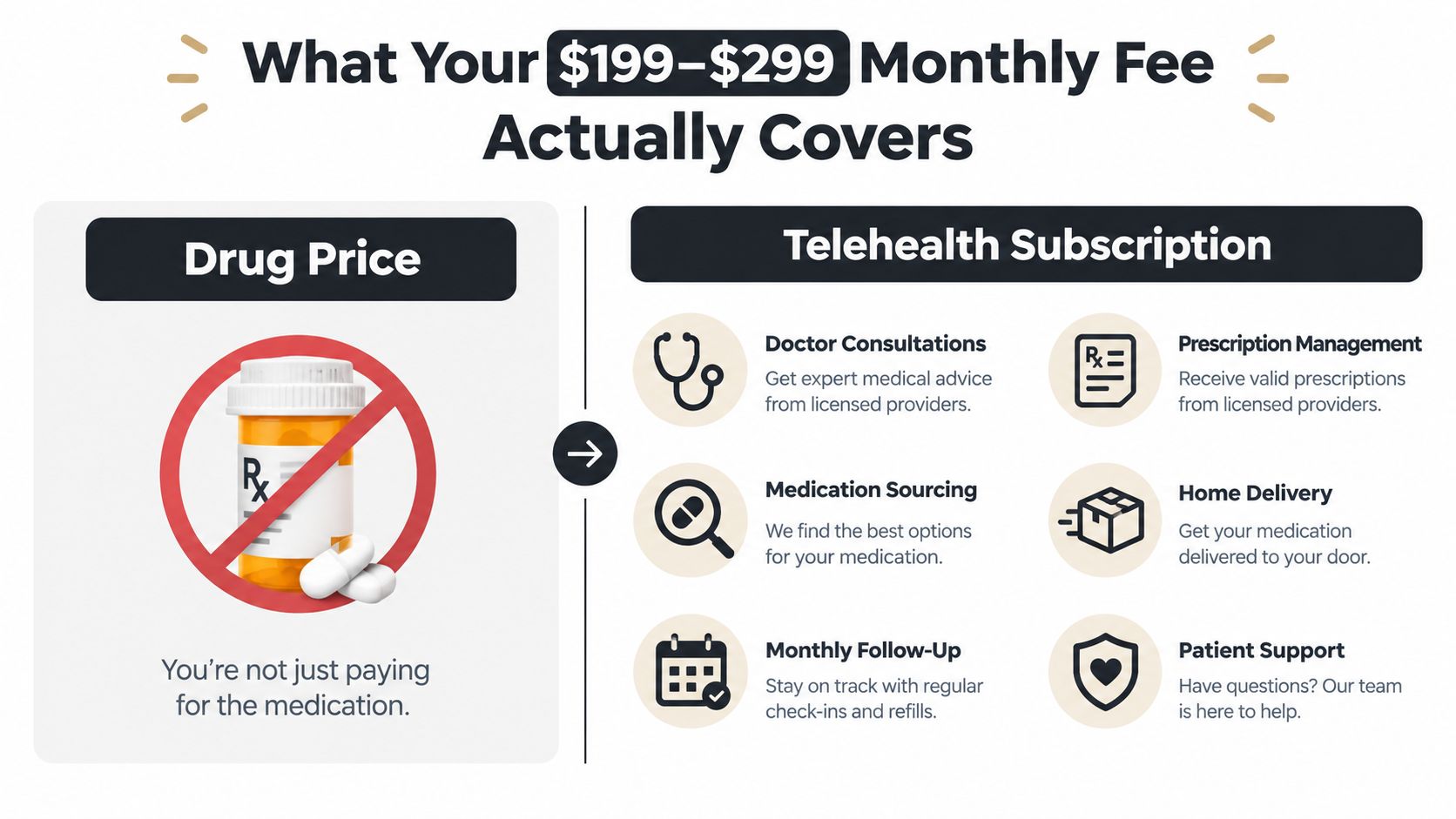
A telehealth subscription isn't automatically a drug price. It's usually a bundle containing clinical care, prescription management, medication sourcing, fulfillment, and delivery, which explains why a subscription can cost more than a bare medication quote while still costing less than full retail.
Some programs advertise monthly prices in the $149 to $499 range, with lower amounts linked to starter doses and higher amounts linked to ongoing therapy, according to Noom's semaglutide cost guide. The question is whether the listed price remains clear after the initial consultation, dose escalation, shipping, and follow-up requirements.
What the fee may include
A retail pharmacy can hand you a medication package and nothing else. A telehealth program may add provider evaluation, dose review, ongoing messaging, prescription transmission, pharmacy coordination, and home delivery. That convenience has value, particularly for people who don't want separate bills for every interaction.
But bundled pricing can hide important differences. Before enrolling, ask:
- Is the prescriber licensed in your state?
- Are labs required, included, or billed separately?
- Who reviews side effects and missed doses?
- Does the price change after the first refill or dose increase?
- Which pharmacy fills the prescription, and how can you verify it?
The right comparison isn't “drug price versus subscription price.” It's total monthly cost versus the amount of clinical continuity you receive.
I prefer a telehealth program when it publishes the medication price, consultation terms, refill process, and pharmacy identity without making you chase those details. I'd avoid any program that leads with a low monthly number but won't explain what happens when your dose changes.
Real Ways to Pay Less Without Insurance
The most useful savings strategy starts with the manufacturer's own cash channels, then moves to pharmacy comparison, then evaluates bundled care. Don't begin with an anonymous website promising an unusually low vial price. Begin with the product you were prescribed and the legitimate ways to lower its cash cost.
Novo Nordisk's direct-pay options create the clearest verified savings path for selected Wegovy products. The pricing reported by Drugs.com includes $499 monthly injections and an oral starter option at $149 monthly through 2026, with selected later prices scheduled at $199 and $299.
Rank the options by confidence
First, check the manufacturer channel. It gives you a branded product and a clearly identified source, but eligibility, product, dose, and time period matter. Read the terms rather than assuming every Wegovy or Ozempic prescription qualifies.
Second, price the same prescription at multiple pharmacies. GoodRx, SingleCare, and other cash-discount tools can produce different quotes by pharmacy and location. The discount applies to the participating pharmacy's price, so ask for the final amount before transferring the prescription.
Third, review HSA and FSA rules. A prescription and itemized receipt may support reimbursement, but the account administrator's rules control. A telehealth consultation and medication charge may be treated differently, so ask before using the card.
Fourth, compare an all-inclusive telehealth offer. The value is predictability. A program such as Weight Method describes a cash-pay model that combines provider access, dose management, medication fulfillment, and shipping, so compare its total price with a pharmacy-only quote rather than comparing headline prices alone.
Finally, assess compounded medication carefully. The FDA shortage status and compounding practices have changed, narrowing the rationale for copycat versions and making pharmacy verification more important, as discussed in the semaglutide shortage update.
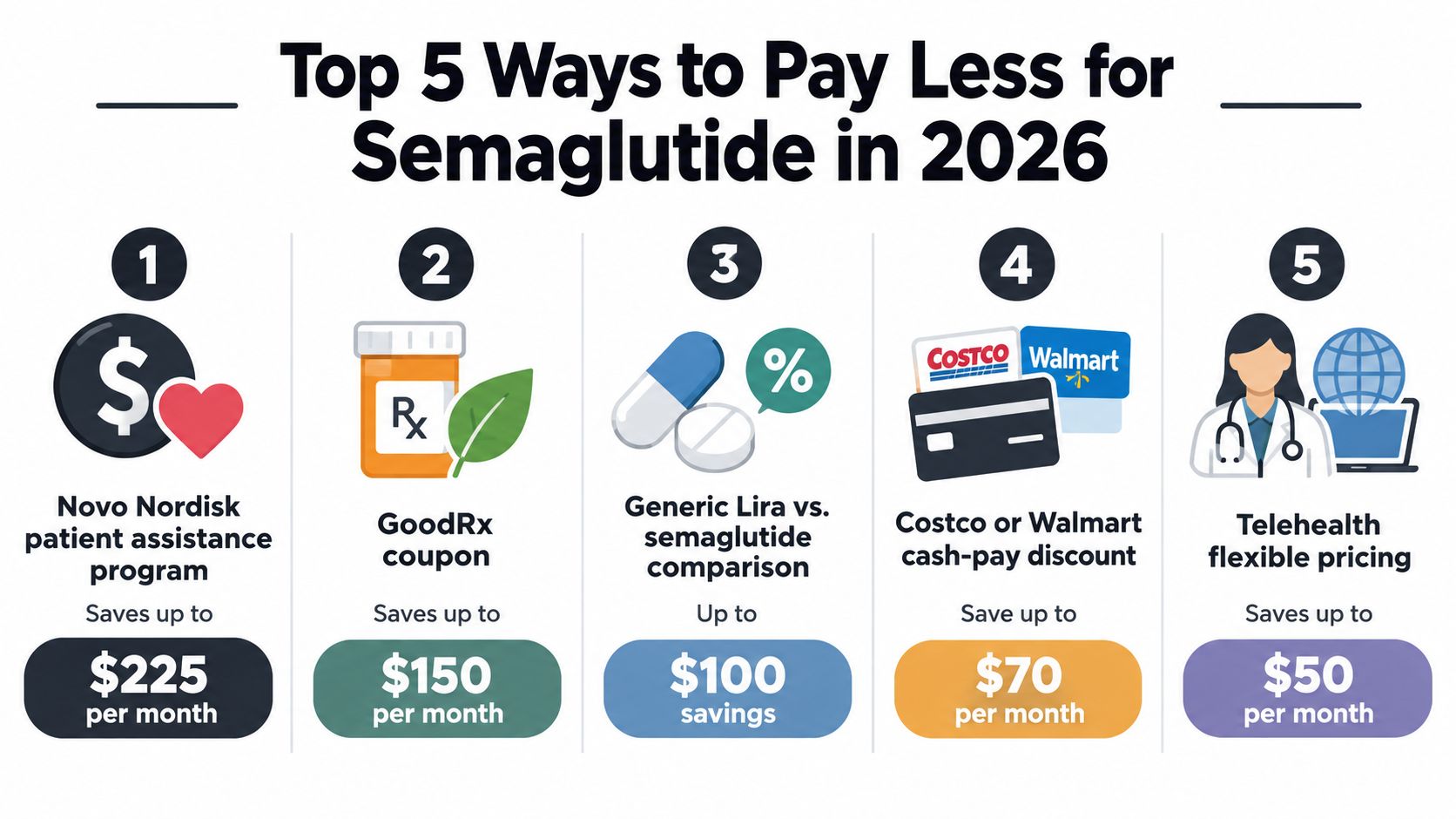
The practical savings order is manufacturer offer first, pharmacy comparison second, telehealth bundle third, compounded option only after verification. The GLP-1 savings guide from Weight Method can help organize those comparisons, but it shouldn't replace a prescriber and pharmacist review.
Red Flags When Semaglutide Looks Too Cheap
The lowest advertised price isn't automatically the best value. Semaglutide is a prescription medication, and a legitimate purchase should connect you to a qualified prescriber and a pharmacy that can identify what it dispensed.
Be especially skeptical of a site that sells medication without a prescription, asks only a shallow quiz, or refuses to explain the concentration in mg/mL. A vial with no clear label, lot information, pharmacy identity, or patient instructions is not a bargain. It's an unverified product.
Five checks before you pay
- Verify the pharmacy. Confirm the pharmacy's license through the relevant state board.
- Ask about sterile preparation. If a compounding pharmacy is involved, ask about its sterile-compounding standards, including USP <797> practices where applicable.
- Request potency documentation. A provider should explain whether third-party testing exists and provide a certificate of analysis when it claims testing.
- Demand dosing clarity. The label should state the concentration, prescribed volume, route, storage instructions, and beyond-use information.
- Find the adverse-event route. You should know which clinician handles side effects and how to report a medication problem.
A maintenance quote below $150 per month deserves careful scrutiny because verified cash-pay pricing can be as low as $149 for selected starter options, while higher doses cost more, according to Noom's pricing analysis. Don't confuse a starter promotion with a sustainable maintenance price.
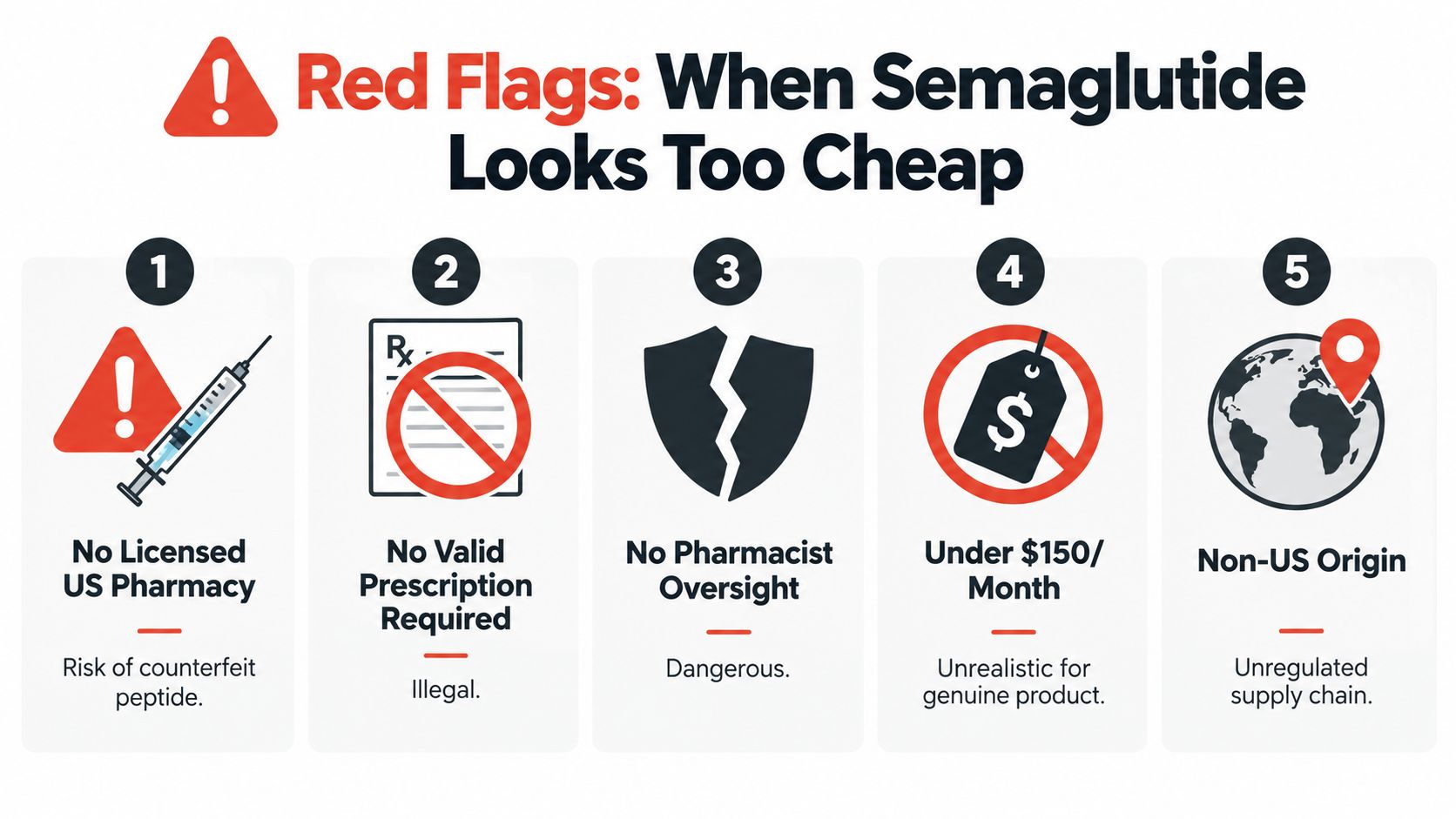
A legitimate lower-cost route should make the prescriber, pharmacy, dose, and refill process easier to verify, not harder.
Compounded semaglutide may be a lower-cost path for some patients, but the source must be transparent and the prescriber must remain involved. If the seller also bundles several unrelated peptides, uses transfer-only support, or pressures you to buy before a medical review, leave the checkout page.
Your Next Steps and Quick Answers
Use this order before placing a cash-pay semaglutide request:
- Confirm the diagnosis, product, and dose with your prescriber.
- Save recent insurance denial documents if your plan rejected the prescription.
- Request cash quotes for the exact prescription at two local pharmacies.
- Compare those quotes with two transparent telehealth programs.
- Ask any compounding pharmacy for its license, labeling details, and testing documentation.
- Get the full refill price before starting, not only the introductory price.
| Question | Short Answer |
|---|---|
| Does Medicare Part D cover semaglutide? | Coverage depends on the product, diagnosis, and plan rules. Diabetes-related prescriptions may receive different treatment from weight-management prescriptions. |
| Can HSA funds pay telehealth fees? | Possibly, but account administrators apply their own eligibility rules. Ask whether the consultation, medication, and membership are separately eligible. |
| How do I challenge a denied prior authorization? | Ask your prescriber for the denial reason, request the plan's appeal instructions, and submit the clinical documentation the plan requires. |
| What if a compounded vial looks cloudy? | Don't inject it. Contact the dispensing pharmacy and prescriber immediately for instructions and replacement review. |
| Is oral semaglutide cheaper than injectable semaglutide? | It can be at selected starter doses. Oral Wegovy was reported at $149 for lower doses through 2026, while later oral tiers were scheduled to rise. |
| Can I transfer the prescription across states? | Ask the prescriber and receiving pharmacy first. State licensure, pharmacy policy, and prescription requirements can affect the transfer. |
| How long does telehealth take before shipment? | It depends on the provider review, prescription approval, and pharmacy fulfillment process. Ask for the expected timeline before payment. |
| Does skipping a dose cancel savings? | Not automatically, but missed doses can change the safe restart plan and the refill timing. Contact the prescribing clinician rather than improvising. |
My decision rule is straightforward: choose the channel that keeps your dose steady, documents its sourcing, and keeps the total monthly bill below $400 without removing clinician access. The lower price is useful only if the supply is legitimate and the care continues after the first shipment.
Weight Method offers a cash-pay telehealth option that connects adults with licensed-provider consultations, semaglutide or tirzepatide fulfillment, dose management, ongoing support, and home shipping. Visit Weight Method to compare its current program details with the pharmacy and self-pay options you're considering.