If you thought semaglutide was just a short-term appetite suppressant you take for a few months and then walk away from, why do clinical follow-ups show weight regain once the prescription stops? Asking what is semaglutide usually leads people to social media headlines about weekly shots and dramatic before-and-after photos. Those summaries almost always stop at hunger suppression while glossing over safety warnings, gradual dosing rules, and what happens after treatment ends.
Semaglutide isn't a quick diet aid or a metabolic shortcut. It's an ongoing prescription therapy designed to manage chronic, biologically regulated conditions like type 2 diabetes and obesity. Treating it like a temporary cleanse sets patients up for avoidable side effects and frustrating rebounds.
Understanding how this medication behaves in the body, what clinical trials do and don't promise, and which medical histories rule it out gives you a much firmer footing before talking with a clinician.
What Semaglutide Is and Where It Is Approved
Semaglutide is a long-acting glucagon-like peptide-1 (GLP-1) receptor agonist, a prescription medicine engineered to copy a natural hormone your gut releases after you eat to help regulate blood sugar and signal fullness. Think of natural GLP-1 like a quick text message that flashes on your screen and disappears within minutes. Semaglutide delivers that exact same biological message, except it's built in a sturdy format that stays active in your bloodstream for days.
One of the biggest points of confusion for newcomers is seeing one generic molecule sold under multiple brand names with different rules. According to the FDA approval documentation for semaglutide, regulators first approved Ozempic, an injectable diabetes treatment, on December 5, 2017, followed by the daily oral tablet Rybelsus in 2019 for type 2 diabetes, and then Wegovy on June 4, 2021 as a higher-dose once-weekly injection specifically for chronic weight management in adults with obesity, or overweight plus at least one weight-related condition alongside reduced-calorie eating and increased physical activity.
| Product | Form | FDA Approval | Authorized Use |
|---|---|---|---|
| Ozempic | Injectable, once weekly | December 5, 2017 | Type 2 diabetes in adults |
| Rybelsus | Oral tablet, daily | 2019 | Type 2 diabetes in adults |
| Wegovy | Injectable, once weekly, 2.4 mg target dose | June 4, 2021 | Chronic weight management in adults with obesity, or overweight plus a weight-related condition |
Why Brand Names and Indications Matter
Seeing three brands share one active ingredient makes it tempting to treat them as interchangeable. They aren't. Ozempic and Rybelsus were developed and labeled primarily for glycemic control in adults with type 2 diabetes, whereas Wegovy carries authorization for long-term weight management at a higher target dose.
Semaglutide also isn't a general fat-burning pill that melts calories regardless of what happens in your daily life. Every regulated weight-management approval pairs the medication with reduced-calorie nutrition and increased physical activity, because the drug works by changing appetite and glycemic signaling rather than artificially spiking your resting metabolic rate.
Reading rule for prescriptions: Always match the brand name to its delivery form and authorized use before assuming a headline, insurance policy, or dosing chart applies to you.
When you read a news story or review a pharmacy benefit sheet, check whether the writer is talking about Ozempic for diabetes, Rybelsus as a daily pill, or Wegovy for chronic weight management. Catching that distinction immediately clears up why two friends taking "semaglutide" can have completely different pens, dosing ceilings, and insurance coverage rules.
How Semaglutide Works in the Body
Say an adult sits down for a regular lunch of grilled chicken, rice, and roasted vegetables. Without medication, the body runs a brief hormonal loop that rises during the meal and fades quickly afterward. With semaglutide on board, that same meal triggers a steadier, longer-lasting biological response across multiple organs.
- Gut hormone signaling starts the chain: Normally, eating prompts cells in the small intestine to release native GLP-1, telling the body that nutrients have arrived. Semaglutide steps into the same receptors so that signal doesn't vanish minutes after the plate is cleared.
- Pancreatic blood-sugar balance kicks in: When semaglutide binds to GLP-1 receptors in the pancreas, it stimulates insulin secretion only when blood glucose is elevated, while dialing back inappropriate glucagon release. Because glucagon normally tells the liver to push stored sugar into the blood, quieting it helps steady post-meal blood glucose without forcing unnecessary insulin spikes when sugar is normal.
- Stomach emptying slows down: The medication delays gastric emptying, meaning food leaves the stomach and enters the small intestine at a measured pace. Meals sit comfortably longer, which stretches physical fullness between lunch and dinner.
- Brain appetite pathways quiet down: Beyond the digestive tract, GLP-1 receptor activation reaches appetite-regulating regions of the brain. That central signal reduces hunger cues and lowers overall daily energy intake, often making smaller portions feel satisfying.
Why One Injection Lasts All Week
Natural human GLP-1 breaks down rapidly in the bloodstream, which would make it impractical as a weekly therapy. The FDA prescribing label for Wegovy explains that semaglutide shares 94% sequence homology with native human GLP-1 and uses a fatty-diacid side chain linked via a hydrophilic spacer to bind to albumin, a common blood protein. Binding to albumin shields the drug from fast enzymatic breakdown and slows kidney clearance, letting a single subcutaneous dose stay active all week.
That same label notes roughly 89% absolute bioavailability after subcutaneous injection, with peak blood levels typically arriving 1 to 3 days after the shot. Because the drug rises gradually and lingers for days, you don't feel an abrupt switch flip five minutes after injecting.
Those exact digestive mechanisms also explain why stomach symptoms show up so frequently. Slowing down gastric emptying helps you feel full sooner, yet pushing food through the stomach more slowly can easily trigger nausea, fullness discomfort, or constipation when drug levels climb faster than your gut can adjust. That biological reality is why prescribers rely on a careful step-up schedule instead of starting patients at full strength.
What the Clinical Trials Show for Weight Loss
Headline numbers often get tossed around without context, making semaglutide sound either magical or suspicious. Looking closely at the data clarifies what this medication delivers across controlled trials and everyday clinics.
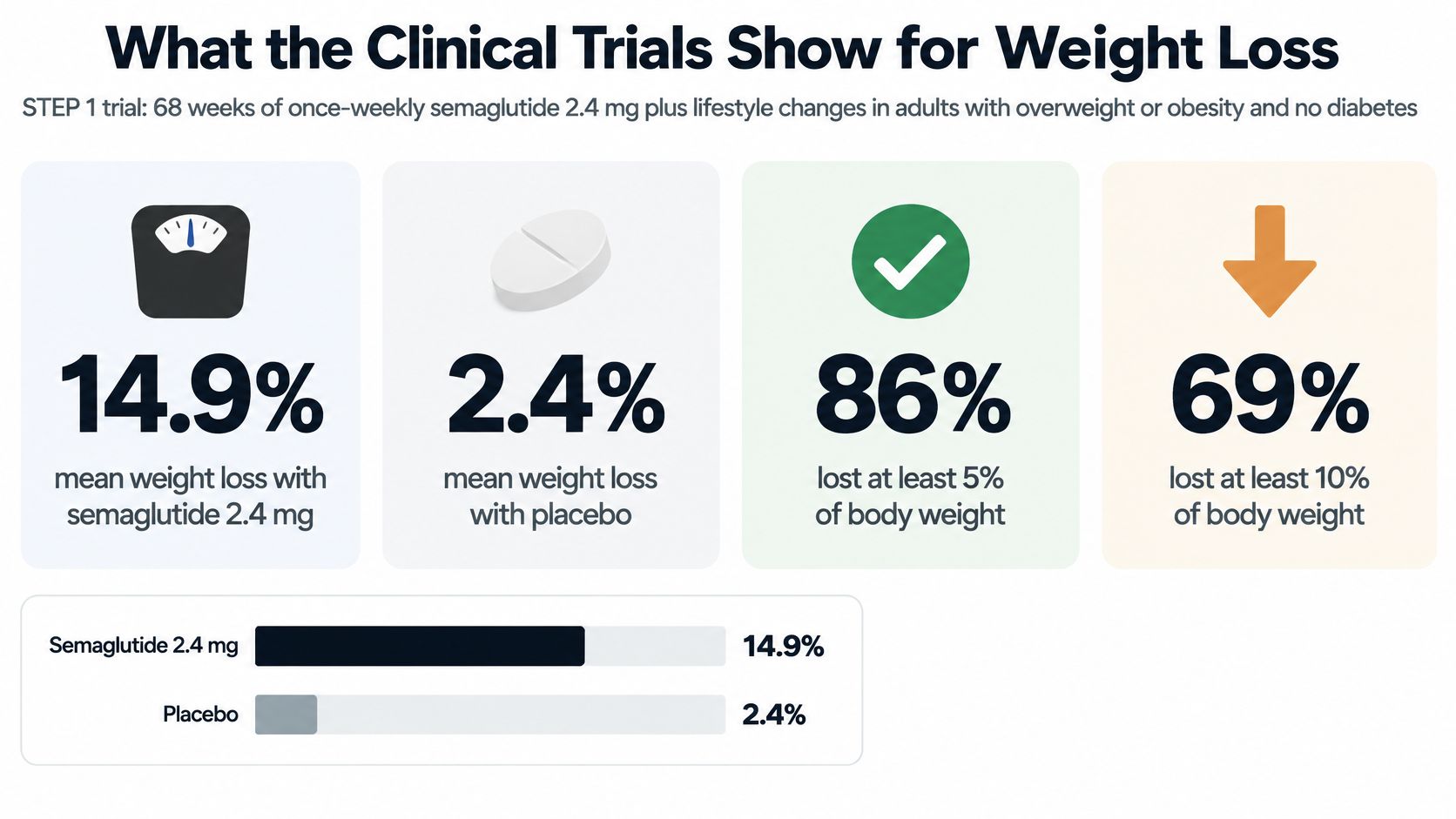
In the landmark STEP 1 randomized clinical trial published in the New England Journal of Medicine, adults with overweight or obesity who didn't have diabetes received once-weekly subcutaneous semaglutide 2.4 mg plus lifestyle intervention for 68 weeks, while a control group received placebo plus the same lifestyle coaching. Participants taking semaglutide lost an average of 14.9% of their starting body weight, compared with 2.4% in the placebo group. That produced an estimated treatment difference of 12.4 percentage points (95% confidence interval, 11.4 to 13.4 percentage points; P below 0.001).
Notice how that comparison works. Researchers measure semaglutide against a placebo group that also receives diet and activity counseling, not against zero effort. You're seeing the added biological lift of the medication on top of structured lifestyle changes.
How Study Design and Duration Shift the Numbers
Single trials tell only part of the story, because weight changes evolve over months and years. Longer follow-ups and clinic-based cohorts show how results look outside a strict 68-week trial window:
- One-year multicenter findings: A 2024 multicenter study indexed in PubMed clinical research reported 13.4% total body-weight loss among adults treated with semaglutide after 12 months.
- Four-year durability data: A 2024 analysis in Nature Medicine tracked participants through week 208 and found mean weight loss of 10.2% with semaglutide versus 1.5% with placebo.
- Two-year real-world progression: A 2025 observational cohort published in Current Medical Research and Opinion recorded mean weight loss of 13.4% at 6 months, 17.6% at 12 months, 20.3% at 18 months, and 20.4% at 24 months.
| Study or Cohort | Duration | Weight Loss With Semaglutide | Comparison |
|---|---|---|---|
| STEP 1 randomized trial | 68 weeks | 14.9% | Placebo 2.4% |
| 2024 multicenter study | 12 months | 13.4% | Single-arm cohort (no placebo) |
| 2025 real-world study | 6 months | 13.4% | Real-world baseline (no placebo) |
| 2025 real-world study | 12 months | 17.6% | Real-world baseline (no placebo) |
| 2025 real-world study | 18 months | 20.3% | Real-world baseline (no placebo) |
| 2025 real-world study | 24 months | 20.4% | Real-world baseline (no placebo) |
| Nature Medicine analysis | 208 weeks | 10.2% | Placebo 1.5% |
Why do real-world numbers sometimes look higher than randomized trials? Observational cohorts don't randomly assign people to placebo, adherence varies widely, and people who remain on therapy at 18 or 24 months are often the ones tolerating the medication well and seeing steady progress. Those who stop early due to side effects, cost, or limited response drop out of later averages.
A clinical trial average describes what happened across a large group, never a personal guarantee of what your scale will show.
Even inside a controlled trial, individual responses spread widely. Some adults lose far more than the mid-teens average, while others see modest single-digit drops despite consistent weekly injections. For a closer breakdown of realistic timelines and individual factors, explore our guide on how much weight you can lose on semaglutide.
Dosing Schedule From First Dose to Maintenance
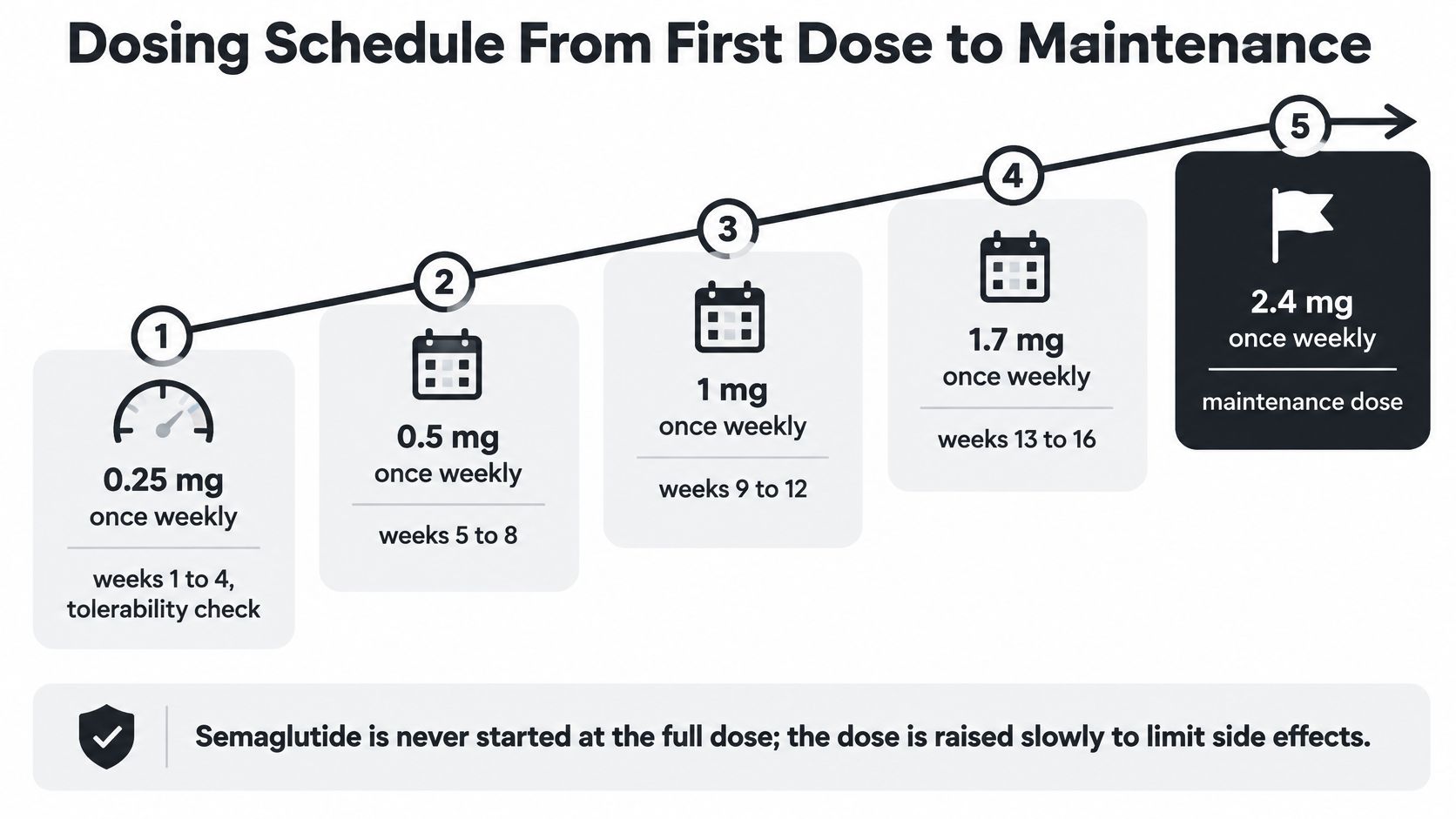
Clinicians never start a patient on the full target dose of semaglutide. Jumping straight to full strength overwhelms digestive receptors and makes severe nausea much more likely. Instead, the Wegovy prescribing plan follows a five-step titration ladder designed to let your stomach and brain adapt gradually over four months.
| Weeks on Treatment | Weekly Dose | Purpose |
|---|---|---|
| Weeks 1-4 | 0.25 mg | Starting dose to check tolerability |
| Weeks 5-8 | 0.5 mg | First step up if tolerated |
| Weeks 9-12 | 1 mg | Second step up |
| Weeks 13-16 | 1.7 mg | Third step up before full dose |
| Week 17 onward | 2.4 mg | Target maintenance dose |
This gradual climb mirrors how randomized trials established safety, using a 16-week escalation window before patients spent roughly a year at the full target dose. That first month at 0.25 mg isn't meant to deliver peak weight loss. It's a tolerability test to see how your digestive tract reacts while blood levels build slowly.
How Prescribers Adjust the Ladder in Real Life
A printed dosing table is a guide, not a rigid race. If you still have stubborn nausea or food aversions during week 4 or week 8, a clinician may hold you at your current dose for an extra month rather than pushing upward on schedule. In some cases, stepping back down temporarily lets symptoms settle without abandoning therapy.
This careful medical supervision is one major difference between prescription GLP-1 therapies and over-the-counter options. People who aren't candidates for prescription titration or want to compare non-prescription mechanisms sometimes look into fat-blocking aids and shop alli capsules at CalVitamin, which work locally in the digestive tract rather than acting on brain and hormonal pathways.
Day-to-Day Administration Rules
Routine habits depend heavily on which form you're prescribed, so confirm your exact product before following instructions:
- Weekly injections (Wegovy and Ozempic): Administer under the skin of your abdomen, thigh, or upper arm once a week on the same day, with or without food. If you miss a weekly dose, the label generally permits taking it within 5 days of the missed day; if more time passes or you miss multiple weeks, follow your prescriber's re-titration instructions rather than doubling up.
- Daily oral tablets (Rybelsus): Oral semaglutide uses completely different milligram strengths and timing rules. Take the tablet first thing in the morning on an empty stomach with no more than 4 ounces of plain water, then wait at least 30 minutes before eating, drinking coffee, or swallowing other pills so the tablet absorbs properly.
Before every scheduled increase, write down your next step-up date and ask your clinician which symptoms mean you should pause and call the office before moving to a stronger pen.
Side Effects and Safety Warnings to Know
Casual conversations online often shrink semaglutide's safety profile down to "you might feel a little nauseous for a few days." That shortcut leaves out the warnings that determine whether someone should take this drug at all.
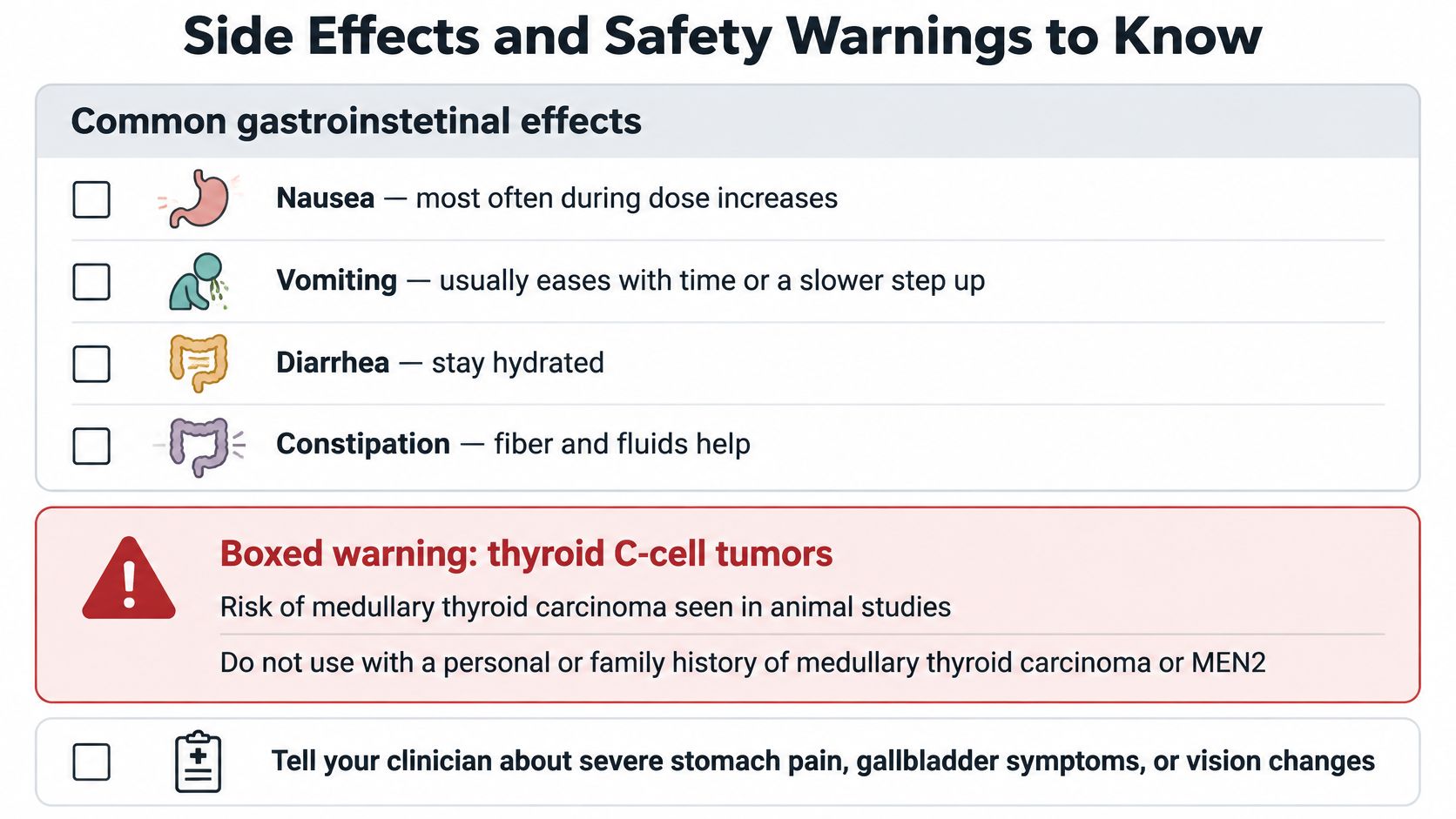
Common gastrointestinal effects are indeed the most frequent day-to-day complaints. Nausea, vomiting, diarrhea, and constipation usually flare right after a dose increase and tend to ease as your body adapts or when your clinician slows down the titration pace. Eating smaller, blander meals, sipping fluids steadily, and adding gentle fiber can make those transitions smoother.
Persistent vomiting or watery diarrhea isn't just uncomfortable, though. Severe fluid loss can strain your kidneys over time, making hydration habits and understanding your renal function results practical if you have underlying kidney concerns or experience prolonged stomach upset.
Serious Warnings That Change Eligibility
Beyond routine stomach upset, the FDA prescribing information for Wegovy carries a boxed warning regarding thyroid C-cell tumors. In laboratory studies, semaglutide caused thyroid C-cell tumors in rodents, while researchers still don't know whether that risk translates to humans. Separating an animal safety signal from confirmed human harm matters, yet the precaution is firm: anyone with a personal or family history of medullary thyroid carcinoma (MTC) or multiple endocrine neoplasia syndrome type 2 (MEN2) shouldn't use semaglutide and needs specialist evaluation.
Pregnancy and reproductive timing also belong near the top of the conversation, not buried in fine print. The same FDA label warns that semaglutide may cause fetal harm and directs patients to stop the medication as soon as pregnancy is recognized. Because the drug lingers in circulation for weeks, adults who are pregnant, trying to conceive, or planning a pregnancy need advance guidance on contraception and washout timing before starting.
Other label precautions include inflammation of the pancreas (pancreatitis), gallbladder problems such as gallstones, and an increased risk of low blood sugar (hypoglycemia) if semaglutide is combined with insulin or sulfonylureas. For a thorough breakdown of who should avoid treatment, review our guide on semaglutide contraindications and safety screening.
Questions to Bring to Your Prescriber
Before filling a prescription, walk through four specific items with your clinician:
- Thyroid and endocrine history: Does anyone in your immediate family have a history of medullary thyroid carcinoma or MEN2?
- Reproductive plans: Are you pregnant, nursing, or planning to conceive in the coming months, and what backup contraception plan fits your schedule?
- Current diabetes medicines: Do you take insulin or a sulfonylurea whose dose needs adjusting to prevent low blood sugar?
- Urgent red-flag symptoms: Which warning signs, such as severe abdominal pain radiating to your back, a lump in your neck, persistent hoarseness, or sudden vision changes, require an immediate medical call?
Why Weight Returns After Stopping Semaglutide
Patients often start a weight-loss medication picturing a finish line: hit a goal number, stop the shots, and keep the results through willpower. Follow-up trial data paints a very different biological picture.
In the STEP 1 extension study published in Diabetes, Obesity and Metabolism via PubMed Central, researchers tracked adults for one full year after they stopped taking weekly semaglutide 2.4 mg following 68 weeks of treatment. During that off-treatment year, former semaglutide users regained an average of 11.6 percentage points of body weight, roughly two-thirds of what they had lost, while participants who had been on placebo regained 1.9 percentage points. Their net loss from original baseline still averaged 5.6%, yet many cardiometabolic improvements, including blood pressure and lipid shifts, drifted back toward starting values.
Weight regain is expected after discontinuing any semaglutide formulation, including oral Wegovy. That rebound isn't evidence of laziness or broken discipline. Obesity is a chronic, biologically defended condition; when you remove a hormone mimic that quieted hunger signals, appetite hormones naturally climb back up and defend the body's previous weight set point.
Stopping semaglutide doesn't erase everything you gained, nor does taking it permanently rewire your metabolism. It behaves like blood-pressure medicine, working while you stay on therapy.
Planning Long-Term Strategy Before You Stop
Framing rebound as a planning problem rather than a personal failure changes how you approach care. You can read more about biological transitions and tapering considerations in our resource on what happens when you stop GLP-1 therapy.
Before changing or pausing a prescription, discuss four clear planning questions with your clinician:
- Maintenance dosing options: Is staying on a lower long-term maintenance dose safer and more sustainable than stopping abruptly?
- Reassessment milestones: How often will you check weight trends, waist measurements, and lab markers during the first six months after any change?
- Behavioral scaffolding: What nutrition, resistance training, and sleep routines are already locked in to protect lean muscle mass if hunger rises?
- Contingency thresholds: At what specific weight regain or symptom threshold would you and your clinician decide to restart or adjust therapy?
Individual outcomes still vary after stopping, and some adults maintain larger portions of their loss through structured lifestyle support. Whatever route you choose, pausing or tapering belongs under active medical supervision rather than silent trial and error.
Decide Whether Semaglutide Fits Your Situation
Deciding whether to explore semaglutide isn't about chasing a trend. It comes down to clinical eligibility, medical safety, and whether you're ready for a supervised long-term treatment plan.
Eligibility for GLP-1 treatment requires a BMI of 30 or higher, or a BMI of 27 or higher with qualifying comorbidities such as high blood pressure or type 2 diabetes. Even when someone meets those numbers, no two prescriptions look identical. Semaglutide or tirzepatide is selected based on BMI, medical history, and expected response, with gradual escalation dosing adjusted to how your body handles each step.
What to Bring to Your First Clinical Evaluation
Showing up prepared helps a licensed clinician make a safe, accurate recommendation during your initial visit:
- Complete medication list: Write down every prescription drug, over-the-counter pain reliever, and herbal supplement you take regularly, especially blood-sugar medications.
- Personal and family health history: Note any past pancreatitis, gallbladder attacks, kidney conditions, depression, or family history of thyroid cancer.
- Reproductive timeline: Share whether pregnancy is possible in the near future so your clinician can factor in washout windows.
- Previous weight-loss history: Outline which nutrition approaches, exercise plans, or medications you've tried before and where you ran into roadblocks.
Telehealth platforms can make getting that evaluation much easier than waiting months for an in-person specialist. Weight Method is an online platform that connects patients with licensed healthcare providers for the evaluation, prescription, and delivery of GLP-1 weight loss medications semaglutide and tirzepatide. The key safeguard stays the same whether you visit a neighborhood clinic or meet over video: the licensed provider, not a website quiz, reviews your history and decides whether medication is medically appropriate.
Ask about long-term maintenance and exit planning before you take your very first dose, not a year later when you hit your target weight.
Taking semaglutide works best when you treat it as one piece of chronic health care alongside strength training, adequate protein, and routine check-ins. Schedule a thorough consultation, lay your medical history on the table, and judge success by sustained health improvements rather than a single month on the scale.
If you want a clinician-guided evaluation without waiting rooms, Weight Method connects you with a licensed healthcare provider who reviews your BMI, medical history, and long-term goals to determine whether semaglutide or tirzepatide fits your treatment plan. Every plan includes provider review, ongoing care-team support, and direct shipping when prescribed so you never have to handle dose escalation or maintenance alone. Visit Weight Method to start your online evaluation and see what medically supervised GLP-1 care looks like for your situation.